

Bringing a dog into your life brings immense joy, but it also introduces a unique set of behavioral challenges. Many pet parents embark on the journey of pet ownership with visions of long, peaceful walks and a companion who seamlessly understands household rules. However, when the reality of potty accidents, shredded shoes, and relentless barking sets in, the initial excitement can quickly morph into frustration.
- Why Your Attempts on How to Train Your Dog at Home Might Be Backfiring
- 5 Professional Methods for How to Train Your Dog at Home
- Solving Housebreaking Accidents: A Core Pillar of How to Train Your Dog at Home
- Managing Destructive Chewing with Smart How to Train Your Dog at Home Tactics
- Troubleshooting: Signs Your Strategy on How to Train Your Dog at Home Is Failing
- FAQs Regarding How to Train Your Dog at Home
- Final Thoughts on How to Train Your Dog at Home
The internet is flooded with conflicting advice, leaving many well-meaning owners spinning their wheels. In fact, standard compliance-driven approaches often backfire completely. Instead of building a well-behaved companion, improper techniques can leave dogs anxious, distant, or even reactive.
If you want to build a harmonious relationship with your canine companion, you must learn how to train your dog at home using modern, humane, and scientifically sound methodologies. Training works best when it is based on trust rather than punishment. Learn more in Positive Reinforcement Dog Training Explained. Real behavioral modification is not about domination or physical enforcement; it is about establishing clear, predictable communication loops that empower your dog to make the right choices willingly.
Read More: 3 Mental and Physical The harmful effects of a canine kennel to Watch Out For.
Why Your Attempts on How to Train Your Dog at Home Might Be Backfiring
It is incredibly disheartening to dedicate hours to training only to find your dog’s behavior deteriorating. You might notice that after weeks of practicing basic commands, your dog suddenly begins avoiding you, chewing on baseboards, or having uncharacteristic housebreaking accidents. When this occurs, owners frequently label their pets as “stubborn,” “dominant,” or “untrainable.”
In reality, the breakdown has nothing to do with the dog’s intelligence or willingness to please. Instead, it stems from a systemic mismatch in communication. Canines are masters at reading environmental context and human body language, but they lack the cognitive architecture to understand human logic or retrospective punishment. When you are learning how to train your dog at home, establishing clear, immediate, and consistent communication boundaries is the only way to replace this natural confusion with predictable obedience.
- Punishment-Based Methods: Elevate Cortisol & Fear → Lead to Avoidance & Reactivity.
- Reward-Based Training: Activates Dopamine Pathways → Fosters Voluntary Cooperation & Long-term Retention.
When an owner uses physical force, loud corrections, or unpredictable emotional reactions, the dog’s nervous system shifts out of a learning state and into a survival state (fight, flight, or freeze). A dog operating under high stress cannot process or retain new cognitive patterns.
Furthermore, poor timing—such as delivering a reward too late or scolding a dog long after an unwanted behavior occurred—creates immense confusion. If you want to master how to train your dog at home, you must transition from a mindset of enforcement to one of education.
“Your dog isn’t trying to give you a hard time; they are having a hard time understanding what you want. True training begins the moment you stop looking for obedience and start offering clarity.”
Julian Reyes, Founder of The Mindful Dog Academy.
5 Professional Methods for How to Train Your Dog at Home
True behavior modification relies on operant conditioning, specifically positive reinforcement. According to the U.S. Centers for Disease Control and Prevention (CDC), positive, reward-based training helps dogs learn appropriate behaviors while strengthening the bond between dogs and their owners.
By systematically rewarding desired actions and managing the environment to prevent unwanted habits, you change the way your dog thinks.
Here are the top five methods recommended by modern veterinary behaviorists to streamline your efforts when learning how to train your dog at home.
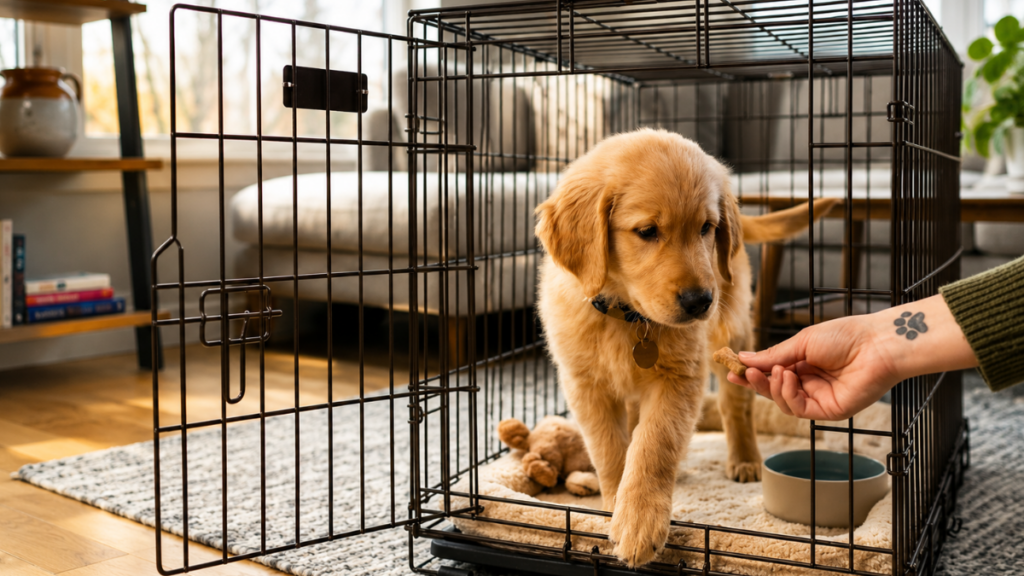
1. Lure and Shape Behaviors When Learning How to Train Your Dog at Home
Luring is a highly effective, force-free technique that uses a high-value resource—typically a small, pungent treat—as a non-physical steering wheel to guide your dog into a specific posture.
To teach a basic command like “Sit,” place a treat directly in front of your dog’s nose. Slowly move your hand upward and backward over their head. To keep their eyes on the food, the dog will naturally lift their nose and lower their hindquarters to balance. The millisecond their rear touches the ground, deliver the treat.
By utilizing lures rather than physically pushing down on their hips, you keep your dog an active, willing participant in the learning process.
2. Master Precision Timing to How to Train Your Dog at Home Successfully
Dogs learn in real-time. If your dog sits, but you don’t hand them the treat until they have already stood back up and started sniffing your shoe, they have no idea which specific action earned the reward. They may assume they are being paid for standing up or sniffing.
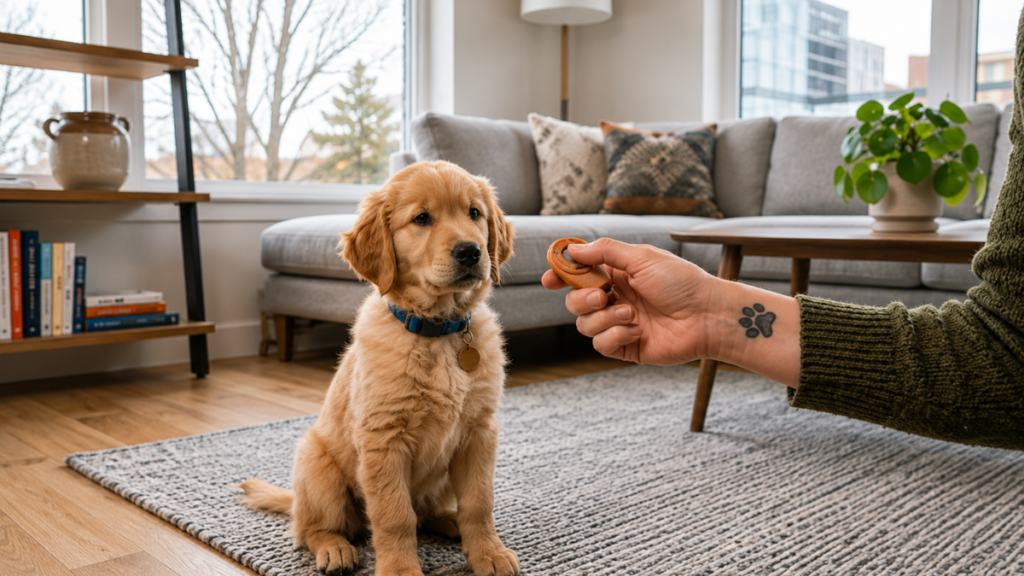
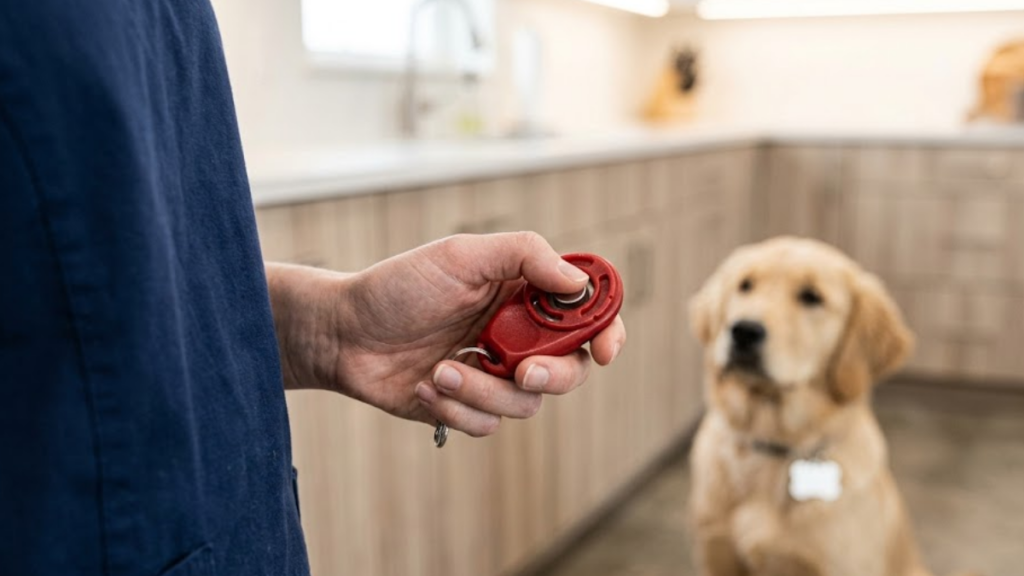
To solve this timing dilemma, professional trainers use a “marker”—either a mechanical clicker or a sharp, consistent verbal cue like “Yes!” This marker acts as an auditory bridge, telling your dog exactly what they did right at that exact millisecond:
- Step 1: The dog performs the desired behavior (e.g., Sitting).
- Step 2: The owner delivers a sharp event marker (“Yes!”).
- Step 3: The owner immediately delivers the high-value treat. Clicker training is another effective way to improve timing. Clicker training is another effective way to improve timing.
3. Capture Natural Behaviors While Discovering How to Train Your Dog at Home
You don’t always need to explicitly engineer a training session to teach your dog valuable life skills. Capturing is the process of keeping an eye out for desirable behaviors that your dog offers completely on their own throughout the day, and marking them instantly.
If your dog voluntarily walks into their crate to rest, walks over and lies quietly at your feet while you work, or sits calmly by the door, mark it with an enthusiastic “Yes!” and drop a treat. Capturing transforms everyday life into an organic learning experience, teaching your dog that calm, polite choices pay off. Reinforcing calm behavior throughout the day often produces better long-term results than long training sessions alone.
4. Redirect Unwanted Choices to Perfect How to Train Your Dog at Home
Simply yelling “No!” or “Stop it!” does not provide your dog with alternative guidance. It merely startles them temporarily without teaching them what they should be doing instead.
If you catch your dog chewing on a table leg, barking out the window, or jumping on guests, immediately redirect their focus to an acceptable, incompatible behavior. Swap the table leg for an interactive chew toy, or direct them to their designated place mat. Once they engage with the correct alternative, shower them with praise and rewards.
5. Establish Environmental Boundaries for Effective How to Train Your Dog at Home
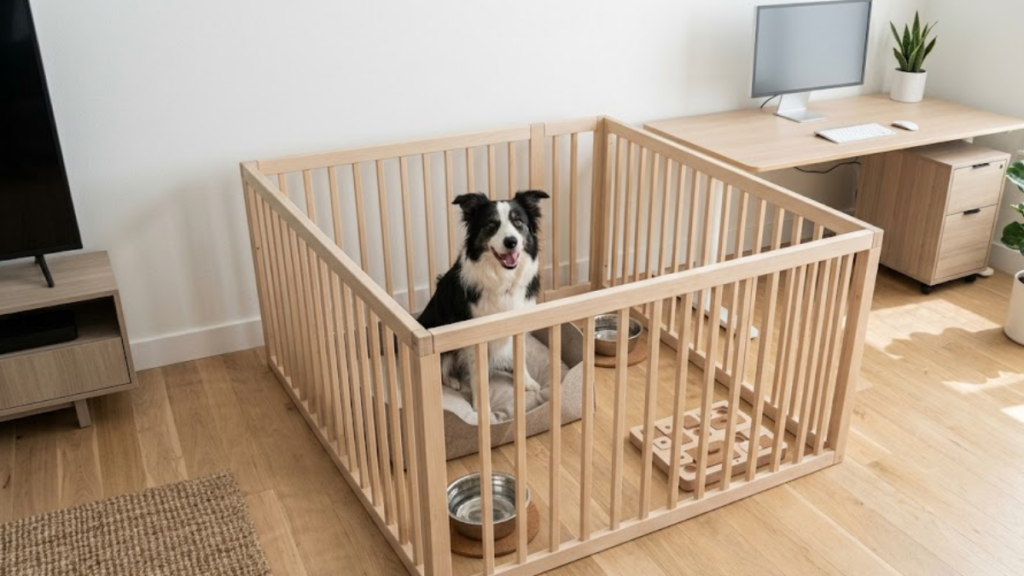
Allowing a young or untrained dog complete, unmonitored freedom inside a large house is an open invitation for behavioral issues. Without supervision, your pet will naturally practice self-rewarding habits, like raiding the trash can, chewing cords, or eliminating on rugs.
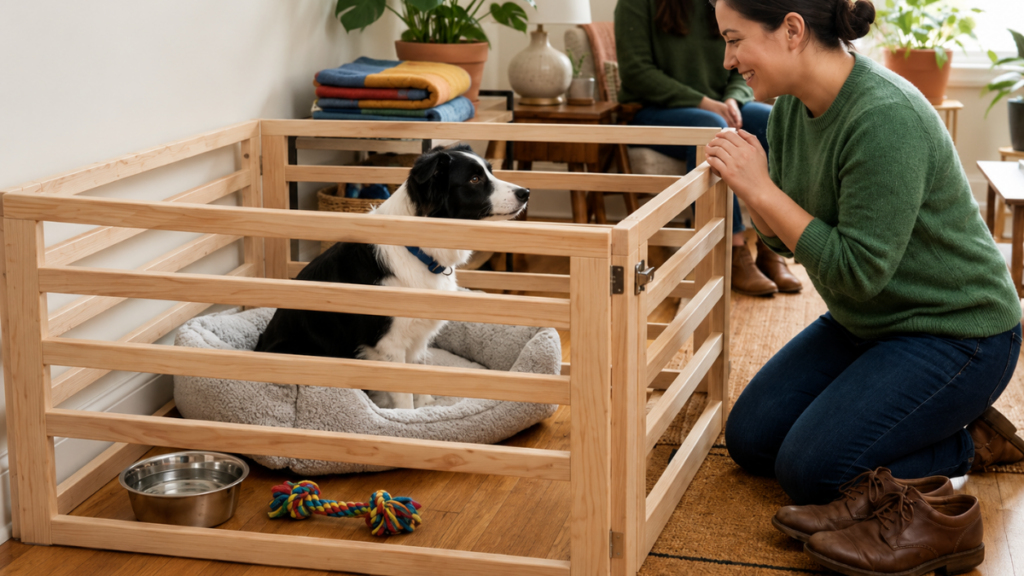
Utilize tools like exercise pens, baby gates, and properly acclimated crates to structure their environment during the early stages of learning how to train your dog at home. By controlling their access to temptations, you prevent bad habits from taking root in the first place.
Solving Housebreaking Accidents: A Core Pillar of How to Train Your Dog at Home
Inappropriate indoor elimination is one of the primary reasons dogs are surrendered to shelters. Yet, this issue is rarely caused by spite or stubbornness. Most housebreaking failures boil down to a lack of a predictable routine or environmental management. Consistency is the key to successful potty training. Read Complete Puppy Potty Training Guide.
The Blueprint for Reliable Housebreaking When Figuring Out How to Train Your Dog at Home
Dogs are creatures of habit and thrive on predictability. To eliminate indoor accidents entirely, implement a strict, clockwork schedule based on canine physiology:
| Potty Trigger Event | Immediate Action Protocol | Behavioral Reinforcement |
| First Thing in the Morning | Clip leash on immediately; walk directly to the designated yard space. | Stand quietly; do not play or engage until elimination occurs. |
| 20-30 Minutes Post-Meal | Gastrocolic reflex kicks in; escort the dog outdoors to their potty spot. | Use a consistent verbal cue like “Go potty.” |
| After Vigorous Play Sessions | Excitement stimulates the bladder; interrupt the transition and head outside. | Throw a micro-party with high-value treats the moment they finish. |
| Following Long Crated Periods | Physical confinement preserves bladder control; exit crate directly to the yard. | Reward immediately on the grass—never back inside the house. |
The Common Mistakes to Avoid on How to Train Your Dog at Home Potty Routine
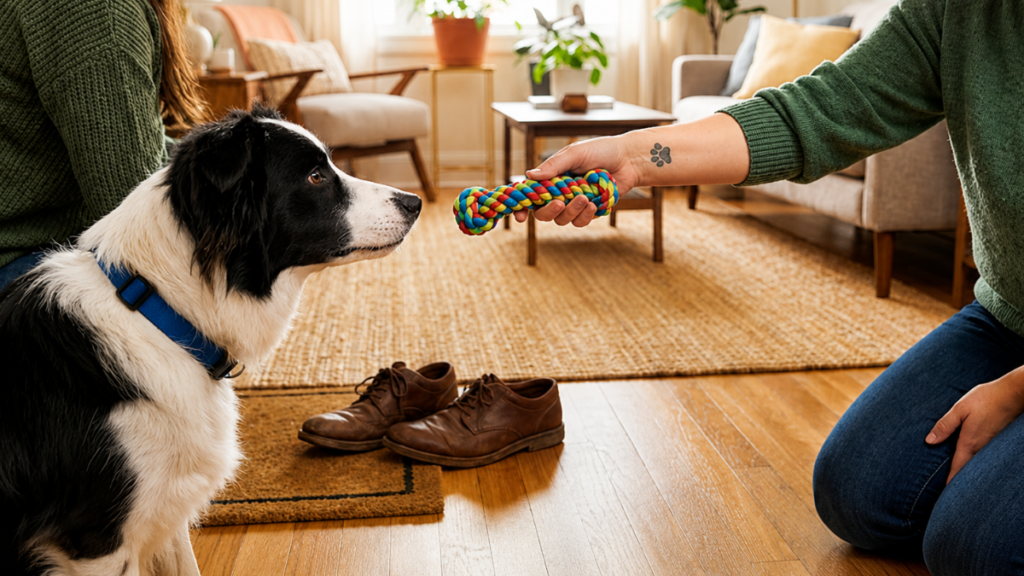
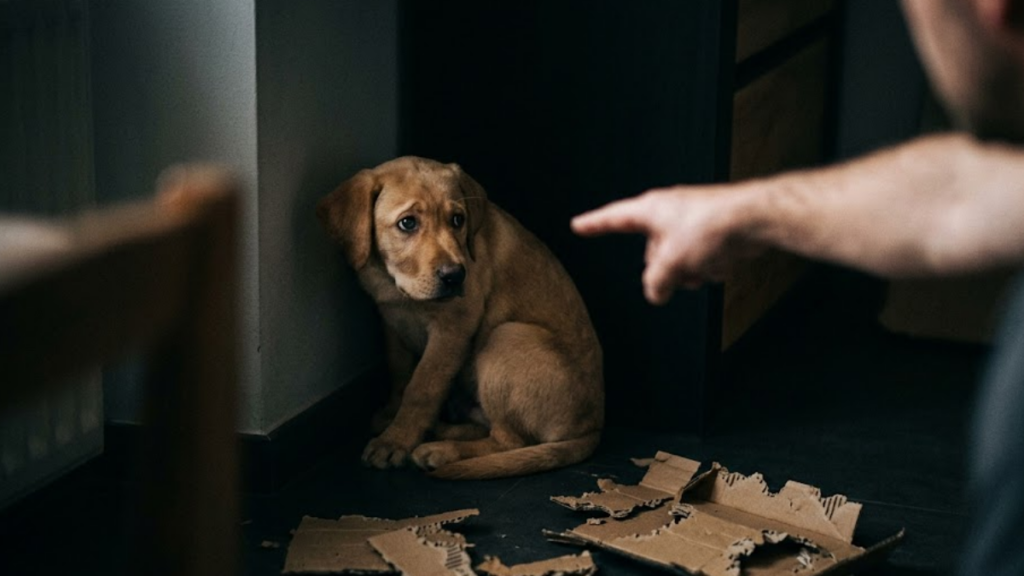
The single most damaging mistake a pet parent can make is punishing a dog after an indoor accident has already occurred. Rubbing a dog’s nose in their mess or yelling at them hours later is completely counterproductive. The dog cannot link the current punishment with a past biological function; instead, they simply learn that their owner is volatile and unsafe.
This fear drives them to hide their accidents behind couches, under beds, or in closets, making the housebreaking process significantly harder to resolve. If you find a mess, silently clean it up with an enzymatic cleaner to completely remove the pheromone markers that invite repeat offenses.
Managing Destructive Chewing with Smart How to Train Your Dog at Home Tactics
Chewing is a natural, biologically necessary behavior for canines. It keeps their jaws strong, cleans their teeth, and serves as an emotional self-soothing mechanism to lower stress levels. The goal of a comprehensive home training program is not to stop chewing entirely, but to direct it toward appropriate targets.
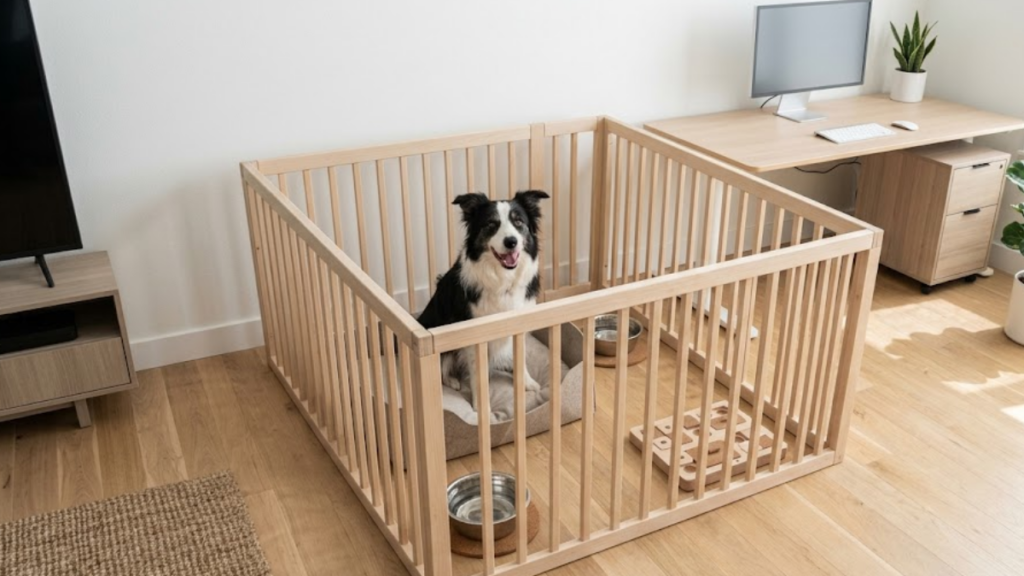
Why Dogs Chew and How to Address It While Figuring Out How to Train Your Dog at Home
To successfully manage chewing, you must first identify the underlying root cause:
- Teething Discomfort: Puppies between 3 and 6 months old experience severe gum irritation as their adult teeth erupt. They crave hard, cold surfaces to numb the ache. Providing frozen chew toys or chilled rubber rings is an incredibly effective way to relieve this discomfort.
- Boredom and Pent-Up Energy: High-energy breeds require targeted physical exercise and daily mental stimulation. If left home alone for hours without an outlet, they will create their own entertainment—which often involves dismantling your furniture.
- Separation Anxiety: If destructive chewing occurs exclusively when you leave the house, and is accompanied by excessive drooling, pacing, or vocalization, the behavior is fueled by panic rather than boredom. This requires a dedicated desensitization protocol to help your dog feel safe when alone.
Environmental Management and Better Alternatives for How to Train Your Dog at Home
Keep your home tidy to prevent accidents. Store shoes in closed closets, elevate electronic charging cables, and keep children’s toys off the floor.
More Read

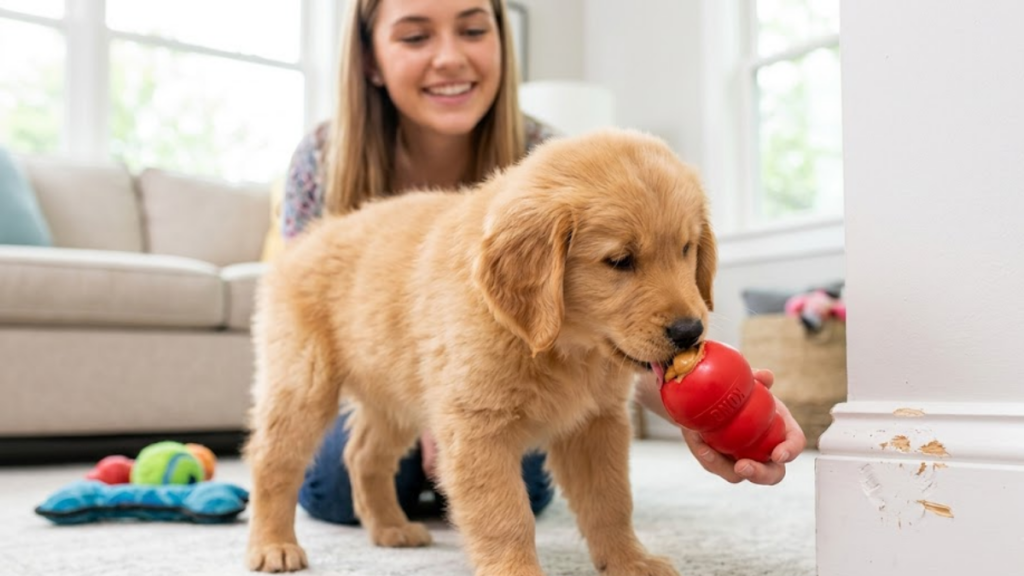
Simultaneously, provide an array of safe, engaging alternatives. Treat-dispensing toys filled with frozen peanut butter or wet food are fantastic options. They keep your dog mentally engaged, burn excess energy, and safely satisfy their natural instinct to chew.
Troubleshooting: Signs Your Strategy on How to Train Your Dog at Home Is Failing
Behavioral progress is rarely a straight line, but it should trend upward over time. If you notice any of the following warning signs, it means your current approach is causing stress and needs immediate adjustment:
- Avoidance Behavior: If your dog runs away, hides under furniture, or cowers when you bring out the training gear, they are associating the process with fear rather than fun.
- Displacement Stress Signals: Watch for subtle warning signs during your sessions, such as excessive yawning, lip-licking, sniffing the ground to avoid eye contact, or shaking off as if wet. These are clear signs that your sessions are too long, too confusing, or too intense. When mastering how to train your dog at home, recognizing these physiological stress responses is crucial to adjusting your pace before your pet completely shuts down or develops training anxiety.
- Defensive Reactivity: Growling, snarling, or snapping when you attempt to move your dog or guide their behavior is a clear red flag. This indicates that your dog feels deeply threatened and is using distance-increasing behaviors to protect themselves.
If you encounter these issues, pause your current program, remove all pressure, and focus on rebuilding a foundation of trust through simple, stress-free engagement games.
FAQs Regarding How to Train Your Dog at Home
How long should my daily home training sessions last?
Keep your sessions short and engaging. Canines process information best in brief, focused intervals. Aim for 2 to 3 sessions per day, lasting just 5 to 10 minutes each. Always end on a successful note to keep your dog excited for the next session.
Can an older rescue dog learn how to train your dog at home?
Absolutely. The old adage “you can’t teach an old dog new tricks” is completely false. While older rescue dogs may have learned unwanted habits over time, they learn new behaviors quickly when guided with clear structure, positive reinforcement, and a patient routine.
What should I do if my dog refuses to take treats during training?
If your dog ignores high-value treats (like fresh chicken or cheese), they are likely over-threshold—meaning the environment is too distracting or stressful for them to focus. Move to a quiet, familiar room inside the house to lower their stress level, and try again.
Final Thoughts on How to Train Your Dog at Home
Transforming an unruly pup into a well-mannered family member takes time, empathy, and consistency. By implementing reward-based methods and setting up their environment for success, you build a resilient bond grounded in mutual trust rather than fear.
For more expert pet consumer advocacy, digital media insights, and lifestyle updates, make sure to follow The Couch Insider. If you are looking to optimize your dog’s overall wellness, physical stamina, and brain health through clean ingredients, dive into our curated collection of expert guides in the Pet Nutrition section today!