



It is a terrifying moment for any pet parent. Your normally affectionate, purring feline companion transforms in the blink of an eye into a hissing, scratching, or biting force of destruction. When dealing with a suddenly aggressive cat, the immediate emotional response is often a mix of shock, fear, and profound confusion. You might wonder if you did something to provoke them or if their entire personality has permanently shifted overnight.
- De-Escalation Protocols: What to Do in the First Critical Minutes
- The Hidden Triggers Behind a Suddenly Aggressive Cat
- Medical Differentiation: Stress vs. Serious Neurological Pathology
- Systemic Environmental Management: Preventing Future Outbursts
- Critical Human First-Aid for Feline Bites and Scratches
- Frequently Asked Questions
- Final Thoughts
In the United States, feline behavioral changes are among the leading reasons owners seek emergency veterinary consultations. Unfortunately, many well-meaning owners respond to these outbursts by yelling, using physical discipline, or attempting to forcibly restrain their pets. These compliance-driven approaches almost always backfire, escalating the danger and permanently damaging the human-animal bond.
To safely resolve this crisis, you must understand that feline aggression is never random or “spiteful.” Instead, it is a highly evolved, biological defense mechanism. This comprehensive guide will explore the hidden medical, emotional, and environmental triggers behind a suddenly aggressive cat, map out immediate de-escalation protocols, and provide a clear roadmap to restore peace to your household. Learning to recognize early stress signals can often prevent aggressive behavior before it escalates.
Read More: 5 Dangerous Signs of Food Poisoning in Kittens to Know.
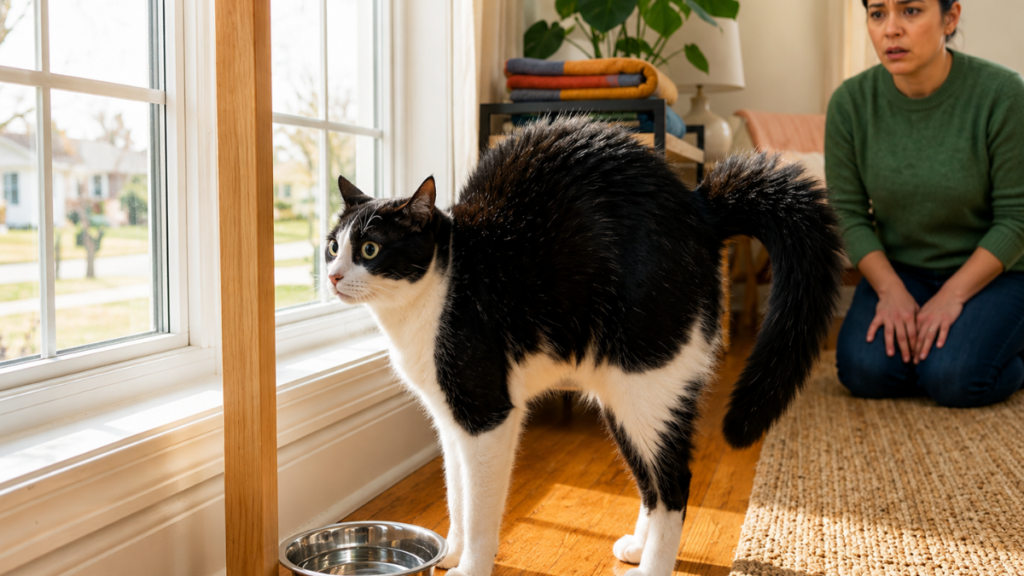
De-Escalation Protocols: What to Do in the First Critical Minutes
When a suddenly aggressive cat loses control, your primary objective must shift from correction to harm reduction. An agitated feline experiences a massive surge of adrenaline and cortisol, plunging their nervous system into a primitive survival state. During this episode, the animal cannot differentiate between a loving owner and a predatory threat. Attempting to hug, corner, or pick up an unhinged cat will almost certainly result in severe puncture wounds or deep scratches.
To handle an acute episode of Cat Behavior deterioration safely, execute the following non-contact safety steps immediately:
Once the cat isolates themselves, close the door to that sanctuary room and leave them completely alone. It can take anywhere from two to twenty-four hours for a feline’s metabolic stress hormones to return to baseline levels. Do not check on them repeatedly or force them out of hiding prematurely.
- Evacuate the Immediate Area: Stop moving toward the cat. Slowly and calmly step backward out of their line of sight. Avoid making direct, prolonged eye contact, which felines interpret as an alpha challenge.
- Remove Vulnerable Bystanders: Instantly escort children, elderly family members, and other household pets into a separate, secure room.
- Eliminate Sensory Overload: Dim the overhead lights, turn off loud televisions or stereos, and cease any shouting or frantic talking. High-decibel environments actively prolong feline panic.
- Create an Escape Route: Do not trap the cat in a corner. Ensure they have a clear, unobstructed path to retreat to a quiet closet, under a bed, or into a separate room where they naturally feel secure.
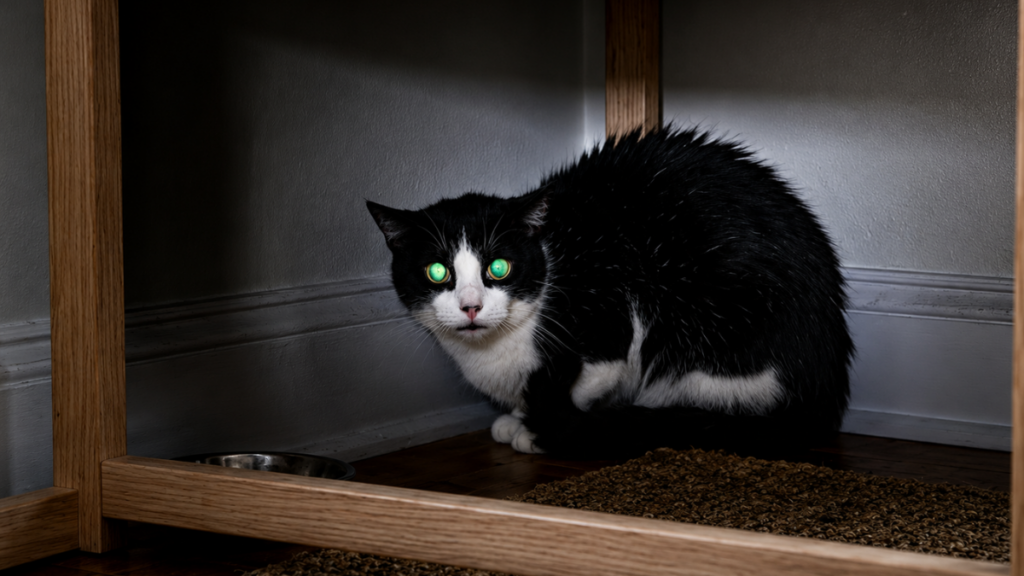
The Hidden Triggers Behind a Suddenly Aggressive Cat
Feline personality shifts do not occur in a vacuum. If a gentle animal weaponizes their claws and teeth, it is usually because an underlying factor has completely compromised their sense of safety.
1. Undiagnosed Medical Pain and Sensory Defensiveness
Because cats are both apex predators and small prey animals in the wild, evolution has hardwired them to hide physical vulnerability at all costs. Consequently, a suddenly aggressive cat is frequently a cat in severe pain.
Conditions such as acute dental abscesses, arthritis, feline lower urinary tract disease (FLUTD), ear infections, or localized soft-tissue injuries can turn a petting session into an agonizing experience. If your pet historically loved being scratched under the chin but suddenly snaps or bites when you touch a specific zone along their spine or abdomen, do not label them as “moody.” They are exhibiting a physiological pain response. Sudden aggression is sometimes the first visible sign of illness. Read Common Signs Your Cat Needs Veterinary Care.
2. The Phenomenon of Redirected Aggression
This is arguably the most misunderstood aspect of abnormal Cat Behavior. Redirected aggression occurs when a cat is intensely aroused and threatened by an external stimulus they cannot physically access—such as a stray cat roaming outside the window, a loud construction blast, or a neighborhood dog barking at the door. If you approach or touch your pet during this peak state of arousal, they will instantly lash out at you, turning into a suddenly aggressive cat due to their redirected survival instincts. Understanding this dynamic is crucial, as what looks like unprovoked rage is actually an involuntary stress response.
If you walk past your pet while they are frozen in this hyper-vigilant state, their loaded fight-or-flight energy will instantaneously discharge onto you. The attack can feel completely unprovoked, but the true target was the unreachable threat outside.

3. Feline Hyperesthesia Syndrome (FHS)
Feline Hyperesthesia Syndrome is an uncommon neurological or endocrine disorder that causes extreme skin sensitivity along the dorsal midline. Cats suffering from FHS will experience sudden, uncontrolled episodes where the muscles along their spine ripple or twitch violently.
The cat may frantically bite at their own flanks or tail, run wildly through the house vocalizing in distress, and transform into a suddenly aggressive cat if touched during the episode. Once the episode ends, the cat often appears disoriented and returns to a normal state. Recognizing FHS is vital, as this complex medical condition requires specialized veterinary treatment rather than behavioral correction.
“The hardest part of managing an aggressive cat is overriding our own panic. A flash of claws isn’t malice; it’s a primitive survival reflex. To heal the bond, we must meet their adrenaline with our absolute calm.”
Julian Mercer, Founder of The Feline Harmony Project
Medical Differentiation: Stress vs. Serious Neurological Pathology
When confronting a suddenly aggressive cat, American pet owners frequently worry about lethal zoonotic viruses, specifically rabies. While rabies is rare in vaccinated, indoor domestic pets, distinguishing between an emotional behavior problem and a severe neurological emergency is critical for public health.
Review this clinical matrix to analyze your cat’s current symptom profile:
| Behavioral Evaluation Criteria | Stress, Anxiety, or Localized Pain | Acute Neurological Pathology (e.g., Rabies) |
| Environmental Triggers | Clear correlation to an event (loud noise, a new pet, handling a sore joint). | Occurs spontaneously without any external environmental stimulus. |
| Symptom Progression | Aggression subsides steadily once the cat is isolated in a quiet, dark room. | Symptoms deteriorate relentlessly over 24 to 72 hours, regardless of environment. |
| Physical Autonomic Signs | Temporary pupil dilation; rapid respiration that slows down over time. | Profuse, ropey drooling (hypersalivation); uncoordinated gait; loss of jaw function. |
| Appetite & Swallowing | May reject food initially but will drink water and eat once calm. | Complete hydrophobia; inability to swallow; total refusal of food. |
| Vaccination Traceability | Up-to-date on state-mandated rabies protocols; low-risk lifestyle. | Expired vaccine history; unverified history of outdoor fights or wildlife exposure. |
Read More: 3 Signs of cat allergy to canned food: Are You Poisoning Your Pet?
Systemic Environmental Management: Preventing Future Outbursts
If your veterinarian conducts a thorough physical exam, runs comprehensive blood panels, and rules out underlying medical causes, the root cause of your suddenly aggressive cat is environmental or emotional stress. You can reduce their stress levels and eliminate unwanted territorial behaviors by proactively altering their living environment.
1. Maximize Vertical Territory
Cats are vertical creatures by nature. They view their world three-dimensionally, and high vantage points provide them with a profound sense of security. When a cat feels cornered on the floor by foot traffic, children, or other dogs, they are much more likely to resort to defensive aggression, leaving owners terrified by a suddenly aggressive cat that feels trapped with no escape route.
More Read

Install multi-tiered cat trees, ceiling-high wall shelves, and window perches throughout your home. This allows your cat to navigate communal rooms safely above the ground, lowering their territorial anxiety and preventing the defensive triggers that lead to dangerous friction.
2. Implement Strategic Environmental Enrichment
A bored indoor cat accumulates massive amounts of predatory energy. Without a proper outlet for this natural drive, they will look for alternative targets. This can manifest as stalking your ankles, lunging out from beneath curtains, or tearing up furniture. If left completely unchecked, this pent-up predatory drive can easily turn your pet into a suddenly aggressive cat during normal household movements.
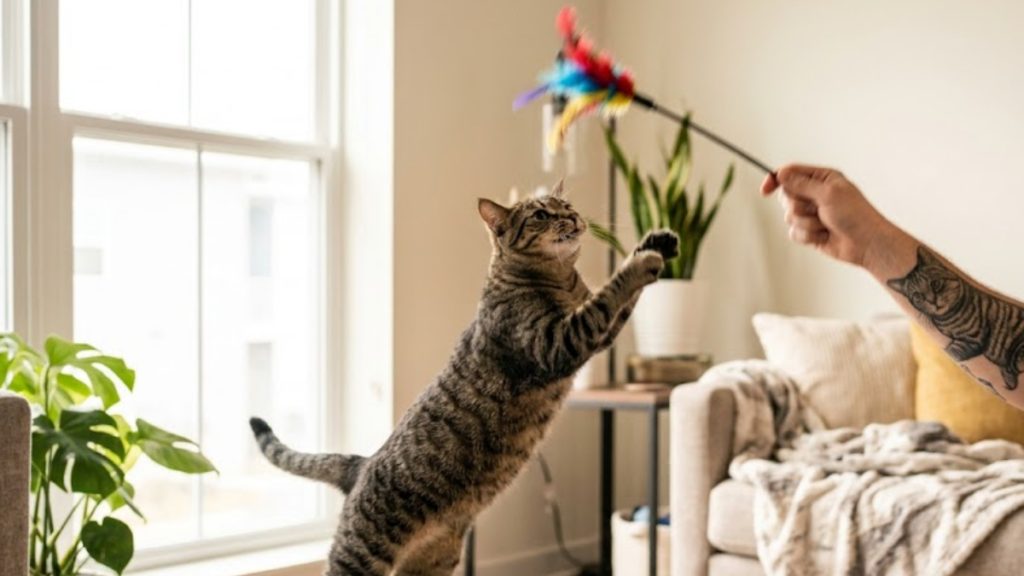
Commit to two structured 15-minute interactive play sessions daily using prey-mimicking wand toys, feather teasers, or laser pointers. Always allow the cat to physically “capture” the toy at the end of the game, and immediately follow the session with a high-protein meal to satisfy their natural hunt-catch-groom-sleep cycle. This constructive physical outlet is essential to ensure you never have to deal with a suddenly aggressive cat misdirecting its natural hunting instincts toward your family.
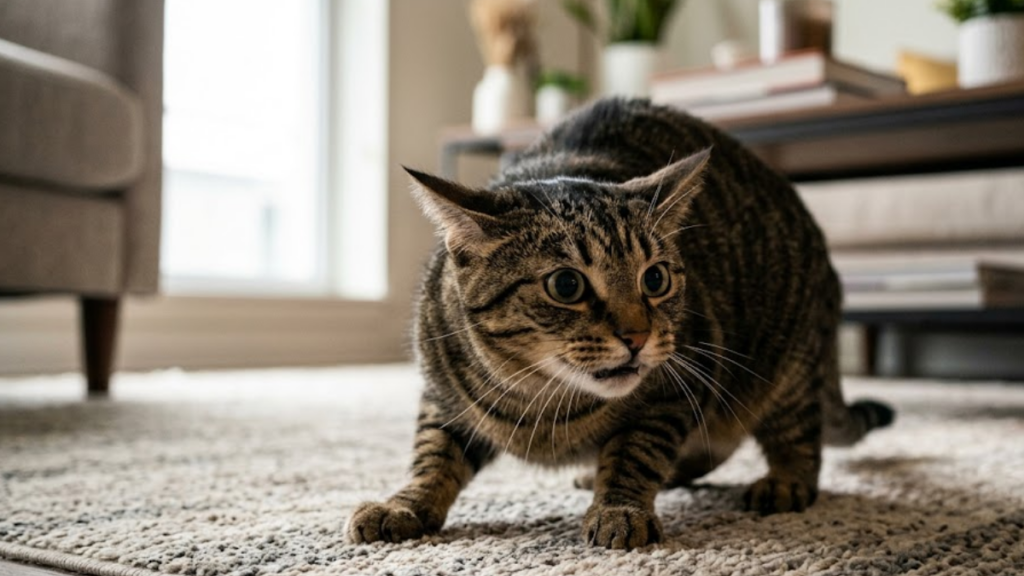
Critical Human First-Aid for Feline Bites and Scratches
If you are injured by a suddenly aggressive cat, you must take immediate first-aid precautions. Feline mouths harbor unique anaerobic bacteria, primarily Pasteurella multocida. Because a cat’s canine teeth are thin and sharp, they act like biological hypodermic needles, injecting these dangerous pathogens deep into underlying joint capsules and tendons.
The path of infection typically follows these dangerous phases:
- Feline Puncture Wound: The sharp tooth punctures deep beneath the skin’s surface.
- Deep Bacterial Seeding: Bacteria are deposited into closed tissues where oxygen cannot reach.
- Rapid Infection (Cellulitis): The area rapidly becomes swollen, red, and painful within hours.
If you are bitten or scratched, execute these medical first-aid steps instantly:
- Wash the Wound Thoroughly: Place the wound under warm, running tap water. Allow the water to flush the puncture tracking for at least five full minutes.
- Apply Antibacterial Soap: Wash the area gently but thoroughly with antimicrobial soap to help remove bacterial saliva. If you have been bitten or scratched by a suddenly aggressive cat, this immediate sanitization is your first line of defense against deep-tissue contamination.
- Avoid Immediate Closure: Do not seal a deep puncture wound with liquid bandage or tight butterfly strips. Sealing the wound traps dangerous anaerobic bacteria inside the deep tissue layer.
- Seek Professional Medical Care: The American Veterinary Medical Association (AVMA) advises washing animal bite wounds immediately with soap and running water and seeking prompt medical evaluation, as cat bites carry a high risk of bacterial infection. Visit an urgent care clinic or emergency medical professional within 24 hours. Injuries inflicted by a suddenly aggressive cat frequently require prophylactic antibiotics to prevent severe cellulitis or systemic infections.
Frequently Asked Questions
Why did my cat attack me out of nowhere while I was petting them?
This common behavior is known as petting-induced aggression. Every cat has a unique tolerance threshold for tactile stimulation. Repetitive stroking can over-stimulate their hair follicles, causing a sudden shift from pleasure to physical discomfort.
If you ignore these sensory limits, your friendly companion can instantly morph into a suddenly aggressive cat that bites or scratches your hand. Watch for subtle warnings like a twitching tail, rippling back skin, or pinned ears, and stop petting immediately before they lash out. Learning to read these early physiological cues is the best way to prevent a suddenly aggressive cat episode during quiet bonding moments.
Can behavior-modifying medications help a suddenly aggressive cat?
Yes. If environmental optimization and behavior modifications are insufficient, your veterinarian or a board-certified veterinary behaviorist can prescribe selective serotonin reuptake inhibitors (SSRIs) or anti-anxiety medications like gabapentin. These medications help stabilize your cat’s chemical baseline, making lifestyle training much more effective.
Should I isolate my aggressive cat indefinitely?
No. Temporary isolation is essential during an active crisis to ensure safety and allow stress hormones to drop. However, permanent isolation creates extreme frustration and will worsen behavioral problems over time. Long-term recovery relies on identifying the root cause and systematically fixing it.
Final Thoughts
Living with a suddenly aggressive cat can be an incredibly stressful and isolating experience for any family. However, it is vital to remember that your pet isn’t acting out of malice; they are communicating an urgent need for help. By remaining calm, giving them space, and working alongside veterinary professionals to address the root cause, you can safely guide your companion back to a peaceful state of mind.
For more investigative consumer alerts, digital media insights, and expert pet safety updates, make sure to follow The Couch Insider. If you are looking to optimize your cat’s neurological health, emotional resilience, and physical vitality through veterinary-approved diets, explore our library of guides in the Pet Nutrition section today!