



Selecting the ideal family vehicle requires balancing passenger comfort, functional cargo space, long-term mechanical dependability, and sensible financial value. The Volkswagen Atlas has long carved out a unique position in the competitive midsize three-row crossover market by bringing German chassis tuning and expansive cabin proportions to North American families. As vehicle buyers evaluate their options, comparing this flagship German crossover against established market heavyweights like the Hyundai Palisade and Kia Telluride provides essential clarity. This deep analytical review combines real-world driver feedback, technical mechanical assessments, and ownership experiences to help prospective buyers determine whether the Volkswagen Atlas remains the superior choice for their daily driving needs.
Navigating the Midsize 3-Row SUV Market and Volkswagen Atlas Positioning
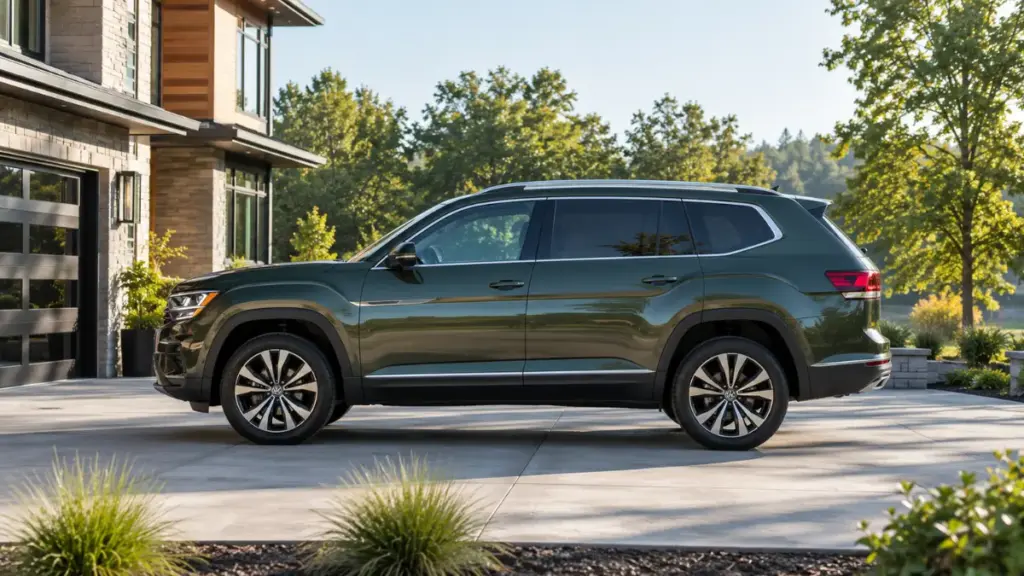
Navigating the crowded midsize three-row crossover segment requires understanding how different automotive manufacturers prioritize spatial efficiency versus technical feature density. The Volkswagen Atlas was specifically engineered for the North American market to address a historic complaint regarding European crossovers: inadequate interior volume. Unlike smaller utility vehicles that compromise on rear passenger legroom, the design philosophy behind this vehicle focuses on maximum interior square footage, exceptional visibility, and European road presence.
When comparing overall footprints, many buyers discover that compact or mid-compact options like the Mazda CX-5 or even the CX-90 feel restrictive when subjected to full family duty. The Volkswagen Atlas operates with a structural commitment to real-world utility, presenting a boxy profile that directly yields expansive interior headroom, generous elbow room, and a third-row seating arrangement capable of housing fully grown adults without complaint.
Read more: Why the Honda Element Refuses to Depreciate Like Most Compact SUVs
Evaluating Third-Row Comfort and Practical Cargo Capacity
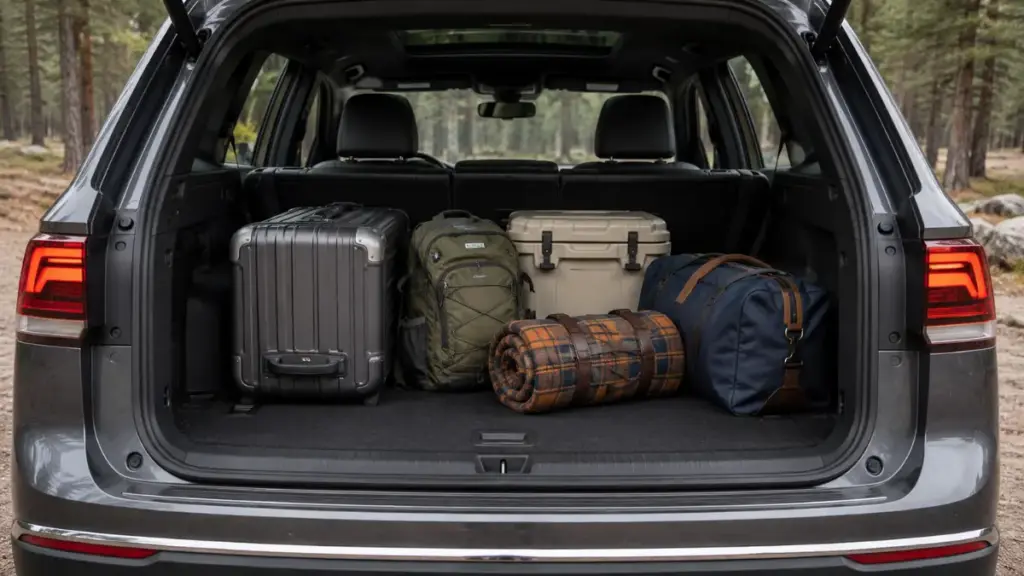
The true test of any family-oriented crossover lies in its daily usability behind the second row. While many competing vehicles treat the third row as an emergency-only space suitable strictly for small children, the Volkswagen Atlas incorporates an intelligent seating layout that maximizes legroom and footwell space. The second-row seats slide forward smoothly on extended tracks, allowing effortless entry and exit even when child safety seats remain installed in the middle row.
Beyond pure seating comfort, the total available cargo volume behind the third row sets a high practical standard. Families embarking on extended road trips can comfortably stow multiple full-sized suitcases, strollers, and sports gear without sacrificing passenger seating. The flat load floor created when folding both the second and third rows transforms the vehicle into a vast hauling platform that rivals traditional full-size body-on-frame utility vehicles.
Decoding Volkswagen Atlas Ownership Realities Across Model Years
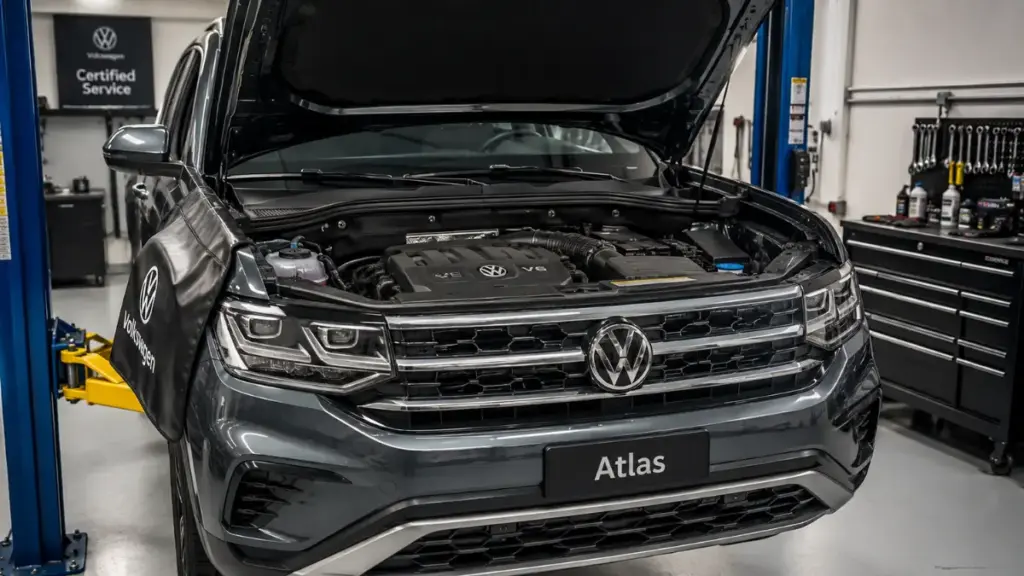
Understanding the long-term ownership dynamics of the Volkswagen Atlas involves looking past promotional brochures and examining real-world owner experiences across multiple model years. Long-term owners consistently report that German utility vehicles reward meticulous routine maintenance while punishing neglected service intervals. Unlike some Asian competitors that tolerate delayed fluid changes, European powertrains require exact adherence to factory maintenance schedules.
“German engineering delivers exceptional high-speed stability and structural rigidity, but keeping these vehicles running flawlessly over 100,000 miles demands strict discipline regarding fluid services, preventative water pump inspections, and timely electrical checks.”
Jade
A common observation across owner forums and pre-owned vehicle marketplaces is the notable prevalence of gently used, low-mileage models coming off 24-month and 36-month lease agreements. Corporate fleet programs and attractive initial lease incentives frequently return well-maintained units to dealer lots. Prospective pre-owned buyers often find incredible value in Certified Pre-Owned units, which provide extended factory warranty coverage that mitigates concerns regarding complex onboard electronics or turbocharger longevity.
Comparing Feature Values Between Volkswagen Atlas and Korean Heavyweights
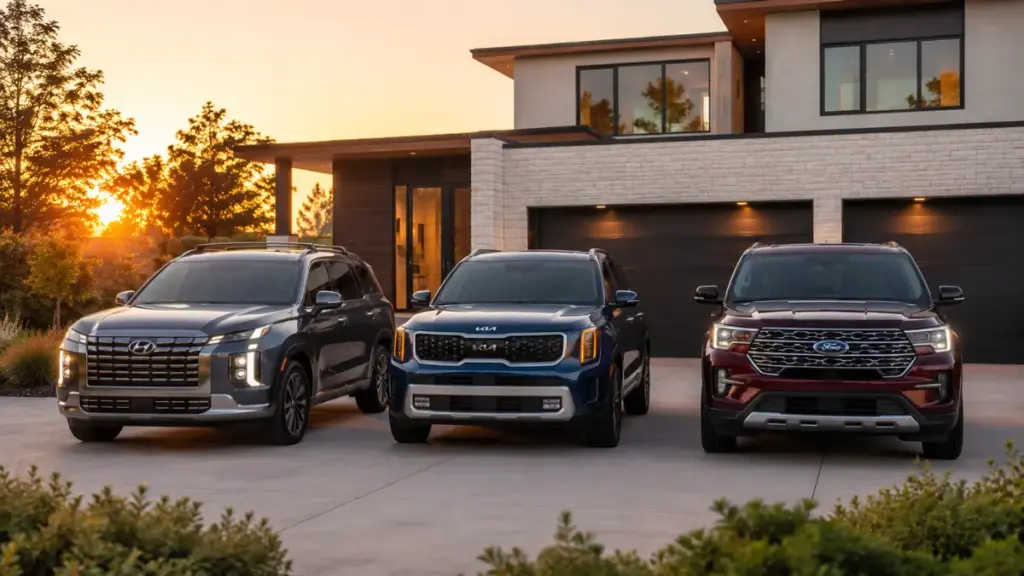
To fully gauge market competitiveness, buyers must weigh the feature packaging and price-to-value equations offered by key industry contenders. The Hyundai Palisade and Kia Telluride have earned widespread acclaim by delivering feature-packed cabins, plush seating materials, and intuitive physical control layouts right from their base trim levels. However, the Volkswagen Atlas responds with a distinct set of structural, dynamic, and practical advantages that appeal to drivers seeking European driving characteristics.
Feature and Option Comparison Table
The following detailed matrix evaluates how the Volkswagen Atlas compares directly against its main Korean rivals across critical purchase dimensions:
| Feature Dimension | Volkswagen Atlas | Hyundai Palisade | Kia Telluride |
| Base Engine Architecture | 2.0L Turbocharged Inline-4 | 3.8L Naturally Aspirated V6 | 3.8L Naturally Aspirated V6 |
| Peak Torque Output | 273 lb-ft @ 1,600 RPM | 262 lb-ft @ 5,200 RPM | 262 lb-ft @ 5,200 RPM |
| Max Towing Capacity | Up to 5,000 lbs | Up to 5,000 lbs | Up to 5,500 lbs (X-Pro) |
| User Interface Concept | Digital Touchscreen & Sliders | Physical Buttons & Dials | Physical Buttons & Dials |
| Third-Row Adult Comfort | Outstanding (Class-Leading) | Moderate | Moderate |
| Maximum Cargo Space | Up to 96.6 cubic feet | Up to 86.4 cubic feet | Up to 87.0 cubic feet |
| Chassis Tuning | Firm, European Road Control | Soft, Comfort-Oriented | Balanced, Smooth Cruise |
Analyzing Cabin Ergonomics and Digital User Interfaces
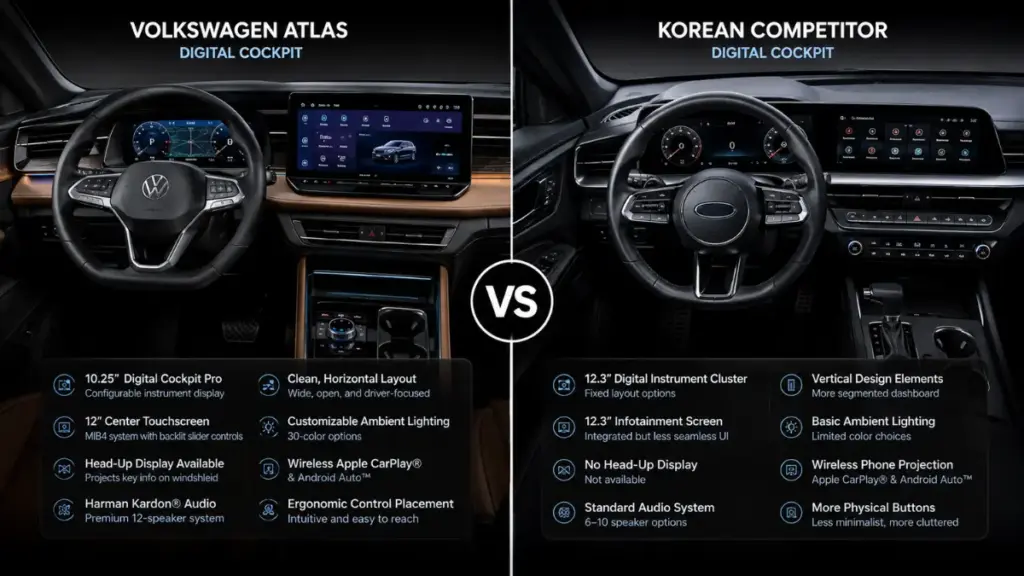
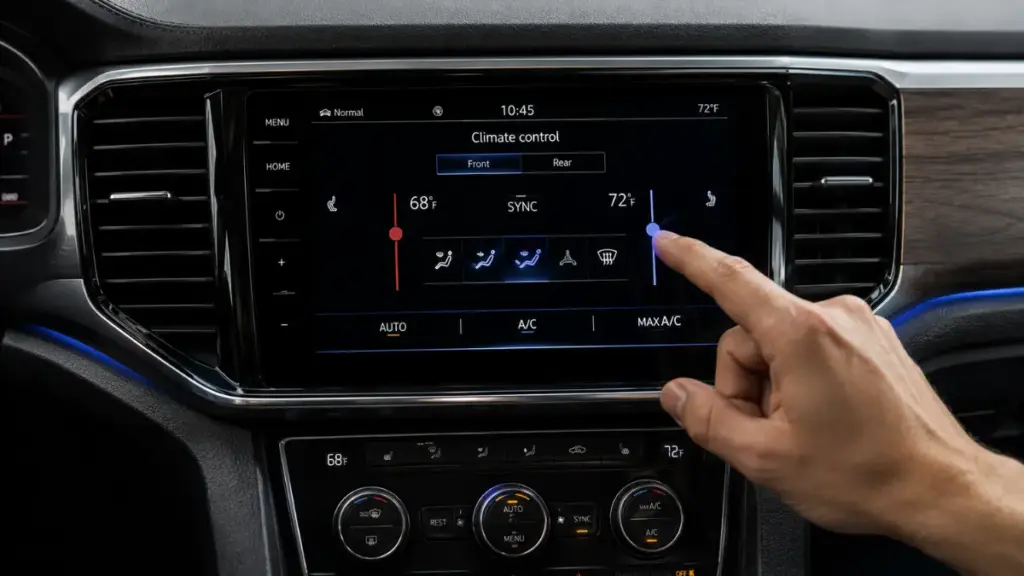
Cabin interaction formats represent one of the most significant points of differentiation between these vehicles. The Korean alternatives feature traditional physical knobs and dedicated buttons for primary climate and media controls. This traditional layout allows drivers to adjust cabin temperatures or switch radio stations purely by tactile feel without taking their eyes off the road.
Conversely, recent iterations of the Volkswagen Atlas feature an advanced, minimalist digital glass cockpit. While this design creates a futuristic, clutter-free cabin environment with customizable ambient lighting, it consolidates primary climate and volume operations into capacitive touch sliders and screen menus. Drivers who prefer traditional physical switches may experience a brief learning curve when acclimating to these touch-sensitive controls during daily operation.
Examining Performance Dynamics and Engine Shift for Volkswagen Atlas
The engineering evolution of the Volkswagen Atlas highlights a broader industry shift toward highly efficient, forced-induction powertrains. Historically, European crossover enthusiasts gravitated toward the smooth linear power delivery and distinct exhaust note of the naturally aspirated VR6 engine. However, modern emissions standards and fuel economy demands led engineers to transition the entire lineup to a sophisticated, high-output turbocharged four-cylinder platform.
More Read

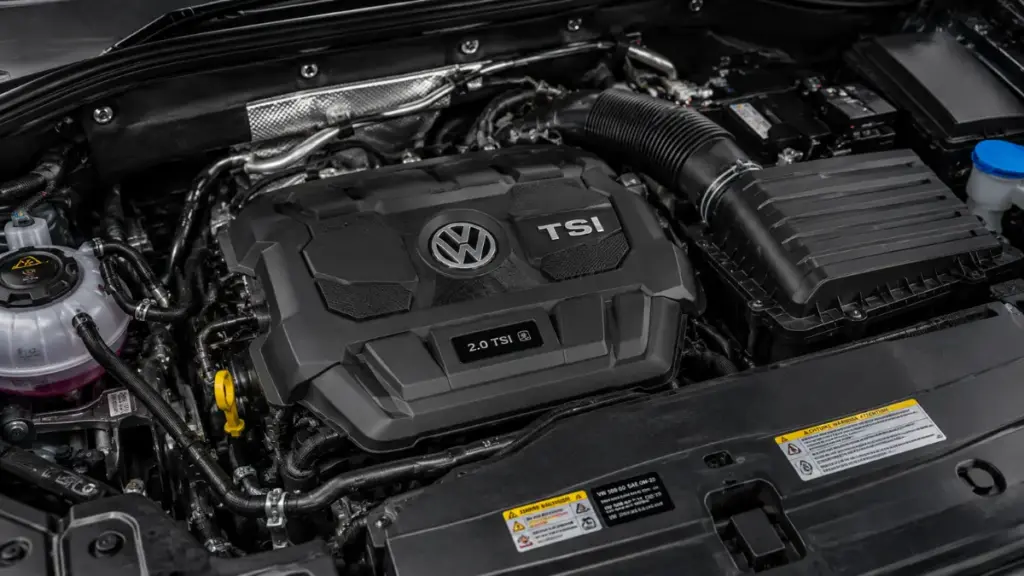
Analyzing EA888 Gen 5 Turbocharged Engine Performance
The latest iteration of the EA888 turbocharged four-cylinder engine represents a significant technological achievement. By producing substantial low-end torque early in the rev range, this engine delivers responsive acceleration off the line. This low-RPM torque curve ensures that the heavy crossover accelerates briskly from stoplights, making around-town driving feel surprisingly light and energetic.
- Low-End Throttle Response: Peak torque arrives at just 1,600 RPM, providing immediate pulling power.
- Highway Passing Capability: The 8-speed automatic transmission downshifts promptly to maintain steady acceleration during high-speed passing maneuvers.
- Fuel Efficiency Gains: Forced induction allows improved fuel economy ratings during steady-state highway cruising compared to legacy six-cylinder designs.
However, driving enthusiasts accustomed to large-displacement V6 engines may notice a slight hesitation—commonly referred to as turbo lag—if the accelerator pedal is aggressively depressed from a complete stop. Once the turbocharger builds boost pressure, the vehicle surges forward smoothly. Selecting Sport mode sharpens throttle mapping and holds gears longer, virtually eliminating initial lag during spirited driving.

Evaluating Driving Dynamics Against Hyundai Palisade and Kia Telluride
Where the Volkswagen Atlas truly sets itself apart from its Asian rivals is in its underlying chassis engineering and suspension tuning. German engineers designed the platform to maintain high-speed stability on open highways while controlling body roll through tight turns. Steering feedback is precise and direct, providing the driver with a reassuring sense of connection to the road surface.
“The structural integrity of the Volkswagen chassis becomes immediately apparent during high-speed emergency lane changes or long cross-country highway runs, where the vehicle remains planted, composed, and effortlessly controllable.”
Jade
In contrast, the Hyundai Palisade and Kia Telluride prioritize a softer, more compliant ride quality designed to absorb minor road imperfections smoothly. While this soft tuning delivers exceptional comfort over gentle pavement bumps, it can result in increased body lean and floatiness when navigating winding mountain roads or tight highway off-ramps. Buyers seeking an engaging, planted driving experience will find the European suspension tuning of the German crossover significantly more satisfying.

Assessing the 2027 Volkswagen Atlas Redesign and Market Competitiveness
Anticipation surrounding the upcoming redesign highlights the continuous evolution of this popular platform. As automotive styling trends shift toward integrated lighting elements, sharp geometric body panels, and advanced digital cabin architecture, the next-generation model aims to solidify its position against aggressive competitive updates from rival brands.
Redesigned Exterior and Interior Tech Evolution
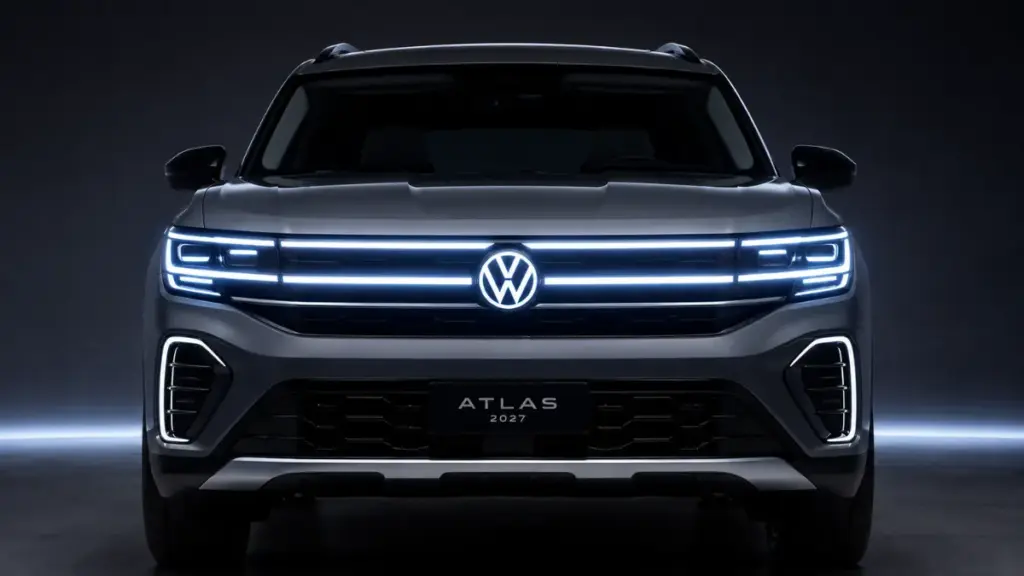
Sneak peeks and global production previews indicate that the 2027 Volkswagen Atlas will adopt a bolder, more sophisticated aesthetic closely aligned with premium luxury standards. Expect a commanding front grille anchored by full-width LED light bars, illuminated brand badging, and sleek headlight housing units. The exterior sheet metal features sculpted character lines that reduce visual bulk while enhancing aerodynamic efficiency.
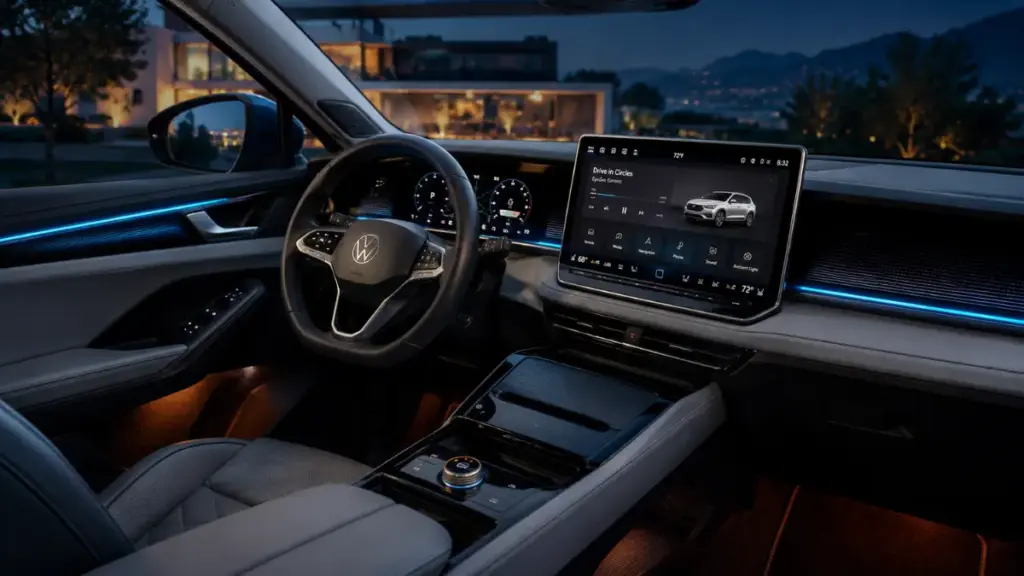
Inside the cabin, technological integration reaches new heights. The upcoming model is expected to feature a massive central infotainment display measuring up to 15 or 17 inches, angled slightly toward the driver for improved reach. Key interior updates anticipated for the redesign include:
- Column-Mounted Gear Selector: Relocating the transmission shifter to the steering column frees up substantial center console storage space.
- Enhanced Ambient Lighting: Multi-zone customizable light strips integrated across the dashboard and door panels create a luxury lounge atmosphere.
- Upgraded Seat Ergonomics: Next-generation seat cushions featuring improved padding, extended thigh support, and advanced massage functions for front passengers.
Strategic Verdict: Should You Buy Now or Wait for 2027 Volkswagen Atlas?
Prospective buyers face a classic dilemma: purchasing a highly refined, heavily discounted current-generation model today versus waiting for the redesigned generation to arrive at dealerships. Current-generation models benefit from years of production refinements, ensuring that early assembly issues have been thoroughly resolved. Furthermore, aggressive manufacturer finance rates and dealer incentives make existing inventory exceptionally attractive from a pure financial perspective.
On the other hand, waiting for the new generation guarantees access to cutting-edge infotainment hardware, fresh exterior styling, and potentially improved hybrid driver assistance technologies. However, history suggests that first-model-year redesigns can occasionally experience software bugs or early production quirks. Leasing a current-model vehicle represents a balanced strategy, allowing families to enjoy immediate utility while positioning themselves to transition into a fully sorted redesigned model once its initial production run stabilizes.

Conclusion
The Volkswagen Atlas continues to prove itself as a formidable contender in the midsize three-row SUV segment, effectively combining true adult-sized interior room with European driving dynamics. While Korean rivals like the Hyundai Palisade and Kia Telluride attract buyers with traditional physical buttons and plush comfort tuning, the German crossover delivers superior total cargo volume, planted road handling, and a commanding driving perspective. Whether choosing a deeply discounted current model or awaiting the technological leaps of the incoming redesign, families who prioritize space, safety, and solid highway performance will find this vehicle an exceptional long-term companion.
PLEASE LEAVE A COMMENT BELOW FOR FREE EXPERT CONSULTATION OR FOLLOW OUR WEBSITE THE COUCH INSIDER TO STAY UPDATED WITH THE LATEST KNOWLEDGE.