


An Open-Box iPhone that looks as if it has never been touched yet commands a price tag thousands of dollars lower than its factory-sealed counterpart creates an unsettling paradox. How can the same hardware, often boasting a perfect zero-cycle battery, exist in two vastly different financial universes? This mystery is not just about the device itself; it is about the invisible rules of retail and the psychological weight we place on a factory seal.
- An Open-Box iPhone looking like new yet $10,000 cheaper creates a strange paradox
- Zero cycle count actually tells you little about an iPhone
- Why a like-new iPhone is not priced like a new one
- Why the $10,000 gap is not about quality but retail categorization
- Open-box iPhone is not a single category but a mix of many
- Why buyers feel cheated even when the device works normally
- Why an iPhone can be both a ‘great deal’ and ‘unreliable’
- You are comparing two ways markets define value
- Conclusion
An Open-Box iPhone looking like new yet $10,000 cheaper creates a strange paradox
The retail world is full of anomalies, but few are as jarring as the massive depreciation seen in an Open-Box iPhone. When you encounter a high-end unit that appears flawless, performs perfectly, and even shows zero battery wear, you expect it to hold its value. Instead, you find a price collapse that defies conventional logic, leaving consumers to wonder if they are looking at a bargain or a hidden trap.
The shocking situation: identical devices, two worlds of pricing
You walk into a store and see a device for its full retail price. Moments later, you find an identical model in the clearance section for a fraction of that cost. Both devices are technically the same, manufactured on the same line, and feature the same internal components. Yet, one is a “premium investment” while the other is an “unstable risk,” purely based on where the box sits on the shelf.
Why zero cycle count makes buyers believe it is new
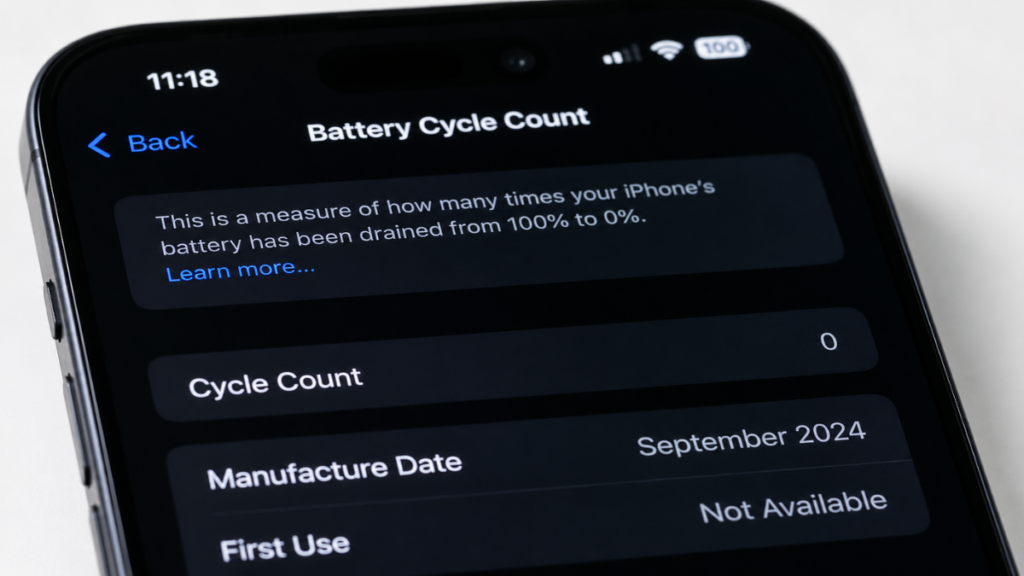
Battery health is the holy grail of mobile hardware verification. When an Open-Box iPhone displays a cycle count of zero, the human brain immediately translates this as “never used.” It is a powerful piece of evidence that suggests the device has remained untouched by human hands, reinforcing the belief that the hardware is as factory-fresh as a sealed model.
The central question: if it is like new, why does the price crash?
If the hardware integrity is indistinguishable from a new unit, why does the market demand such a steep discount? The answer lies not in the performance of the silicon, but in the rigid structures of modern commerce. When a product leaves the “new” category, it immediately sheds its status, regardless of its actual physical condition.
Read more: Apple Supply Chain Hierarchy: How Apple Decides Which Suppliers Build Its Most Secret Products.
Zero cycle count actually tells you little about an iPhone
Many shoppers rely heavily on software diagnostics to verify hardware age. However, a zero-cycle reading is not an absolute guarantee of a device’s history; it is merely a data point that can be manipulated or misinterpreted.
Cycle count only measures battery, not device history
A battery cycle count only tracks how many times the battery has been discharged and charged. It cannot tell you if the device has been dropped, exposed to moisture, or disassembled by an unauthorized technician. Relying on this metric alone is a dangerous shortcut for an Open-Box iPhone buyer.
“The true value of an iPhone is not just defined by its physical state, but by the rigid commercial systems that dictate its status in the eyes of retailers.”
Luna
Why an iPhone can be unboxed but still show zero cycles
Some units are removed from their packaging for simple visual inspection or marketing photography. In these cases, the device remains powered off or barely touched, allowing the battery to maintain its factory charge status. The “zero” reading is accurate but misleading, as it ignores the potential environmental exposure the device faced while out of its box.
Cases where battery data does not reflect reality
Sophisticated software can sometimes be reset, or hardware modules might be replaced in ways that reset system-level metrics. Buyers must recognize that an Open-Box iPhone is a product of complex supply chains where data integrity is not always the primary concern of the retailer.
Why a like-new iPhone is not priced like a new one
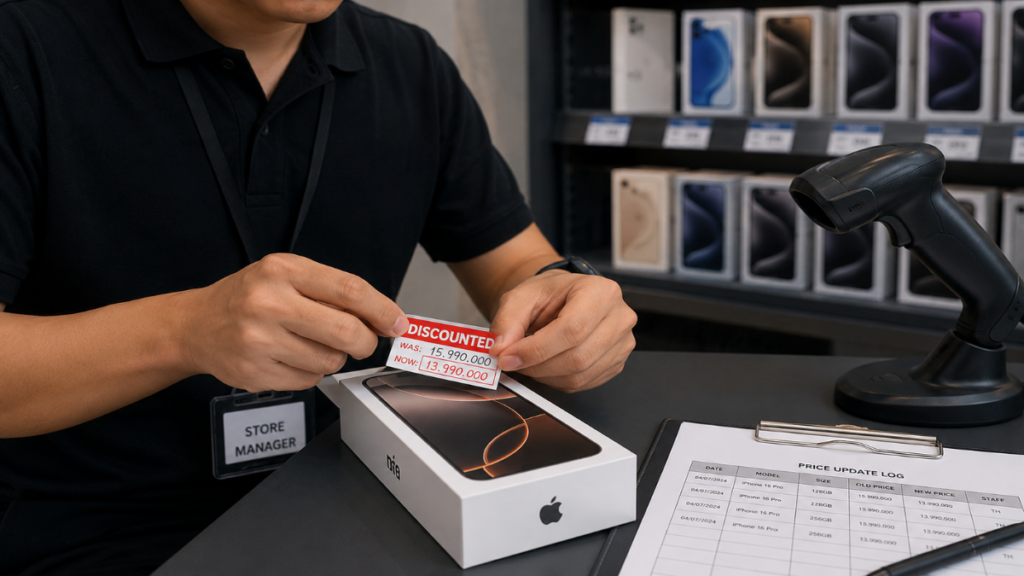
The market does not function on a sliding scale of quality; it functions on a binary scale of “sealed” versus “unsealed.” This distinction dictates the entire lifecycle of the product’s value.
The market does not price based on technical status
If you expected the market to reward you for finding a perfect piece of hardware, you will be disappointed. Retailers are not in the business of judging hardware precision; they are in the business of managing inventory flows. Once the seal is broken, the product’s classification changes, and the price is dictated by store policy.
Sealed condition is more important than device condition
In the eyes of a major retailer, the seal is a legal and contractual boundary. It represents the transition from a “saleable as new” item to an “Open-Box iPhone” asset. This transition is binary—there is no middle ground, regardless of how pristine the device looks.
Breaking the seal instantly shifts the price bracket
Once the plastic wrap is removed, the device enters a new pricing tier. This drop is often calculated to move inventory quickly, as retailers want to avoid the administrative burden of handling returns and individual unit re-classification.
Why the $10,000 gap is not about quality but retail categorization
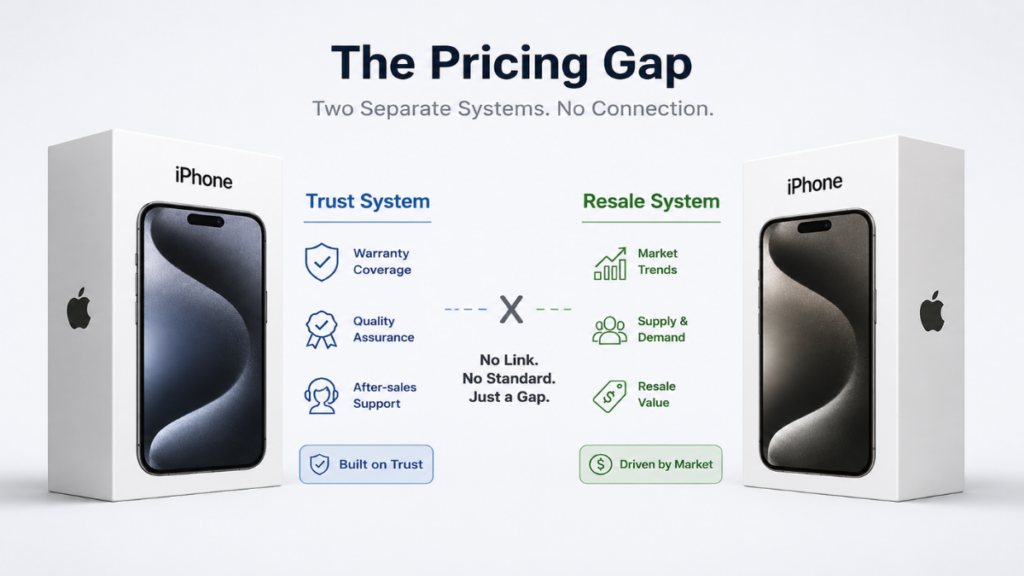
The massive price reduction you see on an Open-Box iPhone is essentially a premium paid for the “Sealed Trust System.” You are not paying for the phone; you are paying for the guarantee that you are the first owner.
Sealed vs open-box: two separate pricing systems
Retailers operate two distinct systems. The primary system is built on brand-new stock with full manufacturer support. The secondary system—where the Open-Box iPhone resides—is built on clearance logic, designed to liquidate stock that cannot be labeled as new.
Why open-box is discounted despite identical performance
The discount is a form of risk mitigation. Retailers are aware that they cannot sell an unsealed item at the same price as a new one because the market would immediately reject it. The price drop is not a reflection of the phone’s performance; it is a concession to the consumer’s demand for a “new” guarantee.
Price drops reflect commercial risk, not hardware issues
Every time an item is returned, it creates a cost. The price reduction on an Open-Box iPhone is a way for the retailer to recover lost revenue from the initial transaction and encourage a quick exit for the item from their warehouse.
Open-box iPhone is not a single category but a mix of many
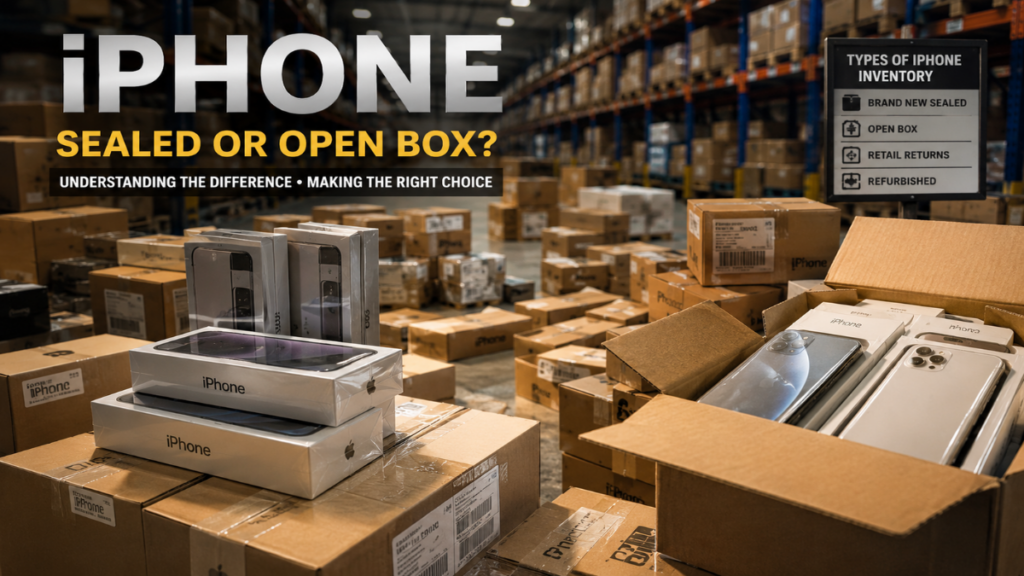
When you buy an Open-Box iPhone, you are rarely getting a uniform product. You are getting a device from an inventory pool that includes wildly different histories.
Display units (demo units)
These units have been handled by hundreds of potential customers, left powered on for weeks, and subjected to the environmental stress of a retail store. Yet, they are frequently grouped with other types of open-box goods.
Customer returns that happened almost immediately
Some users return a device because they didn’t like the color or the screen size. These units are often the “best” of the open-box category, having seen only hours of use, but they are still branded with the same discount label.
More Read

Seal broken for inspection but never used
These are the unicorns of the market. The box was opened, someone checked the contents, and it was closed back up. This Open-Box iPhone is essentially new, but it carries the same risk profile in the eyes of the retailer as a unit that has been heavily used.
The impossibility of knowing the true origin
Retailers rarely provide a detailed log of why an item was returned. As a buyer, you are often left guessing if your unit was a 5-minute return or a 30-day display model.
Why buyers feel cheated even when the device works normally
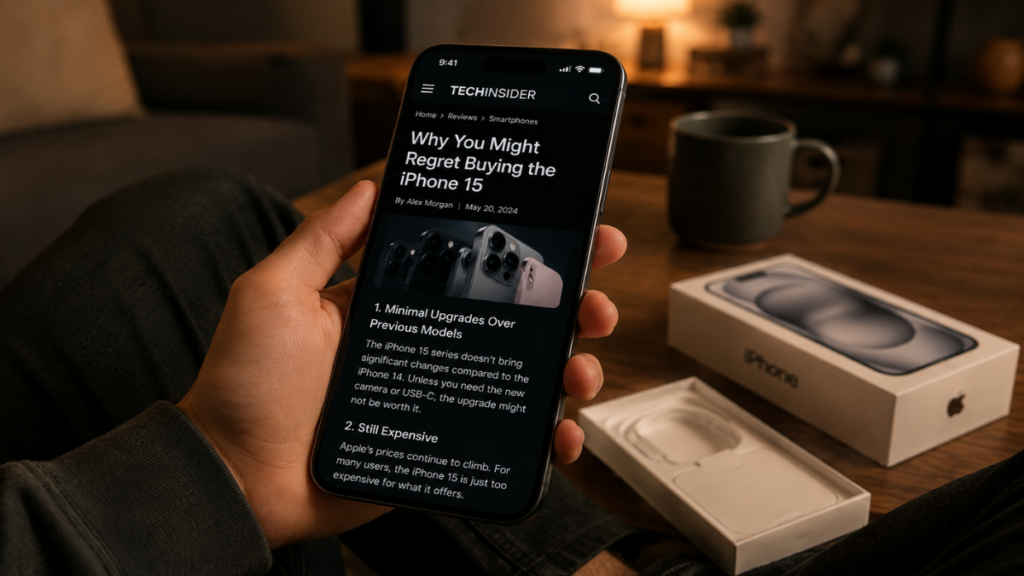
The frustration often stems from a mismatch between expectations and reality. We are trained to think that “like-new” means “new,” but the retail industry uses the term as a category, not a description.
The expectation of ‘like new’ versus the reality
We want to believe that an Open-Box iPhone is just a cheaper version of a new phone. When we find even a microscopic speck of dust or a slightly misaligned cable, we feel betrayed because we were promised “like new.”
The psychological loss of trust
When a device’s technical specifications (like a clean battery) don’t match the social stigma of an unsealed box, it creates cognitive dissonance. You have the hardware, but you don’t have the “new product experience.”
The ambiguity between physical and commercial states
The issue is that “physical state” is objective, but “commercial state” is subjective. An Open-Box iPhone can be physically perfect but commercially tainted, and the buyer feels this tension every time they look at the phone.
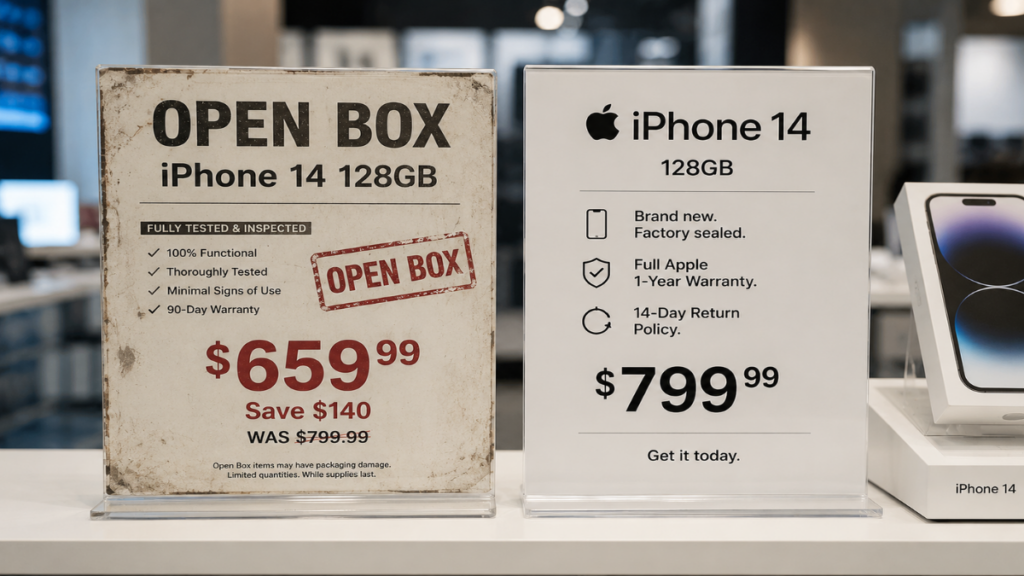
Why an iPhone can be both a ‘great deal’ and ‘unreliable’
Experience with an Open-Box iPhone depends entirely on the ecosystem in which it is purchased.
The role of the source: retailer vs. marketplace
A major electronics chain handles an Open-Box iPhone with standardized protocols. A random third-party marketplace, however, might be selling a refurbished unit disguised as open-box. The source is the only meaningful indicator of reliability.
Experience depends on where you buy
Buying from an authorized channel versus an unknown seller creates two completely different risk profiles. The product is the same, but the protections, warranties, and return policies change everything.
No common standard for ‘open-box grading’
There is no industry-wide certification for grading. One store’s “excellent” Open-Box iPhone might be another store’s “fair” condition, making the shopping experience highly unpredictable.
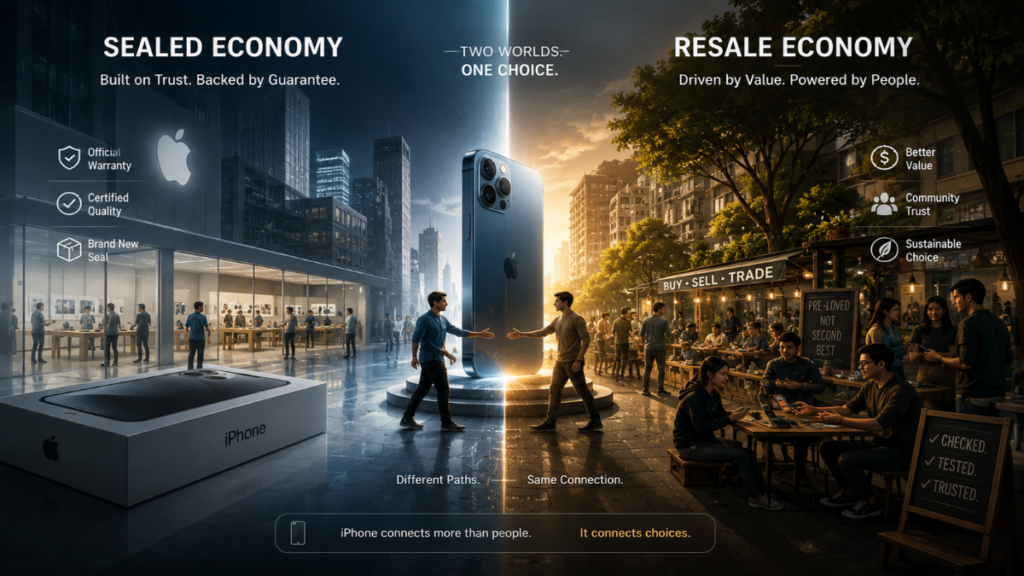
You are comparing two ways markets define value
The final takeaway is simple: you aren’t really comparing two phones. You are comparing two different systems of trust.
Sealed trust system
The sealed system is about offloading all risk to the manufacturer. You pay more, but you are buying a promise of perfection.
Resale and return system
The resale system is about managing the consequences of human behavior—returns, errors, and curiosity. This system prices items based on how quickly they can be moved, not how well they perform.
Two systems that never meet
These worlds run parallel. When you buy an Open-Box iPhone, you are opting out of the sealed trust system and into the resale and return system. Understanding this, rather than focusing on cycle counts, is the secret to successful tech shopping.
Conclusion
Zero cycle counts and pristine screens are tempting indicators, but they are secondary to the retail system from which your Open-Box iPhone originates. By recognizing the difference between the “sealed trust system” and the “resale and return system,” you can navigate the market with clarity. The price gap isn’t about the hardware; it’s about the peace of mind that only a factory seal can buy.
LEAVE A COMMENT FOR EXPERT ADVICE OR FOLLOW THE COUCH INSIDER WEBSITE TO UPDATE THE LATEST KNOWLEDGE.