

The Apple supply chain hierarchy is widely regarded as the most sophisticated and opaque industrial network in the global economy. While the casual observer only sees the polished finish of a new iPhone or the seamless display of a MacBook, the machinery powering these innovations is hidden deep within a complex “Supplier Pyramid.”
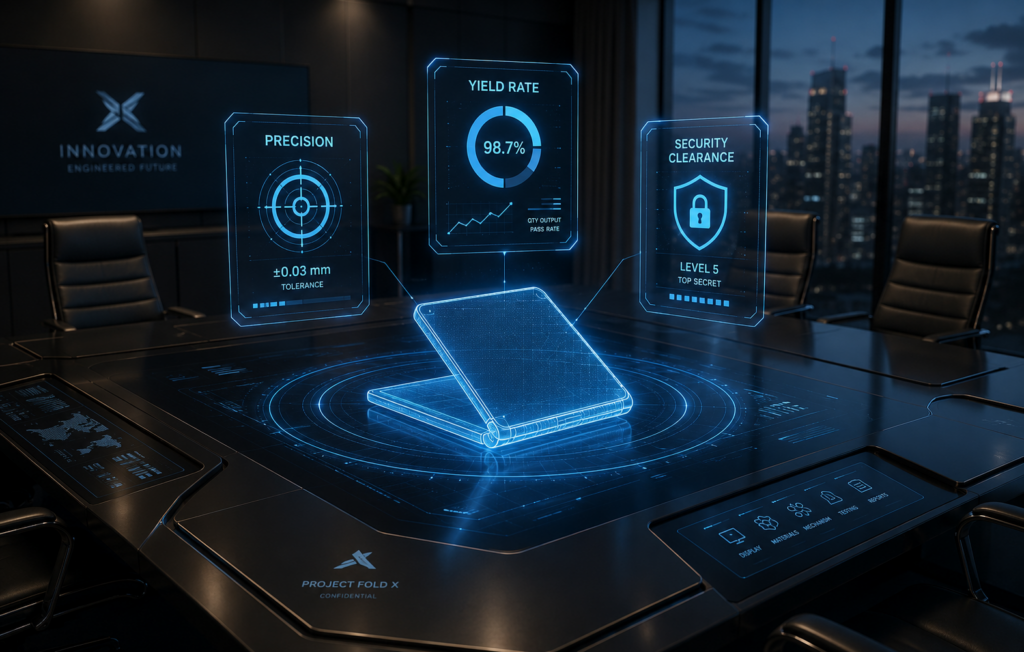
When Apple embarks on developing a revolutionary, unannounced product—such as the elusive foldable series—the selection of who builds it is not merely a logistical arrangement; it is a high-stakes security maneuver. Understanding this hierarchy is the only way to grasp how a company manages to produce over 200 million devices annually while keeping its most disruptive secrets under absolute lock and key.
How Does Apple Decide Which Supplier Gets Its Most Secret Products?
Apple does not gamble when it comes to R&D. The selection of Apple manufacturing partners for top-secret devices follows a proprietary “Pyramid Filtering” process that prioritizes capability, security, and proven history above all else.
Read more: 12 Essential Insights Into How the Apple Supplier Security Strategy Has Changed.
Tier 1 Strategic Partners: The Inner Circle
“In the complex ecosystem of the Apple supply chain hierarchy, the true secret is not the technology itself, but the invisible network of trust that Apple weaves between its most elite manufWhy Apple separates components across different companieacturing partners.”
Senior Industry Researcher
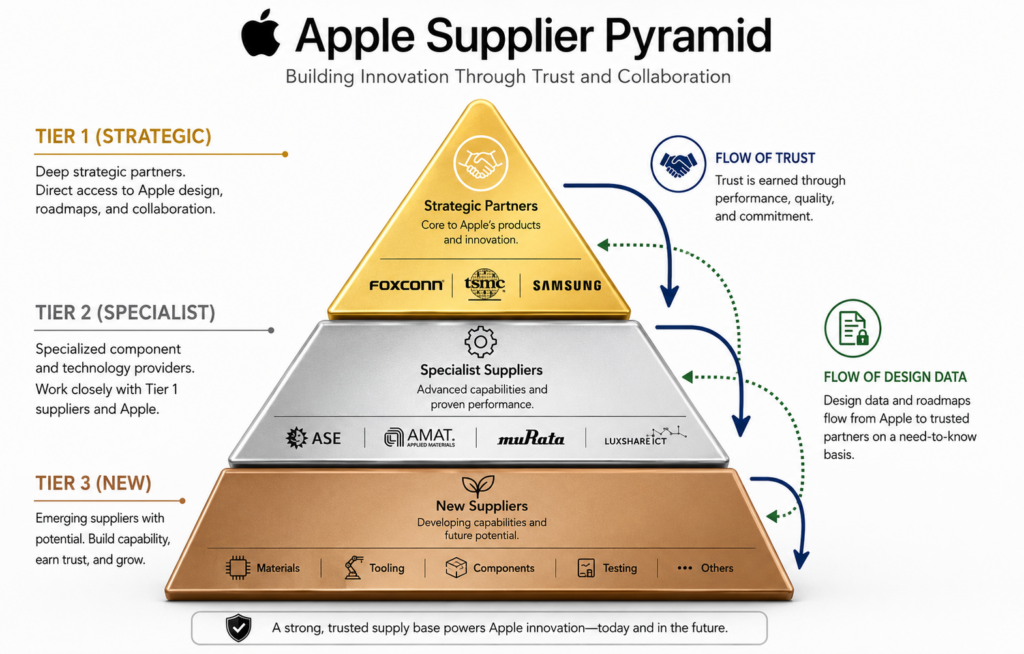
At the absolute peak of the Apple supply chain hierarchy, companies like Foxconn, TSMC, and Samsung Display act as physical extensions of Apple’s Cupertino engineering team. These partners are granted early access to blueprints precisely because they possess the massive capital required to pivot their entire factory lines for a new, unreleased device.
For an Apple manufacturing partner to reach Tier 1, they must demonstrate an ability to handle extreme production volumes while maintaining near-zero tolerance for error. They are the backbone of every major launch and represent the highest level of mutual dependence.
Tier 2 Manufacturing Specialists: The Precision Engine
Tier 2 Apple manufacturing partners such as Murata, Amphenol, or Lens Technology occupy the middle of the Supplier Pyramid. They provide essential, highly proprietary components—from acoustic modules to advanced glass. Apple selects them based on their singular, world-class mastery of a specific technology.
Unlike Tier 1, these partners are often focused on the science of the component rather than final product assembly. Their role in the Apple supply chain hierarchy is defined by “technical irreplaceability”; if they disappeared, the quality of an iPhone’s camera or haptics would immediately plummet.
Tier 3 New Manufacturing Partners: The Emerging Growth
The base of the Apple supply chain hierarchy includes newer entities like Tata or early-stage Luxshare. These companies are currently proving their worth, often focusing on expanding Apple’s footprint in new markets like India or Vietnam. Apple utilizes these partners to test their ability to handle less critical tasks or legacy model maintenance.
For these firms, the Apple supply chain hierarchy acts as a ladder—if they can consistently meet Apple’s stringent quality standards without a security breach, they eventually move up the pyramid to gain access to more sensitive, secret-product workflows.
Key Criteria for Apple’s Secret Partner Selection
When choosing which of its Apple manufacturing partners will handle a secret project, Apple evaluates them against a strict scorecard.
Manufacturing precision and yield rates
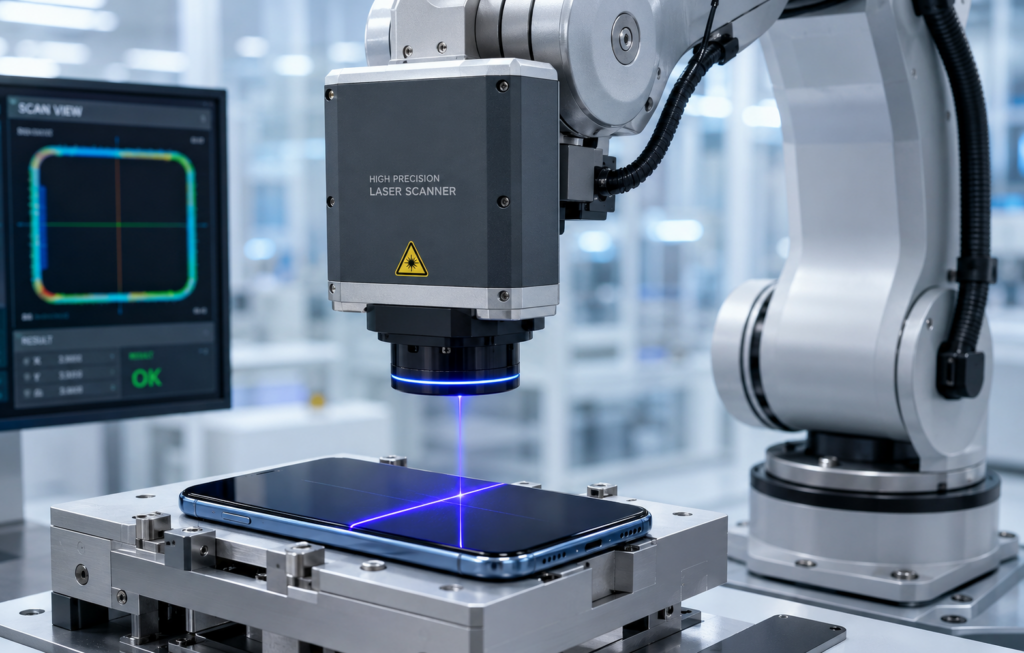
A partner’s [manufacturing yield rates] are the most critical metric. If a supplier cannot maintain consistent quality across millions of units without defects, they will never be entrusted with a secret product.
Proven experience with previous flagship devices
Apple favors long-term Apple manufacturing partners who have survived the “hell” of multiple iPhone launches. This experience ensures that they know how to handle the extreme pressure of Apple’s production schedules.
More Read

Can a supplier scale without sacrificing quality?
Scaling is the ultimate test. The Apple supply chain hierarchy demands that partners can move from a lab-grade prototype to a global mass-production level instantly, which is why Apple’s [global production network] remains so elite.
The Compartmentalization Strategy
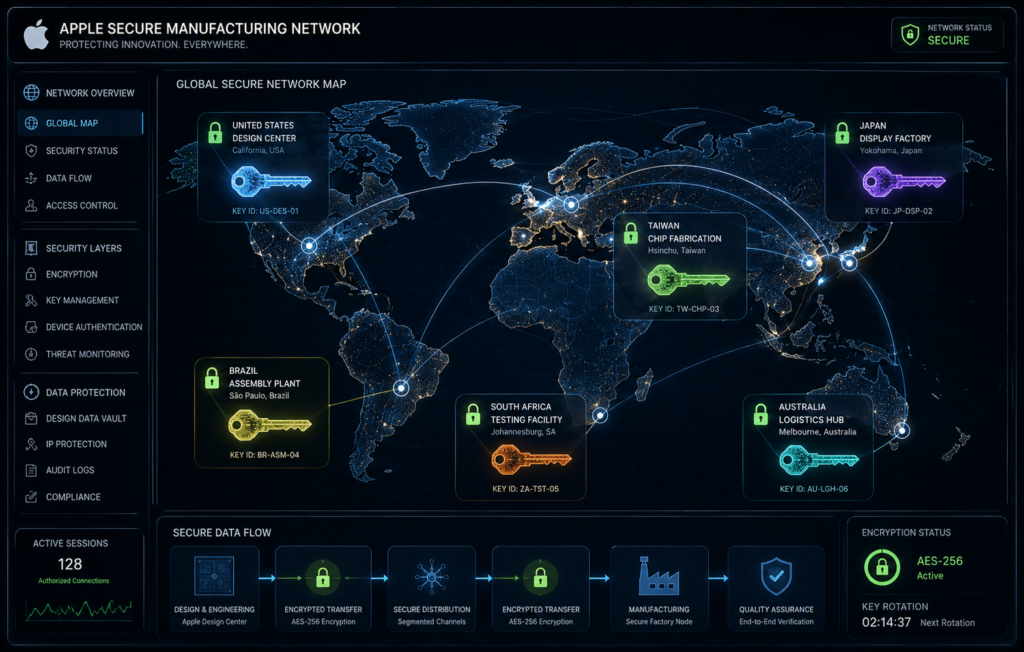
The Apple supply chain hierarchy relies on siloing data. No single entity—not even the largest Tier 1 partner—sees the entire product design.
Why Apple separates components across different companies
“Apple’s genius lies in ‘Zero-Knowledge’ manufacturing: by ensuring that no partner sees the full design, the company effectively turns its entire global production network into a secure, decentralized vault.”
Tech Economy Strategist.
By separating the display, hinge, chassis, and battery manufacturing, Apple ensures that no single entity can recreate the device independently. This compartmentalization is the strongest defense in the Apple supply chain hierarchy. If a supplier only builds the “casing,” they never see the software integration or the board design. This makes reverse engineering impossible, even if a supplier were compromised.
The compartmentalization strategy that keeps suppliers from seeing the whole picture
This “Zero-Knowledge” approach to manufacturing is why Apple can trust dozens of different Apple manufacturing partners simultaneously. They are effectively piecing together a massive puzzle where no single supplier holds the reference image. Even within the factory floor, Apple often mandates “secure zones” where only authorized personnel can enter, further limiting the information exposure for any given employee in the Apple supply chain hierarchy.
Conclusion: Why Trust is the Ultimate Currency
In the Apple supply chain hierarchy, trust is as vital as the factory equipment itself. As Apple explores new categories—from foldable devices to wearable computing—the role of its Apple manufacturing partners will continue to evolve. They are no longer just suppliers; they are essential stakeholders in the company’s innovation strategy.
For Apple, the hierarchy is not just a management tool; it is a defensive wall that protects the future of their revenue. As we look ahead, the ability of Apple to maintain this balance of extreme transparency with its partners and absolute secrecy with the public will remain the definitive feature of their enduring market dominance.
LEAVE A COMMENT FOR EXPERT ADVICE OR FOLLOW THE COUCH INSIDER WEBSITE TO UPDATE THE LATEST KNOWLEDGE.