


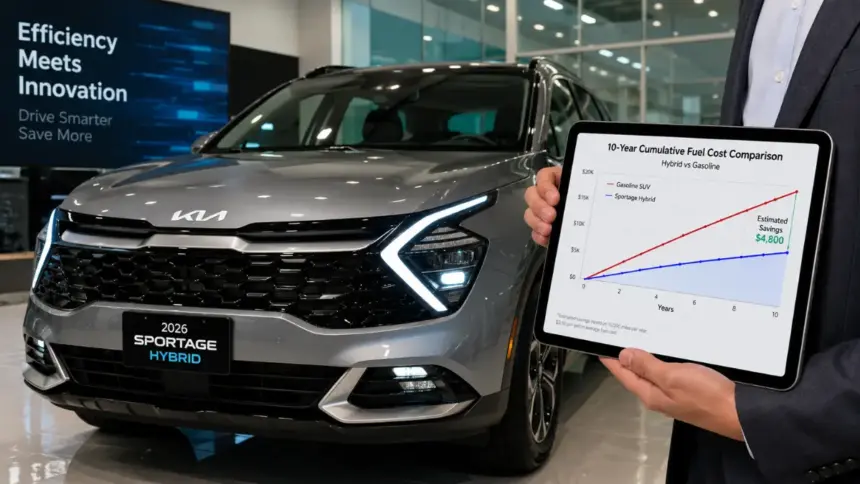
Purchasing a new compact crossover SUV involves navigating a complex landscape of upfront sticker prices, long-term operational expenses, and shifting fuel economy claims. As automotive manufacturers push electrified powertrains into mainstream segments, buyers face a pivotal financial dilemma when evaluating the Kia Sportage family. The hybrid variant comm
- Understanding the Financial Gap Between Gas and Hybrid Models
- Deciphering Real World Fuel Economy Versus Official EPA Ratings
- Calculating the Actual Fuel Cost Breakeven Point
- Honest Owner Realities and Daily Driving Experiences
- Pro Owner Starter Pack and Essential Tips and Tricks
- Long Term Reliability and Ownership Maintenance Considerations
- Final Verdict and Buying Recommendations
ands a noticeable price premium over its traditional internal combustion counterpart, forcing consumers to evaluate whether reduced gas station visits can truly offset the higher initial invoice. Calculating true financial value requires looking far beyond the window sticker to examine real-world consumption metrics, mechanical power delivery, and strict mathematical breakeven thresholds. Achieving meaningful Kia Sportage hybrid fuel savings demands a thorough understanding of driving habits, annual mileage benchmarks, and environmental factors that directly influence hybrid battery efficiency.
Understanding the Financial Gap Between Gas and Hybrid Models
Evaluating the economic argument for electrification starts with a transparent breakdown of the upfront invoice price. Trim for trim, selecting a hybrid powertrain introduces an immediate cost delta that must be recouped over time through operational efficiency.
A detailed inspection of dealer invoices reveals an average price gap ranging between $1,700 and $2,500 depending on optional equipment packages and drivetrain configurations. Comparing a conventional front-wheel-drive LX or EX gas model against an equivalent hybrid edition shows a clear initial cost surcharge.
Powertrain and Performance Comparison Overview
- Gas Variant (2.5L 4-Cyl):
- Total System Horsepower: 187 hp
- Total System Torque: 178 lb-ft
- Transmission Type: 8-Speed Automatic
- EPA Combined MPG (FWD): 28 MPG
- EPA Combined MPG (AWD): 25 MPG
- Price Position: Baseline MSRP
- Turbo Hybrid Variant (1.6L Turbo):
- Total System Horsepower: 232 hp
- Total System Torque: 258 lb-ft
- Transmission Type: 6-Speed Automatic
- EPA Combined MPG (FWD): 43 MPG
- EPA Combined MPG (AWD): 38 MPG
- Price Position: +$1,700 to $2,500 Premium
Beyond the raw financial metrics on the dealership window sticker, the two models deliver vastly different driving dynamics. The standard naturally aspirated 2.5-liter four-cylinder engine generates a modest 187 horsepower and 178 lb-ft of torque, mated to an eight-speed automatic transmission.
While functional for daily commuting, this base engine often strain under heavy acceleration or highway merging scenarios.
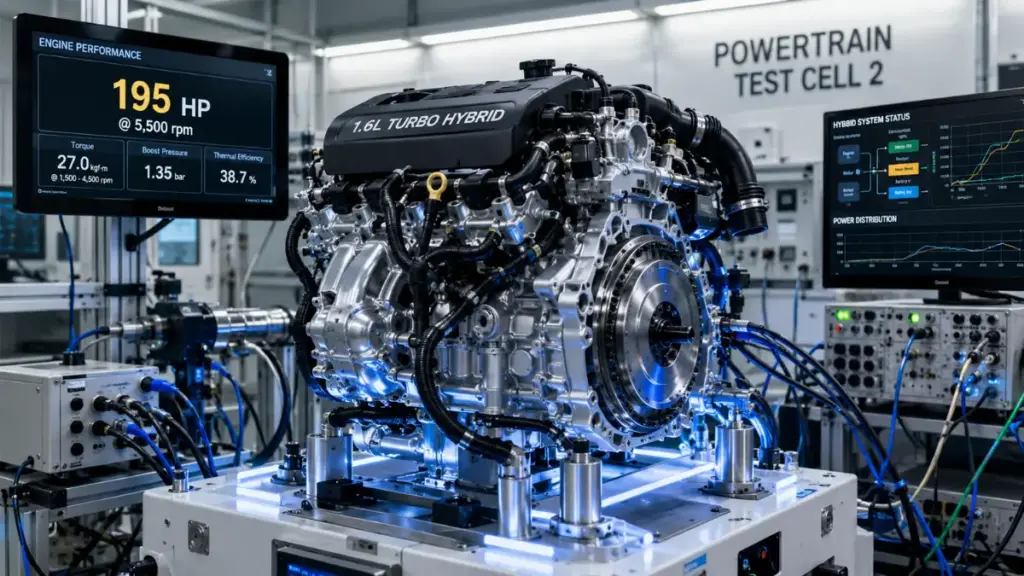
In contrast, the hybrid variant pairs a 1.6-liter turbocharged engine with a 44 kW electric motor powered by a 1.49 kWh lithium-ion battery pack. This combination yields a robust 232 horsepower and 258 lb-ft of torque delivered almost instantaneously through a six-speed automatic gearbox.
The presence of immediate electric torque eliminates the hesitation typical of non-turbocharged compact crossovers. Consequently, buyers paying the premium for the hybrid edition receive not only fuel efficiency improvements, but also a significantly more responsive vehicle during daily driving routines.
Evaluating this performance upgrade helps frame the initial cost difference as both an efficiency investment and a functional vehicle upgrade.
Deciphering Real World Fuel Economy Versus Official EPA Ratings
While the Environmental Protection Agency (EPA) provides standardized fuel economy estimates, real-world driving conditions rarely match laboratory testing protocols. Long-term testing data demonstrates that achieving expected Kia Sportage hybrid fuel savings depends heavily on driver behavior, ambient temperature, and route topology, which directly influence real-world mileage numbers.
City Commuting Versus High Speed Highway Efficiency
The hybrid powertrain achieves its maximum efficiency advantages during stop-and-go urban traffic conditions. When navigating city streets at speeds between 25 mph and 45 mph, the electric motor handles a large portion of the propulsion duties, allowing the gas engine to shut off completely during coasting and idling to maximize Kia Sportage hybrid fuel savings.
Under these specific urban driving conditions, owners routinely record efficiency figures between 38 MPG and 44 MPG, proving that Kia Sportage hybrid fuel savings can easily surpass EPA estimates in the city. Maximizing Kia Sportage hybrid fuel savings relies heavily on the regenerative braking system, which captures kinetic energy during frequent stops to continuously top off the high-voltage battery.
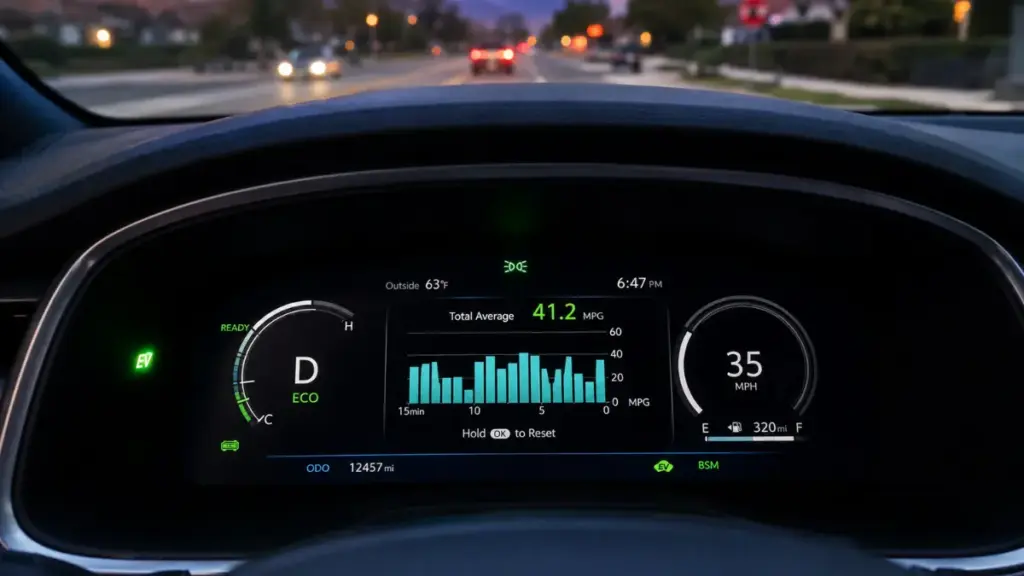
However, sustained high-speed highway driving alters this efficiency equation significantly. Traveling at interstate speeds of 75 mph to 80 mph requires continuous mechanical output from the 1.6-liter combustion engine to overcome aerodynamic drag.
At elevated highway speeds, the electric motor acts primarily as a minor power assist rather than the primary drive source. As a result, highway fuel economy figures often settle between 31 MPG and 34 MPG.
Understanding this operational distinction is crucial for prospective buyers analyzing Kia Sportage hybrid fuel savings. Drivers with daily commutes centered on suburban roads will maximize their fuel cost reduction, whereas drivers who spend most of their time on high-speed interstate highways will experience longer payback periods.
The Engine Break In Period and Long Term Efficiency Gains
A critical factor that frequently catches new owners off guard is the mandatory mechanical break-in period required for new hybrid powertrains. Brand-new vehicles rolling off the assembly line rarely achieve peak factory fuel economy ratings during their first few thousand miles of operation.
Internal engine components, piston rings, and transmission gears require a break-in period to seat properly and minimize internal mechanical friction. Furthermore, the electronic control units (ECU) continually monitor driver inputs and environmental variables to calibrate optimal air-fuel ratios and battery charging algorithms over time.
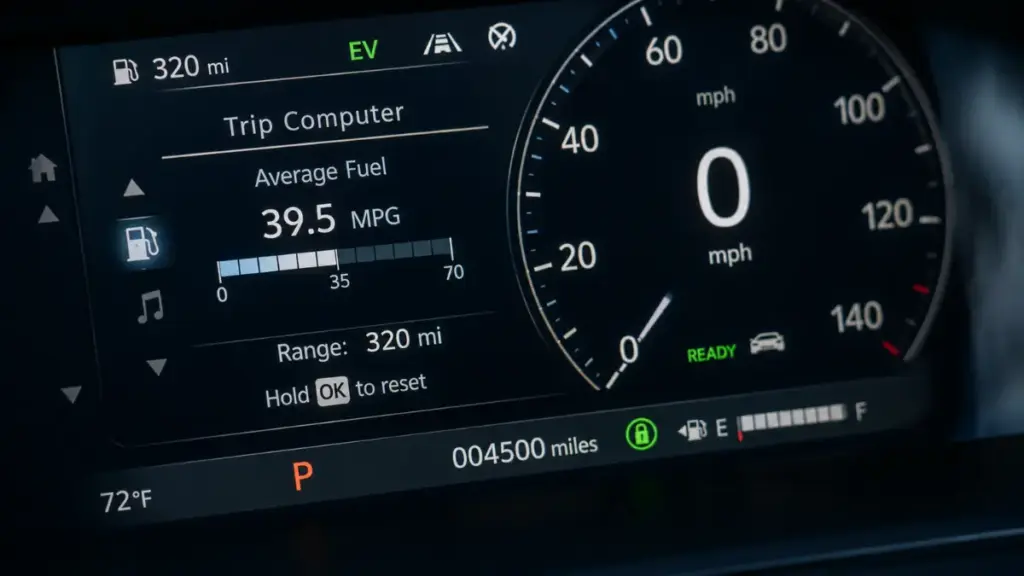
During the initial 1,000 to 2,000 miles of driving, brand-new hybrid units may report average consumption metrics in the modest 30 MPG to 32 MPG range. Anyone tracking long-term Kia Sportage hybrid fuel savings should note that once the odometer passes the 3,000 to 5,000-mile mark, internal friction decreases and thermal management systems operate at peak design efficiency.
At this stage, average fuel efficiency metrics stabilize into their expected higher ranges. Recognizing this initial burn-in window prevents drivers from making premature conclusions regarding long-term operational economy.
Calculating the Actual Fuel Cost Breakeven Point
Determining whether the hybrid variant represents a sound financial investment requires applying a rigorous mathematical formula that factors in fuel cost fluctuations, annual distance driven, and baseline mileage differences.
The Mathematics Behind Your Break Even Mileage Formula
To establish a clear financial timeline, drivers can use a standardized mathematical equation designed to isolate the exact point where cumulative fuel savings equal the initial price difference between models.
Breakeven Distance Formula (Plain Text):
Breakeven Distance in Miles = Upfront Price Premium in Dollars / [(Gas Price per Gallon / Gas Model MPG) – (Gas Price per Gallon / Hybrid Model MPG)]
To demonstrate how this formula calculates Kia Sportage hybrid fuel savings under realistic conditions, consider a scenario with an initial price premium of $2,200 for the hybrid model over an equivalent gas trim.
Assuming a constant fuel price of $3.75 per gallon, a non-hybrid model averaging a real-world combined 26 MPG, and a hybrid model averaging a real-world combined 38 MPG:
- Gas Model Cost per Mile = $3.75 / 26 = $0.1442 per mile
- Hybrid Model Cost per Mile = $3.75 / 38 = $0.0986 per mile
- Net Savings per Mile = $0.1442 – $0.0986 = $0.0456 saved per mile
- Breakeven Distance = $2,200 / $0.0456 = 48,245 miles
Under these representative parameters, the hybrid vehicle reaches full financial breakeven at roughly 48,250 miles.
“Evaluating Kia Sportage hybrid fuel savings requires looking beyond the window sticker; driving style, annual mileage, and highway speed play an equal role in determining your real breakeven timeline.”
Jade
For an average commuter driving 15,000 miles annually, achieving full recovery of the initial cash outlay requires approximately 3.2 years of ownership.

If gasoline prices rise to $4.25 per gallon, the net savings per mile increases to $0.0517, reducing the breakeven point to approximately 42,500 miles, or just 2.8 years.
Conversely, if fuel prices drop significantly or an owner drives fewer than 8,000 miles per year, the recovery period expands past the five-year mark when calculating true Kia Sportage hybrid fuel savings.
Honest Owner Realities and Daily Driving Experiences
Beyond spreadsheets and mathematical formulas, long-term vehicle satisfaction depends on daily cabin comfort, noise isolation, and interior functionality.
More Read

Cabin Comfort and Sound Insulation Advantages
An unexpected benefit of choosing the hybrid option is a noticeable improvement in cabin quietness and overall refined driving dynamics compared to many competitors in the compact crossover market.
The hybrid system starts silently in pure electric mode, eliminating the starter motor noise and low-frequency vibrations typical of conventional internal combustion engines.
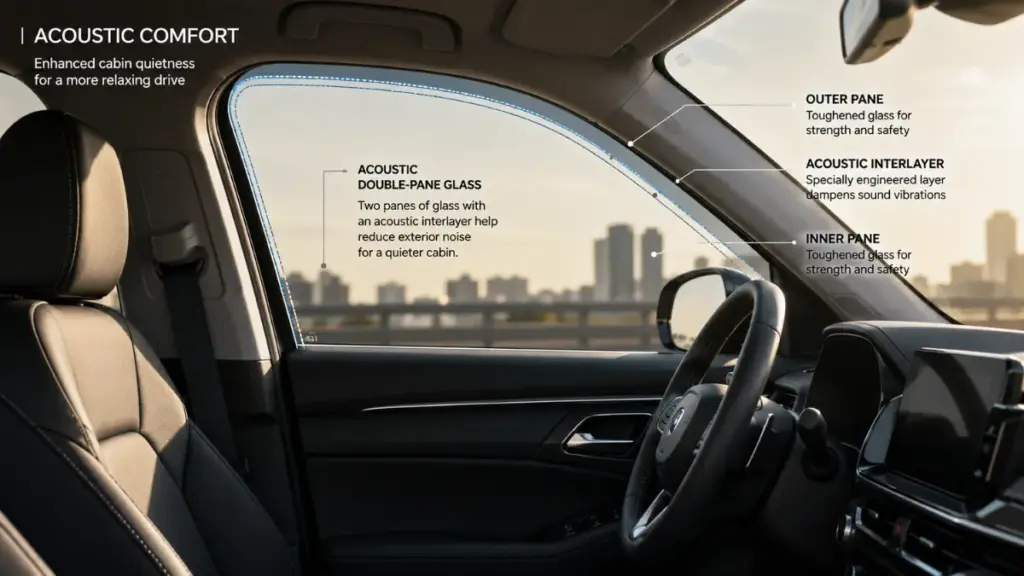
Furthermore, upper-tier trims include specialized acoustic laminated front windshield glass and thicker rear door glass insulation.
This dedicated sound dampening effectively isolates passengers from road rumble, tire roar, and wind turbulence at elevated highway speeds.
Read more: Nissan Xterra 2028: The 7 Reasons This BOF SUV Will Dominate Off-Roading
When evaluating overall value alongside Kia Sportage hybrid fuel savings, this elevated level of interior isolation creates a calm passenger environment that matches vehicles in higher luxury price brackets.
Minor Downsides and Daily Ownership Quirks
Despite its strong operational engineering, daily living with the vehicle highlights several minor ergonomic oversights that prospective buyers should consider.
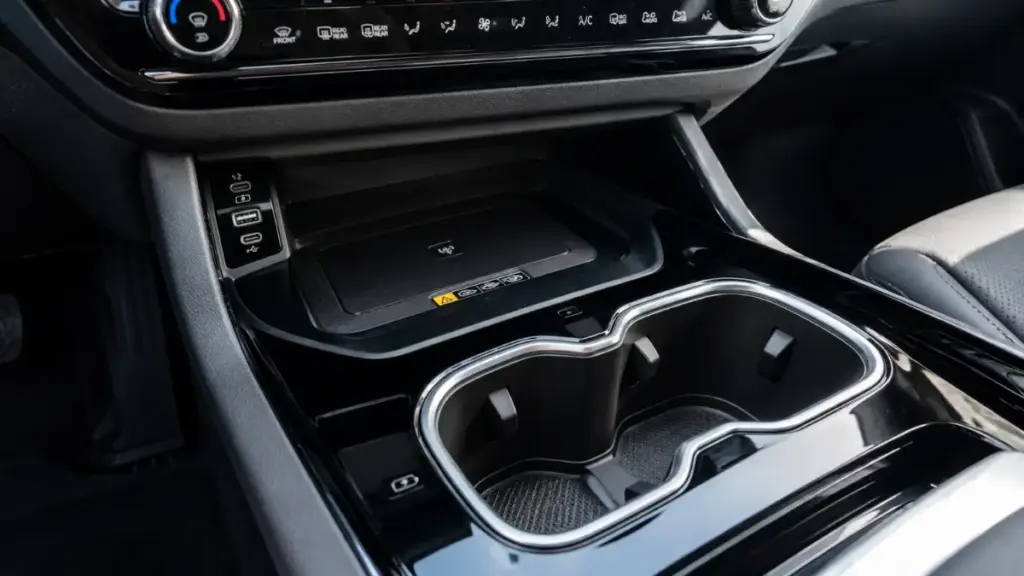
One notable missing interior feature is the absence of an overhead sunglasses holder in the roof console assembly, requiring drivers to store eyewear inside the primary center console or glove box.
Additionally, while the center console features retractable cup holder arms to accommodate larger water bottles, the remaining open storage cubby space is slightly constrained compared to some rival vehicles.
Finally, the vehicle lacks factory-installed rear recovery tow hooks, meaning roadside assistance crews must rely on chassis tie-down points during flatbed transport.
While none of these issues represent major functional flaws, acknowledging them provides a well-rounded perspective for anyone studying overall ownership expenses and Kia Sportage hybrid fuel savings.
Pro Owner Starter Pack and Essential Tips and Tricks
Maximizing the ownership experience requires mastering specific vehicle controls, electronic settings, and driving techniques unique to this platform.
Locking the Dual Purpose Touch Bar Controller
One of the most distinctive design elements inside the cockpit is the dual-purpose capacitive touch control bar situated below the main infotainment display.
This multi-function control strip alternates between physical climate controls and infotainment shortcuts at the touch of a toggle button.
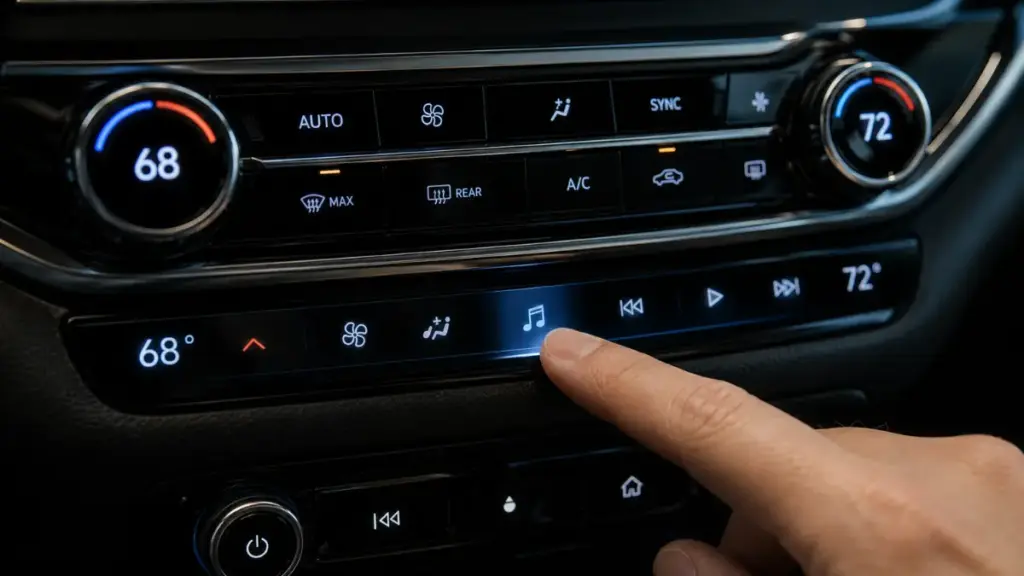
During early ownership, drivers may accidentally change the cabin temperature when attempting to adjust the audio volume, or vice versa.
To prevent this distraction, the system menu allows users to set a default screen preference.
By accessing the display settings on the primary touchscreen, drivers can lock the touch bar to automatically revert to climate control or media controls after five seconds of inactivity.
Establishing this setting eliminates accidental inputs and keeps frequently used primary controls immediately accessible.
Driving Techniques to Maximize Hybrid Regeneration
Extracting maximum efficiency from the hybrid powertrain requires adapting driving habits to work in tandem with the electric motor and regenerative braking systems.
Rather than applying sudden, aggressive pressure to the brake pedal at intersections, drivers should begin deceleration earlier using smooth, continuous pedal pressure.
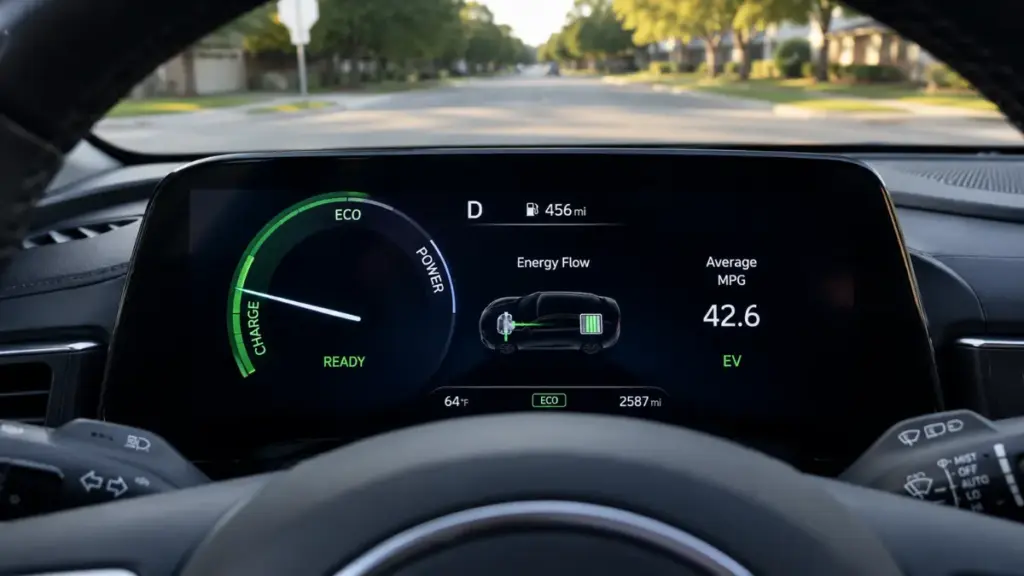
This technique keeps the regenerative braking system operating within its optimal kinetic energy capture zone, sending recovered electrical energy directly back into the battery pack rather than wasting it as friction heat through the brake pads.
Similarly, during initial acceleration from a complete stop, applying smooth, moderate throttle inputs keeps the vehicle in pure electric mode (EV Mode) up to speeds of 20 mph to 25 mph.
For drivers focused on achieving maximum Kia Sportage hybrid fuel savings, avoiding aggressive throttle inputs prevents the internal combustion engine from engaging unnecessarily during high-fuel-consumption acceleration phases, directly extending daily operational range.
Long Term Reliability and Ownership Maintenance Considerations
Maintaining peak efficiency and mechanical reliability across a long ownership cycle requires adherence to routine service intervals and proactive battery maintenance habits.
Maintenance Schedules and Battery Health Protection
While hybrid systems feature complex electronics and high-voltage battery architecture, routine maintenance requirements remain straightforward for owners.
Oil changes for the 1.6-liter turbocharged engine should occur at strict 5,000-mile or six-month intervals, using recommended full-synthetic viscosity grades.

Because the combustion engine cycles on and off repeatedly during normal driving, fresh synthetic oil is critical to protect turbocharger bearings from thermal degradation.
Furthermore, protecting the high-voltage lithium-ion battery requires keeping the air intake vents—located beneath the rear seat cushions—free from dust, pet hair, and luggage obstructions.
Unobstructed airflow ensures proper cooling during rapid charge and discharge cycles, preserving long-term battery health and protecting your ongoing Kia Sportage hybrid fuel savings.
Final Verdict and Buying Recommendations
Evaluating the economic case for the hybrid crossover leads to a clear conclusion for prospective buyers.
The decision to purchase the hybrid model over the standard internal combustion edition shouldn’t rely solely on marketing claims, but on an accurate assessment of individual driving patterns.

For individuals driving 12,000 to 15,000 miles per year with a route balance split evenly between city and suburban driving, realizing significant Kia Sportage hybrid fuel savings makes the purchase a highly sound financial decision.
The fuel cost savings will reliably offset the initial price premium within 3 to 3.5 years of daily driving.
Beyond pure economic calculations, the substantial increase in system horsepower, immediate electric torque response, quieter cabin insulation, and extended total driving range between fill-ups make the hybrid variant the superior overall vehicle choice.
Unless your driving consists almost entirely of long-distance, high-speed highway cruising with very low annual mileage, selecting the hybrid powertrain provides both immediate driving refinements and long-term financial dividends.
To track continuous performance trends across various market segments, analysts often evaluate digital marketing metrics to study evolving consumer purchasing patterns.
Understanding how buyers research powertrain options online provides deeper insight into shifting industry trends.
Analyzing long-term content ROI across automotive research hubs helps highlight how technical information drives modern consumer choices.
Ultimately, establishing active audience engagement across automotive communities ensures prospective buyers receive reliable, field-tested guidance before making major purchasing decisions.
LEAVE A COMMENT BELOW TO GET FREE EXPERT CONSULTATION OR FOLLOW OUR WEBSITE THE COUCH INSIDER TO UPDATE THE LATEST KNOWLEDGE.