
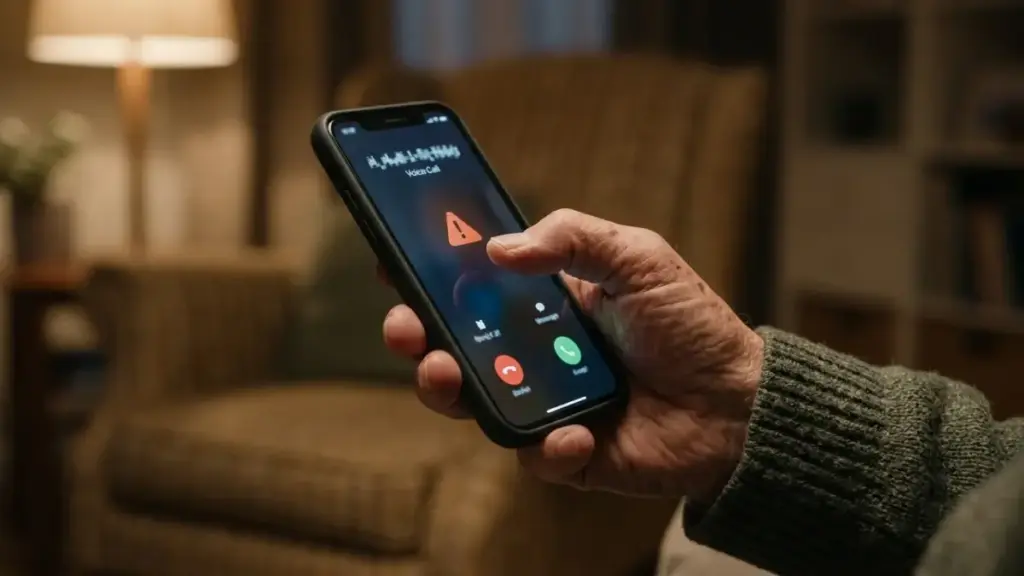
The voice on the phone sounds exactly like your grandson. He’s crying, he’s in trouble, and he needs money right now. Except it isn’t him. AI scams like this one are exploding, and older Americans are losing the most. Before you head home for the holidays, here are the five AI scams to watch for, the red flags that give them away, and a few simple steps that can protect the people you love.
Why AI scams spike at the holidays
Scams have always been around. What’s new is how convincing they’ve become. With cheap AI tools, a scammer can now copy someone’s voice from a few seconds of video, put a celebrity’s face on a fake ad, or build a polished online store in an afternoon.
The FBI’s latest Internet Crime Report, covering 2025, shows how fast this is growing:
- Americans reported about $21 billion in losses to online crime, from more than 1 million complaints.
- People 60 and older lost about $7.7 billion, up 37% from the year before.
- For the first time, the FBI tracked AI on its own: more than 22,000 complaints and about $893 million in losses tied to AI. According to AARP, older adults accounted for about $352 million of that.
The holidays make all of this worse. People are shopping online more, donating more, traveling, and talking to family they don’t see often. Scammers know you’re busy, generous and a little distracted, and that’s exactly when they strike.
The 5 most common holiday AI scams
1. The “family emergency” voice clone call

How it works: A phone rings, often late at night. The voice sounds exactly like a grandchild, son or daughter. They’ve been in a car accident, or arrested, or stranded on a trip, and they need money fast. Sometimes a second person gets on the line claiming to be a lawyer or police officer. Scammers can build the fake voice from a short clip posted on social media. The FBI specifically calls out voice cloning in these “family in distress” calls.
Red flags:
- Extreme urgency and panic: “I need it right now.”
- A request to keep it secret, especially from other family members.
- Payment by gift cards, wire transfer, cryptocurrency, or cash picked up by a “courier.”
What to do: Hang up and call your loved one back on the number you already have for them. Or ask a question only they would know, or use your family safe word (more on that below).
2. Deepfake celebrity videos and giveaways

How it works: A video on Facebook, Instagram or YouTube shows a famous person, or a trusted doctor or TV host, recommending a product, a free holiday giveaway or an investment. It looks and sounds real, but it’s AI. The Better Business Bureau recently warned about deepfake videos of celebrities, including one using Oprah Winfrey’s likeness, pushing a weight-loss supplement; one Illinois resident lost more than $400. The FBI also says deepfakes are showing up in investment scams, the type of fraud that causes the biggest losses overall.
Red flags:
- Miracle results or “guaranteed” returns.
- A “free trial” that asks for your card number.
- Pressure to buy or invest before a timer runs out.
What to do: Check the celebrity’s own verified website or social media accounts. If they’re not promoting it there, it’s fake.
3. Fake holiday stores and “too good to be true” deals
How it works: AI makes it easy to spin up a professional-looking store with polished product photos, glowing reviews and huge discounts on popular gifts. You pay, and the item never arrives, or something cheap and different shows up.
Red flags:
- Prices far below every other store.
- A website that’s brand new, with no real contact information or return policy.
- Payment only by Zelle, wire, gift card or crypto.
What to do: Shop with retailers you know, type their web address yourself instead of clicking ads, and pay with a credit card, which gives you the strongest protection if something goes wrong.
4. Romance scams with AI faces and voices

How it works: The holidays can be lonely, and scammers take advantage of that. A friendly stranger reaches out on social media or a dating site. With AI, they can send convincing photos and even appear on a short video call. After weeks of building trust, a request comes: money for a plane ticket to visit for the holidays, a medical emergency, or a “sure thing” investment.
Red flags:
- They always have a reason they can’t meet in person.
- Video calls are short, glitchy or always “bad connection.”
- Any request for money, gift cards or crypto from someone you’ve never met.
What to do: Never send money to someone you haven’t met in person. Talk it over with a family member or friend before you do anything.
5. Fake bank, government and delivery messages
How it works: A text says a package can’t be delivered. A call that sounds like your bank’s fraud department says your account was hacked. A message claims to be from Medicare or the Social Security Administration. AI makes these messages better written, and AI voices make the calls sound professional. Caller ID can be faked, so it may even show the real bank’s name. Phishing and impersonation are among the most common complaints the FBI receives.
Red flags:
- A link you’re asked to click to “fix” a problem.
- Requests for passwords, one-time codes, or your Social Security number.
- Being told to move money to a “safe account.”
What to do: Don’t click and don’t call back the number in the message. Contact the bank or agency yourself using the number on your card, statement or official website. Real banks will never ask you to move your money to protect it.
How to protect your parents and grandparents from AI scams

The best protection isn’t an app. It’s a conversation. If you’re seeing family over Thanksgiving or the holidays, take five minutes to go through these together.
1. Pick a family safe word
Choose a word or short phrase that only your family knows, something that isn’t on social media. If anyone ever calls in an “emergency” asking for money, the rule is simple: no safe word, no money. A cloned voice can copy how someone sounds, but it can’t know your secret word.
2. Agree on the “hang up and call back” rule
Make it a family habit: any urgent call about money gets a hang-up and a call back to a number you already know. A real family member won’t be offended. A scammer will lose their chance.
3. Remember the payment rule
No real grandchild, bank, police department or government agency will ever ask to be paid in gift cards, cryptocurrency, wire transfers or cash handed to a courier. Write that on a sticky note by the phone if it helps.
4. Slow everything down
Scams work by creating panic. The FBI’s advice is to “take a beat” before you act. Agree that before sending money to anyone, you’ll call one other family member first, even if the caller begs you not to.
5. Lock down what’s online
Scammers use what they can find. Set social media accounts to private, think twice before posting voice and video clips publicly, and avoid sharing travel plans in real time. The less material there is, the harder it is to fake.
6. Turn on the phone’s built-in protections
Help older relatives turn on spam call and text filters on their phone and through their carrier, and set up two-factor authentication on their bank and email accounts.
Read more: How to Stop Political Texts and Robocalls (2026 Guide)
What to do if someone you love gets scammed
First, no blame. Scammers are professionals, and these AI tools fool smart, careful people every day. Feeling embarrassed is exactly what keeps people from reporting, and reporting quickly can make a real difference.
- Stop all contact with the scammer and don’t send any more money, even if they promise to return what was taken.
- Call the bank or card company right away using the number on the back of the card. Ask them to stop or reverse the payment and secure the account.
- If gift cards were used, contact the gift card company immediately with the card numbers. Sometimes funds can be frozen.
- Report it to the FBI at ic3.gov and to the FTC at ReportFraud.ftc.gov. Write down names, phone numbers, dates, how the money was sent and where it went.
- Get free help. The National Elder Fraud Hotline (1-833-FRAUD-11, or 1-833-372-8311) helps people 60 and older report fraud and find next steps. The AARP Fraud Watch Network Helpline (877-908-3360) is free for anyone.
- Watch for a second scam. Victims are often contacted again by “recovery services” promising to get the money back for a fee. That’s another scam.
FAQ
What are AI scams? AI scams use artificial intelligence to make fraud more convincing, for example by cloning a loved one’s voice, creating deepfake videos of celebrities, or building realistic fake stores and messages.
How much do AI scams cost older Americans? According to the FBI’s 2025 Internet Crime Report, people 60 and older lost about $7.7 billion to online crime overall. AARP reports about $352 million of the $893 million in AI-related losses came from older adults.
Can scammers really copy someone’s voice? Yes. AI tools can imitate a voice from a short audio or video clip, which is why a family safe word and calling back on a known number are so important.
How can I tell if a video is a deepfake? Look for odd lip movement, strange blinking, blurry edges around the face, or a voice that doesn’t quite match. The most reliable check is simple: see whether the person is promoting it on their own verified accounts.
Where do I report an AI scam? Report it to the FBI at ic3.gov and the FTC at ReportFraud.ftc.gov. People 60 and older can also call the National Elder Fraud Hotline at 1-833-FRAUD-11.
The best way to stop AI scams is to talk about them before they happen. Send this guide to your parents, your grandparents and the family group chat, or pull it up on your phone at the Thanksgiving table and pick your safe word together.
At The Couch Insider, we cover the tech that shows up in your living room, the good and the shady. Bookmark The Couch Insider and follow us for more guides that keep your family safe and a step ahead.