


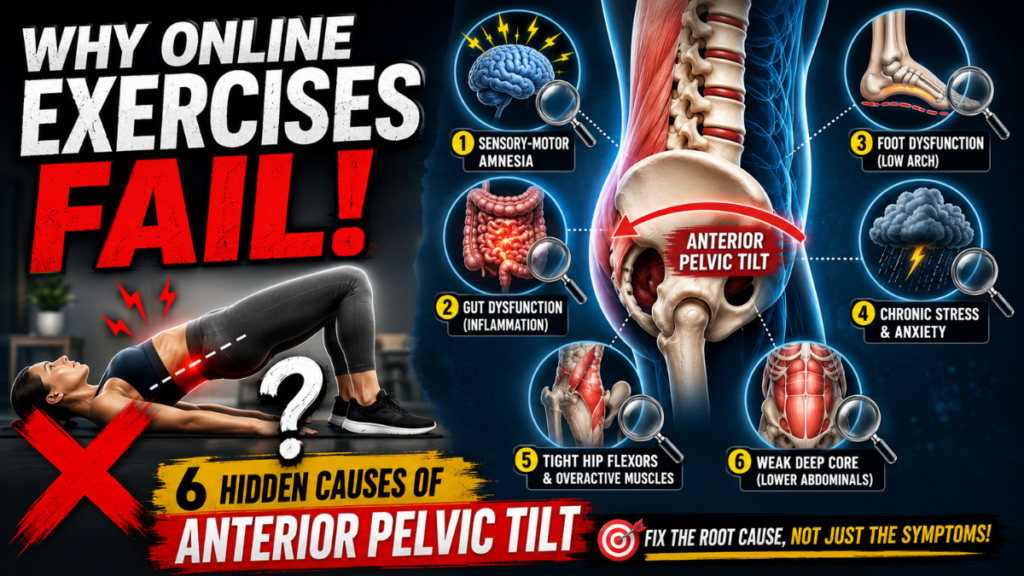
You’ve spent weeks stretching your hip flexors and doing glute bridges alongside YouTube workout videos, yet your Anterior Pelvic Tilt (APT) hasn’t improved. The frustrating truth is that generic online exercise routines completely overlook the complex neurological and biomechanical factors unique to each individual. If your posture correction has stalled, it isn’t because you’re not working hard enough—it’s because you’re trapped by six hidden systemic issues that muscle exercises alone cannot solve. Let’s explore the real science behind APT, why your pelvis becomes “locked” in place, and how leading movement specialists actually address the condition.
The Real Biomechanics Behind Anterior Pelvic Tilt
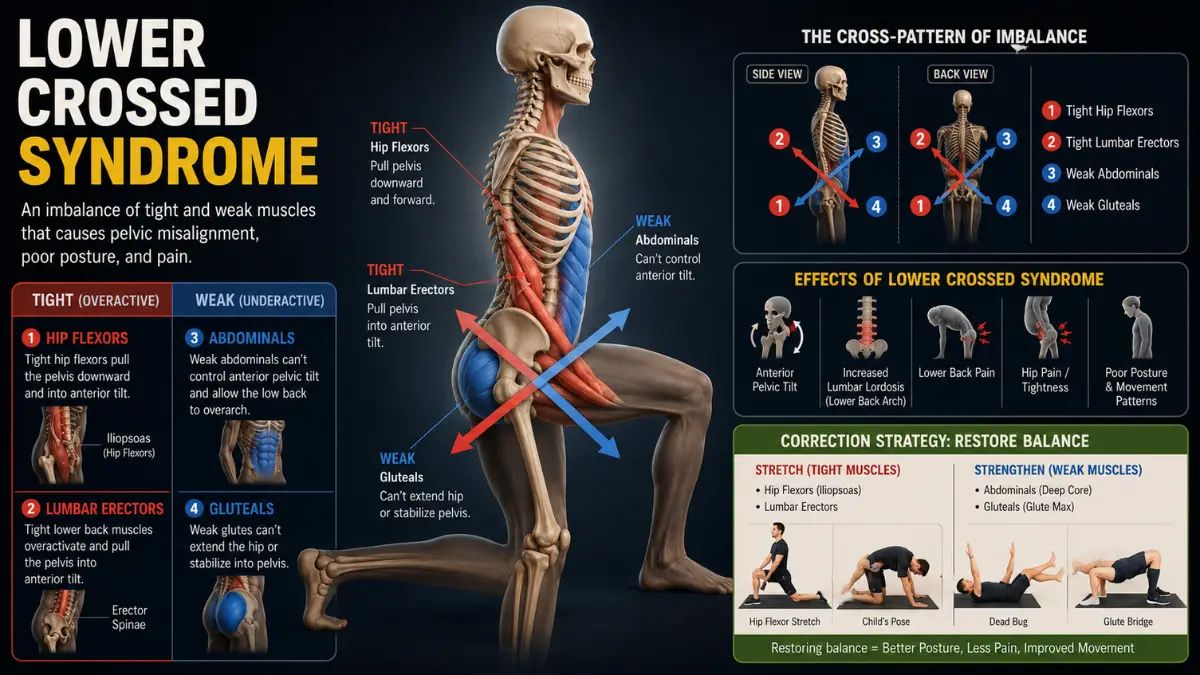
Anterior Pelvic Tilt is far more than a simple skeletal misalignment. It is primarily driven by Lower Crossed Syndrome—a chronic neuromuscular imbalance that creates a self-perpetuating dysfunctional movement pattern.
Why It Happens
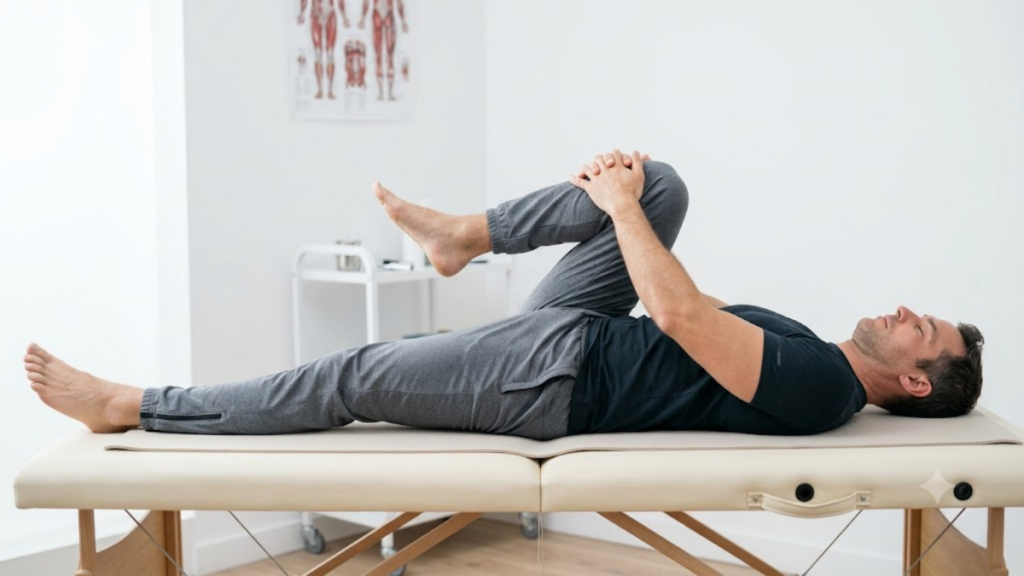
A sedentary lifestyle and prolonged sitting gradually shorten and tighten the hip flexor muscles. This constant tension pulls the front of the pelvis downward into an anterior tilt.
At the same time, the glutes and deep abdominal muscles become neurologically inhibited through a process known as reciprocal inhibition. Instead of providing pelvic stability, they become lengthened, weakened, and unable to counterbalance the excessive pull from the front of the body.
Key Insight: Strengthening your glutes alone will not correct Anterior Pelvic Tilt. Unless your nervous system first reduces excessive hip flexor tension, the opposing muscle imbalance simply recreates the same faulty posture.
Common Signs of Anterior Pelvic Tilt Beyond Appearance
Many people assume APT is purely a cosmetic issue. In reality, it produces noticeable functional symptoms throughout the musculoskeletal system.
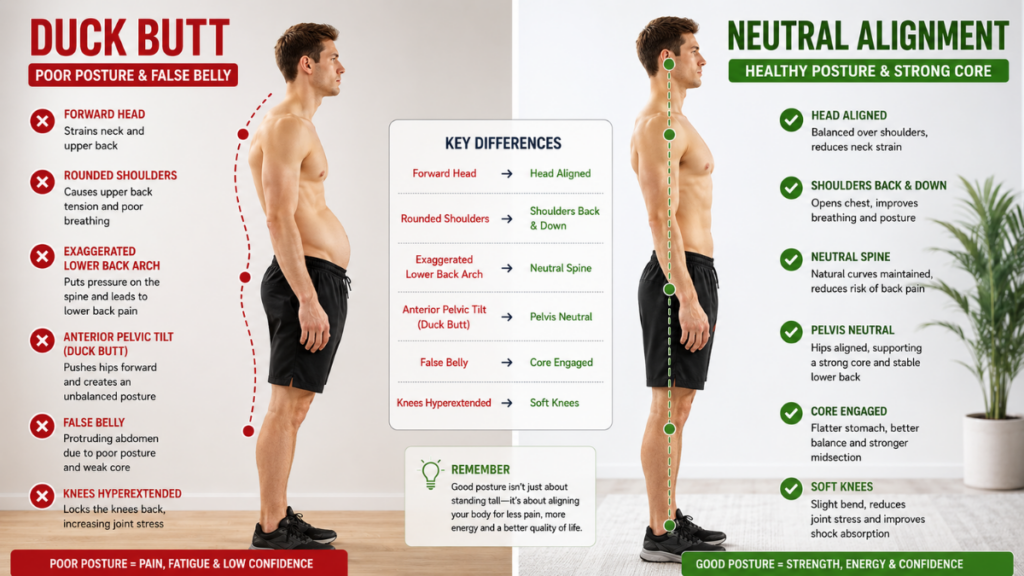
- The “Lower Belly” Illusion: Even with low body fat, the lower abdomen protrudes because the pelvis rotates forward rather than because of excess fat.
- Duck Butt Posture: The buttocks stick out excessively while standing, creating an exaggerated lumbar arch and uneven clothing fit.
- Persistent Lower Back Pain: Standing or walking for just 15–20 minutes often leads to dull aching pain in the lower back, making simple daily activities uncomfortable.
- Knee Instability (Dynamic Valgus): The knees collapse inward during squats, stair climbing, or walking, increasing stress on the kneecap and surrounding cartilage.
The Hidden Damage Caused by Improper Training
Here’s the uncomfortable truth: memorizing popular online stretches while ignoring the underlying dysfunction is like gambling with your spine.
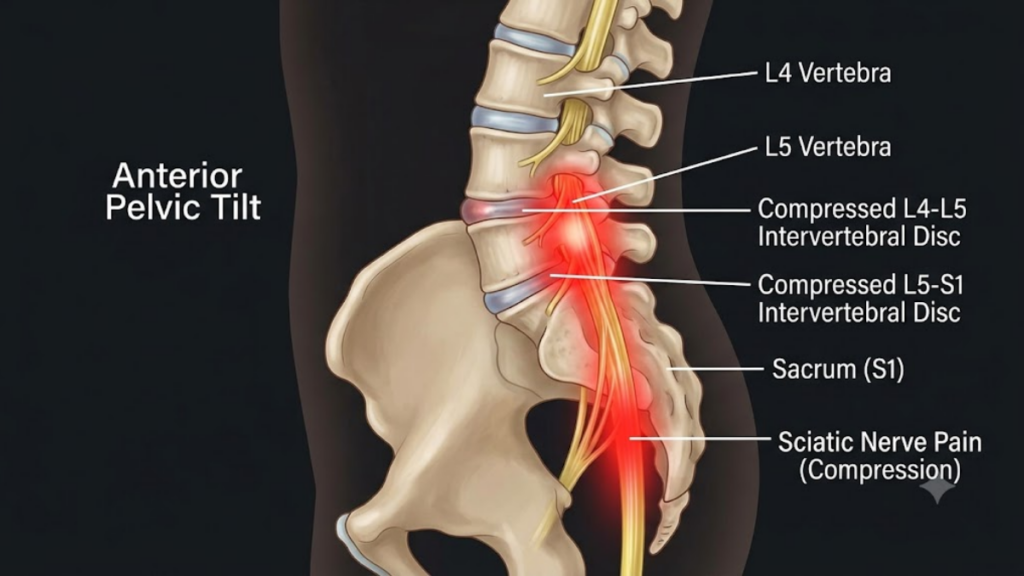
Anterior Pelvic Tilt is not merely a cosmetic concern—it fundamentally alters spinal mechanics.
Common Mistake: Constantly bracing your abdominal muscles to flatten your back only increases compressive loading on already stressed lumbar discs instead of correcting the underlying movement dysfunction.
Potential Consequences
- Lumbar Disc Compression (L4-L5 & L5-S1): Forward pelvic rotation dramatically increases pressure on the lower lumbar discs, raising the risk of disc degeneration, herniation, and sciatic nerve irritation.
- Premature Knee Degeneration: Internal rotation of the femur changes patellar tracking, contributing to chronic inflammation, cartilage wear, and knee pain during running or weightlifting.
The Six Hidden Reasons Your Anterior Pelvic Tilt Never Improves
Before searching for another exercise routine, determine whether your condition is structural or functional by performing a simple Wall Test.
Structural vs. Functional Anterior Pelvic Tilt
| Factor | Structural | Functional |
| Cause | Congenital skeletal anatomy or hip orientation | Neuromuscular imbalance caused by posture, lifestyle, or injury |
| Wall Test | Unable to flatten the lower back even with maximum abdominal effort | Can flatten the lower back temporarily but immediately returns to excessive arching |
| Primary Treatment | Specialized rehabilitation and manual therapy | Neuromuscular retraining combined with movement correction |
If your condition is functional, these six hidden factors may be preventing recovery.
More Read

1. Sensory-Motor Amnesia
Years of poor posture cause the brain to accept pelvic misalignment as the new “normal.” When you consciously attempt to correct your posture, the nervous system interprets it as unfamiliar and responds by increasing muscle tension.
Solution: Use Pandiculation, involving a gentle contraction followed by an extremely slow release, to retrain the brain instead of aggressively stretching.
2. Chronic Psoas Muscle Guarding
The psoas muscle is closely connected to the sympathetic nervous system. Chronic stress keeps it contracted through the body’s fight-or-flight response.
One hour in the gym cannot overcome twenty-three hours of continuous neurological tension.
Ri
Solution: Combine Box Breathing (4-4-4-4) with Trauma Release Exercises (TRE) to activate the parasympathetic nervous system.
3. Visceral Reflexes from Digestive Dysfunction
Digestive inflammation, bloating, or Irritable Bowel Syndrome (IBS) can trigger protective muscular reflexes that tighten the psoas while simultaneously inhibiting the abdominal wall.
Solution: Follow a Low-FODMAP anti-inflammatory diet for two weeks while incorporating gentle abdominal massage.
4. Natural Organ Asymmetry
Human anatomy is naturally asymmetrical. The liver, diaphragm, and internal organs subtly shift body weight, causing many individuals to habitually load one side more than the other.
Traditional symmetrical exercises often fail to address these three-dimensional asymmetries.
Solution: Retrain weight distribution through unilateral standing and sitting strategies.
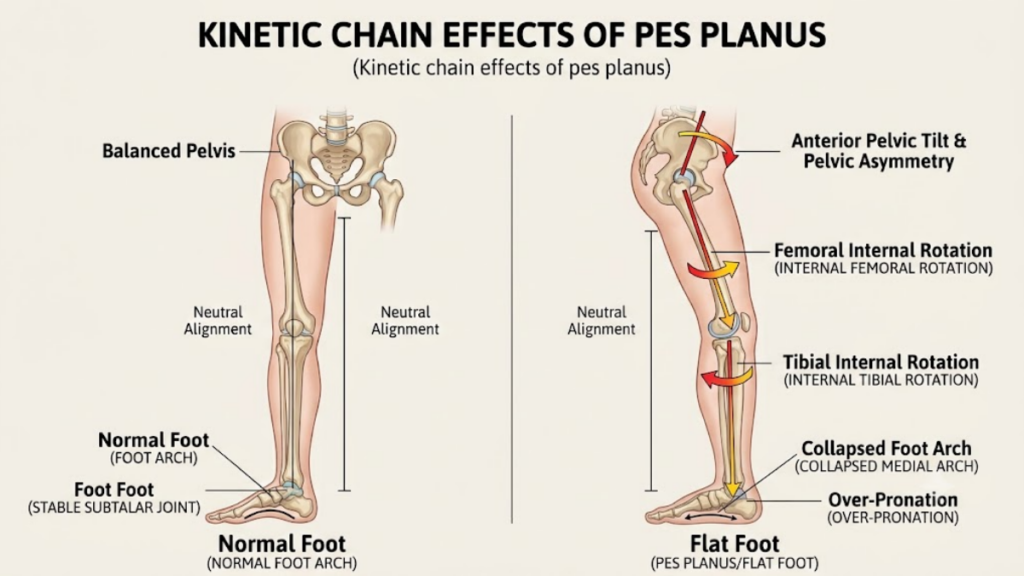
5. Flat Feet and Collapsed Foot Arches
The body’s fascial system connects the feet to the pelvis. Collapsed arches encourage internal rotation of the lower limbs, which ultimately contributes to anterior pelvic tilt.
Solution: Perform the Short Foot Exercise daily and consider custom orthotics when appropriate.
6. Vestibular and Visual Compensation
Your brain prioritizes keeping your eyes level with the horizon. Poor vision, uneven prescriptions, or habitual head tilting force compensatory spinal and pelvic adjustments.
Solution: Ensure accurate vision correction and perform Vestibulo-Ocular Reflex (VOR) training.
Frequently Asked Questions
Can Anterior Pelvic Tilt be permanently corrected?
Yes, if the condition is primarily functional rather than structural. Long-term success requires neuromuscular retraining, movement correction, and consistent habit changes.
How long does it take to improve Anterior Pelvic Tilt?
Many people notice reduced lower back discomfort within 2–4 weeks. Meaningful postural changes typically require 3–6 months of consistent rehabilitation.
Do posture correctors help?
No. Passive posture braces often weaken the core muscles over time and fail to address the neurological causes of pelvic misalignment.
Is walking good for Anterior Pelvic Tilt?
Walking is beneficial, but only when performed with proper pelvic positioning. Walking with excessive anterior tilt may reinforce dysfunctional movement patterns.
Can Anterior Pelvic Tilt make me appear shorter?
Yes. Excessive lumbar lordosis compresses spinal alignment. Restoring a neutral spine can improve standing posture and may increase apparent height by approximately 1–3 cm.
Conclusion
Fixing Anterior Pelvic Tilt is not just about doing more stretches or copying another online workout routine. The real goal is to understand why your pelvis keeps returning to the same faulty position, then correct the deeper neurological, muscular, and biomechanical causes behind it.
At The Couch Insider, we break down complex health and posture issues into practical, easy-to-follow guides. Explore more of our spinal health and movement articles to better understand your body, reduce daily discomfort, and build long-term postural strength.