



Mile run performance serves as a powerful biological metric for measuring VO2 Max, cellular aging, and overall cardiorespiratory longevity. Based on concepts from the classic Cooper test, how fast you can complete a 1-mile distance provides direct insight into your aerobic capacity and heart health. Evaluating your pace against age-based benchmarks helps determine whether your cardiovascular system is aging gracefully or lagging behind. Discover where you stand on the mile run chart, how to utilize Heart Rate Zones, and how Zone 2 Cardio training can systematically boost your aerobic threshold.
- Why the Mile Run Results Serve as the Gold Standard for Cardiorespiratory Longevity
- Mile Run Pace Benchmarks by Age: Where Do You Stand on the Health Scale?
- Key Influencing Factors and Common Mistakes During the Mile Run Test
- Actionable Strategies to Optimize Mile Run Performance Using Zone 2 Cardio
- Practical Execution and Safety Recommendations for the Mile Run Test
- Frequently Asked Questions About the Mile Run Baseline
- Elevating Cardiorespiratory Health Through Consistent Mile Run Benchmarking
Completing a Mile Run in under 8 minutes for a 30-year-old male or under 9 minutes for a 30-year-old female represents an optimal cardiovascular threshold that correlates strongly with superior VO2 Max and reduced long-term mortality risk.
Why the Mile Run Results Serve as the Gold Standard for Cardiorespiratory Longevity
The Direct Link Between 1-Mile Pace and VO2 Max Absorption
Cellular Oxygen Transport and Consumption Under Sustained Exertion
When executing a high-effort Mile Run, your body demands an immediate surge in ATP synthesis. Red blood cells must rapidly transport oxygen molecules from pulmonary capillaries through the arterial highway into twitching skeletal muscle fibers. The efficiency with which your mitochondria consume oxygen under intense physical strain dictates your sustained velocity across the track.
Why High VO2 Max Is Recognized as the Premier Biological Longevity Predictor
Medical research demonstrates that VO2 Max is far more than an athletic vanity metric. Higher functional aerobic capacity directly shields the human system against early vascular calcification, metabolic syndrome, and microvascular decay. Standardizing your effort through a periodic Mile Run offers a clear window into your functional cardiorespiratory reserve.
Read more: Mile Walk Test: 1 Woman’s Agonizing Injury Pitfall You Must Avoid
Impact of the 1-Mile Fitness Assessment on Vascular Elasticity and Mitochondria

Cellular Aging Rate and Muscle Mitochondrial Density Reflected in Completion Time
Your total time on a single Mile Run correlates directly with capillary density in peripheral muscles. Young, resilient muscle tissues house dense networks of power-generating mitochondria. As cellular aging accelerates, mitochondrial density drops, causing rapid lactate accumulation and early exhaustion at lower running speeds.
Comparative Evaluation: 1-Mile Speed Assessment vs. the 12-Minute Cooper Test
While the classic 12-minute Cooper test measures total distance covered in a fixed window, the standardized Mile Run fixes the distance variable and measures time output. Both protocols effectively isolate aerobic capacity, but the 1-mile distance is vastly more accessible for self-administered field tests without complex track measuring tools.
Mile Run Pace Benchmarks by Age: Where Do You Stand on the Health Scale?
Analyzing the Standard 1-Mile Time Benchmarks Across Age and Gender
| Age Group | Male Benchmark (Optimal) | Female Benchmark (Optimal) | Male At-Risk Threshold | Female At-Risk Threshold |
| 20–39 Years | Sub-7:30 to 8:30 min/mile | Sub-8:30 to 9:30 min/mile | Over 12:00 min/mile | Over 13:30 min/mile |
| 40–59 Years | Sub-8:30 to 9:30 min/mile | Sub-9:30 to 10:30 min/mile | Over 13:30 min/mile | Over 15:00 min/mile |
| 60+ Years | Sub-10:00 to 11:00 min/mile | Sub-11:00 to 12:00 min/mile | Over 15:30 min/mile | Over 17:00 min/mile |
Standard for Ages 20–39: Minimum Speed Thresholds for Vascular Stamina
For younger adults, achieving a solid Mile Run time ensures that arterial compliance remains exceptionally high. Individuals in this bracket should target sub-8-minute times to confirm that left-ventricular stroke volume and peripheral oxygen extraction are operating at physiological peak capacity.

Standard for Ages 40–59+: Measuring Respiratory Decline and Arterial Stiffness
As biological aging progresses, arterial walls naturally lose elastin and accumulate collagen stiffness. Tracking your regular Mile Run throughout middle age provides early warning signals regarding subclinical cardiovascular decline, allowing targeted aerobic interventions before functional capacity plummets.
Read more: Group Fitness: 3 Unexpected Benefits of Working Out in a Crowd
Classifying Physical Fitness Levels Based on Real-World Performance
At-Risk Category (Over 12–15 Minutes/Mile): Poor Aerobic Capacity Indicators
Completing a Mile Run at a pace slower than 12 to 15 minutes indicates severe aerobic deconditioning or underlying pulmonary inefficiency. Individuals falling into this baseline tier face significantly heightened risks for hypertension, insulin resistance, and systemic low-grade inflammation.

Optimal Category (Under 7–9 Minutes/Mile): Excellent Youthful Cardiac Metrics
Crossing the finish line of a Mile Run in under 7 to 9 minutes places an individual in the upper tier of cardiorespiratory health. This level of physical output reflects a hyper-efficient stroke volume, minimal systemic peripheral resistance, and robust cellular metabolic flexibility.
Key Influencing Factors and Common Mistakes During the Mile Run Test
The Role of Heart Rate Zone Management Throughout the Distance
The Danger of Hitting Maximum Heart Rate (Zone 5) Too Early
Launching into a maximum-effort sprint during the first 400 meters of a Mile Run rapidly forces the heart into Zone 5. This premature anaerobic shift surges arterial hydrogen ion concentration, paralyzing muscle contraction mechanisms and forcing dramatic deceleration well before the final lap.

Identifying the Aerobic Threshold to Maintain a Steady Finishing Speed
Pacing a successful Mile Run requires remaining precisely near your anaerobic threshold until the final 200 meters. By managing oxygen debt, you preserve mechanical efficiency, prevent acute intracellular acidosis, and secure a smooth, consistent velocity across the entire four-lap duration.
The Mile Run is far more than a simple fitness test; it is an unfiltered biological report card measuring cellular vitality, arterial elasticity, and ultimate human endurance. Honor your current starting point, train intelligently with Zone 2 heart rate discipline, and watch your cardiorespiratory health transform month after month.
Marcus Vance
Physiological Variables and Technical Errors Directly Impacting Results
Impact of Body Mass Index (BMI), Lung Capacity, and Ankle Mobility
Excess non-functional adipose mass creates massive mechanical inefficiency during every foot strike of a Mile Run. Furthermore, restricted ankle dorsiflexion reduces Achilles tendon energy recoil, forcing the quadriceps to overwork and driving pulmonary ventilation to uncomfortable ceilings prematurely.

Execution Pitfalls: Starting Too Fast Leading to Acute Lactic Acid Accumulation
The most ubiquitous error in a self-tested Mile Run is an aggressive opening pace. When power demands exceed mitochondrial processing speed, pyruvate converts instantly to lactate and free hydrogen ions, creating severe muscle burning, dyspnea, and involuntary pacing failure.
Actionable Strategies to Optimize Mile Run Performance Using Zone 2 Cardio
Zone 2 Cardio Training: The Ultimate Key to Raising Aerobic Threshold Without Injury
Capillary Network Development and Mitochondrial Biogenesis at Low Heart Rates
To drastically improve your baseline Mile Run pace, counterintuitively, you must train slowly. Zone 2 cardio stimulates vascular endothelial growth factor (VEGF), spurring the creation of dense new capillary beds around slow-twitch muscle fibers while multiplying functional mitochondrial density.
More Read


Zone 2 Heart Rate Conversion Table and the “Conversational Pace” Test
Maintaining a Zone 2 effort while preparing to shave minutes off your Mile Run means keeping your heart rate between 60% and 70% of your maximum heart rate. You should be able to speak complete sentences comfortably without gasping for oxygen throughout the session.
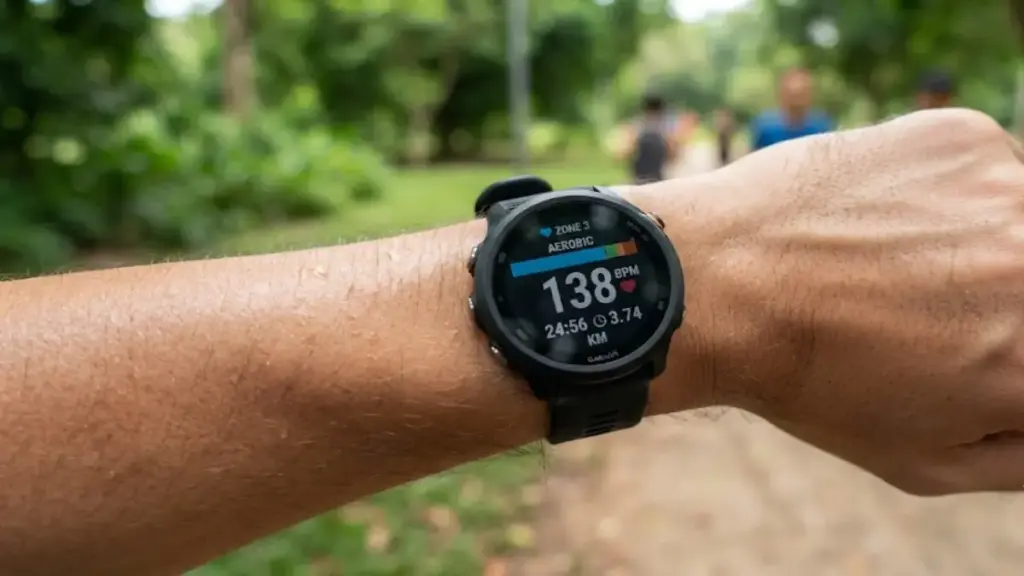
Hybrid Interval Protocols to Breakthrough 1-Mile Benchmarks Across Fitness Levels
High-Intensity Interval Training (HIIT) to Maximize Cardiac Output
Incorporating weekly 400-meter track repeats at slightly faster than target Mile Run pace conditions the left ventricle to stretch and pump maximum blood volume per beat. This neuromuscular conditioning trains the mind and body to tolerate elevated acidosis comfortably.

Combining Long Zone 2 Runs with Auxiliary Lower-Body Strength Work
Pairing weekly long base-building runs with targeted resistance exercises—such as heavy back squats, Bulgarian split squats, and calf raises—fortifies connective tissue against stress fractures while dramatically boosting kinetic energy transfer during every single stride of your Mile Run.

Practical Execution and Safety Recommendations for the Mile Run Test
Standardized Protocol for High-Precision 1-Mile Field Testing
Surface Selection (400m Track Standard) and Respiratory Warm-Up Drills
Execute your Mile Run assessment on a standardized 400-meter outdoor track (completing exactly 4 laps in Lane 1). Prioritize a thorough 15-minute dynamic warm-up including leg swings, high knees, and gradual stride-outs to prime pulmonary alveoli for heavy ventilation.

Tracking Post-Test Heart Rate Recovery (HRR) Metrics
Immediately upon crossing the finish line of your Mile Run, sit or stand still and measure how many beats per minute your heart rate drops within the first 120 seconds. A rapid drop of over 30 to 40 beats indicates superior vagal tone and excellent overall autonomic nervous system health.

Medical Guidelines to Prevent Cardiovascular Events During Maximal Exertion
Identifying Red Flag Warnings: Chest Tightness, Dizziness, or Uncontrolled Dyspnea
While a high-effort Mile Run naturally causes respiratory distress, sudden sharp retrosternal chest pressure, lightheadedness, radiating jaw pain, or severe disorientation are critical red flags requiring immediate cessation of the test and prompt medical evaluation.
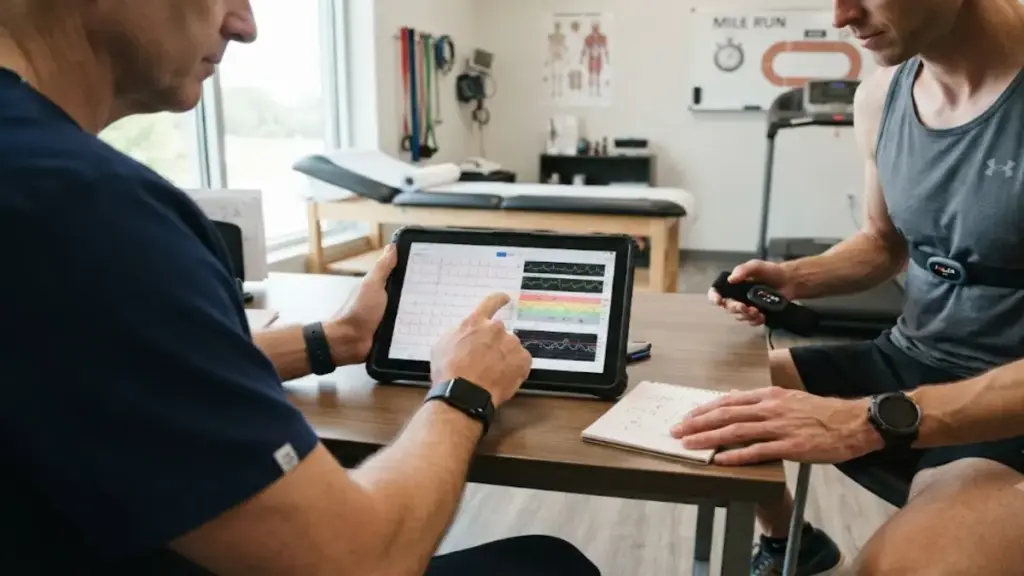
Cardiovascular Screening Advice for Adults Over 40 Prior to Speed Tests
Sedentary individuals over 40 years old should undergo an electrocardiogram (ECG) and a formal physician-supervised treadmill stress test before attempting a maximum-effort Mile Run. Ensuring underlying coronary arteries are clear eliminates acute ischemic risks during high-strain athletic endeavors.
Frequently Asked Questions About the Mile Run Baseline
How often should I re-test my timed 1-mile performance?
Re-testing your Mile Run every 8 to 12 weeks provides an ideal window to measure aerobic adaptations. Testing too frequently causes unnecessary systemic fatigue, whereas waiting 12 weeks allows sufficient mitochondrial biogenesis and capillary restructuring to reflect in your overall time.
Can walking parts of the distance still yield an accurate health evaluation?
Yes, incorporating planned walking intervals during a Mile Run still provides valuable baseline cardiorespiratory data for beginners. As long as you track your heart rate response and total elapsed time accurately, future improvements in walking-to-running ratios directly measure cardiovascular conditioning gains.

What is the difference between treadmill times and outdoor track times?
Treadmill testing often produces faster Mile Run times because the motor assists belt turnover and wind resistance is non-existent indoors. To simulate outdoor air resistance and ground contact forces accurately on a treadmill, set the incline gradient to 1.0% throughout your attempt.
Elevating Cardiorespiratory Health Through Consistent Mile Run Benchmarking
Regularly assessing your cardiorespiratory stamina with a standardized Mile Run offers an unmatched, low-cost window into your biological aging, VO2 Max, and vascular longevity. By combining low-intensity Zone 2 base building with occasional high-intensity interval workouts, runners of any age can systematically lower their completion times, fortify heart function, and build lifelong cardiovascular resilience.
PLEASE LEAVE A COMMENT TO SHARE YOUR FAVORITE THOUGHTS OR FOLLOW OUR BLOG FOR THE LATEST UPDATES.