

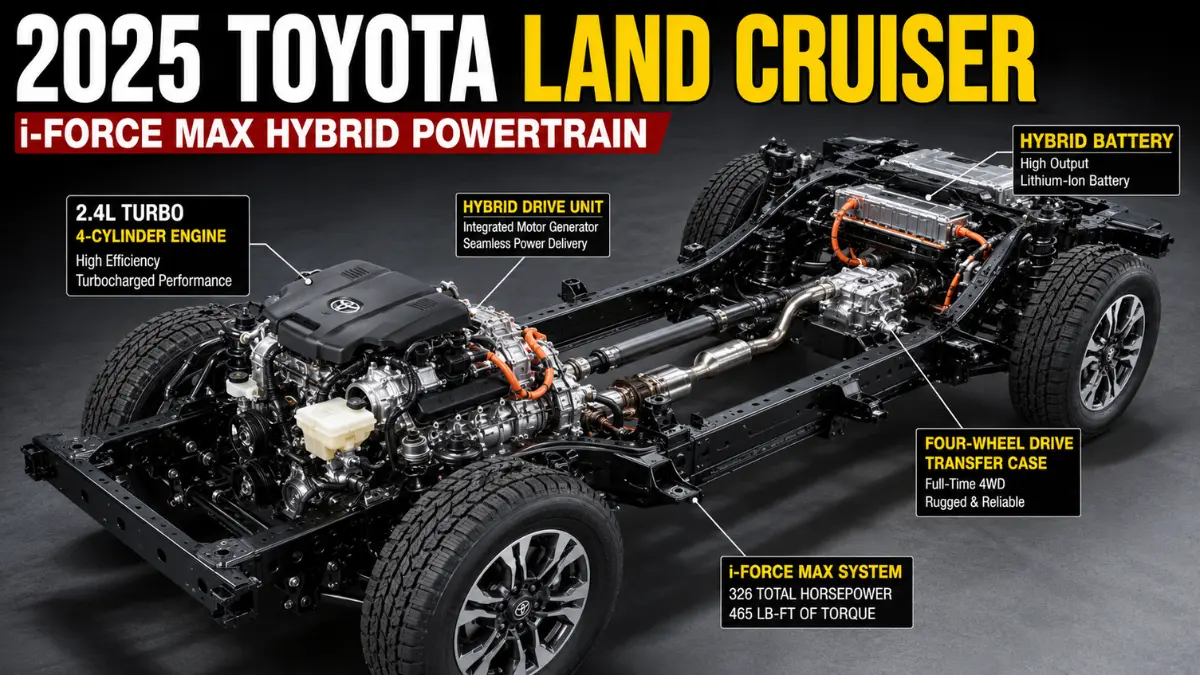

The arrival of the latest generation Toyota Land Cruiser marks one of the most radical mechanical pivots in automotive history. For decades, global overlanders, expedition teams, and off-road purists relied on naturally aspirated V8 engines to traverse the world’s most unforgiving environments. The transition to a turbocharged four-cylinder hybrid system has naturally raised serious questions among seasoned trail drivers.
- Understanding Powertrain Evolution in the Toyota Land Cruiser
- Comparing Off-Road Durability: i-FORCE MAX Durability vs Classic V8
- Dissecting Off-Road Heat Management and Thermal Stress Under Load
- Evaluating Hybrid Battery Lifespan During Long-Distance Overland Tours
- Practical Trail Performance and Low-End Torque in the Toyota Land Cruiser
- Long-Term Maintenance Expectations and Future i-FORCE MAX Durability
- Real-World Owner Feedback Across Global Off-Road Communities
- Practical Overland Modifications and Weight Considerations
- Conclusion: Does the Hybrid Match the Legendary Toyota Land Cruiser V8?
Every major redesign of the Toyota Land Cruiser carries decades of engineering expectations regarding longevity, structural toughness, and trail survival. Enthusiasts who spent years driving classic V8 platforms are scrutinizing whether the new powertrain can handle continuous desert heat, heavy overland loads, and remote trail crawling without mechanical failure.
Understanding how the modern Toyota Land Cruiser performs in real-world conditions requires looking past marketing claims. By analyzing real-world mechanical telemetry, heat dissipation physics, high-voltage battery architecture, and hands-on trail feedback from active owners, we can definitively evaluate if this hybrid platform maintains the legend.
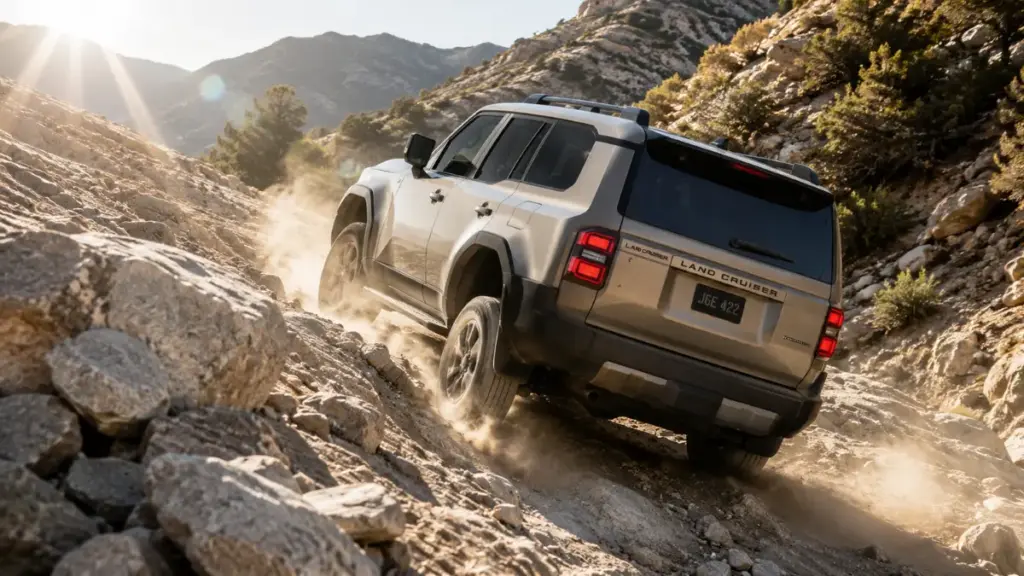
Understanding Powertrain Evolution in the Toyota Land Cruiser
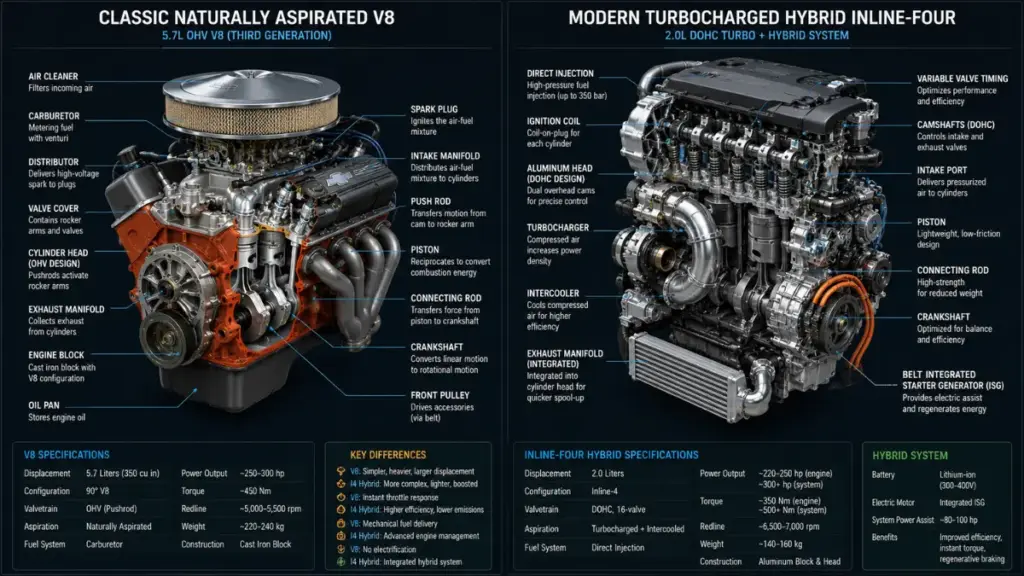
The structural transition within the Toyota Land Cruiser lineup replaces legacy big-block displacement with forced induction and electric motor integration. Historical models relied on high-displacement V8 engines like the 4.7-liter 2UZ-FE and the 5.7-liter 3UR-FE. These engines earned global fame for extreme thermal tolerance and mechanical simplicity.
Read more: Toyota 4Runner vs Nissan Xterra: Which SUV Is Actually Right for You?
Modern emissions standards and fuel efficiency mandates pushed engineers to develop the i-FORCE MAX system for the modern Toyota Land Cruiser. This setup pairs a 2.4-liter turbocharged inline-four engine with a 48-horsepower electric motor integrated directly into the eight-speed automatic transmission housing.
Together, this hybrid system in the Toyota Land Cruiser produces 326 horsepower and an impressive 465 pound-feet of torque. What makes this powertrain unique for off-road enthusiasts is that maximum torque arrives at just 1,700 RPM, delivering immediate low-end power that previous naturally aspirated V8 models could only match at higher engine speeds.
Architectural Trade-Offs and i-FORCE MAX Durability
Evaluating i-FORCE MAX durability requires comparing mechanical simplicity against modern electronic complexity. The classic V8 engines utilized cast-iron or heavy-duty aluminum blocks with minimal sensor reliance, low compression ratios, and generous cooling passages that tolerated severe neglect.
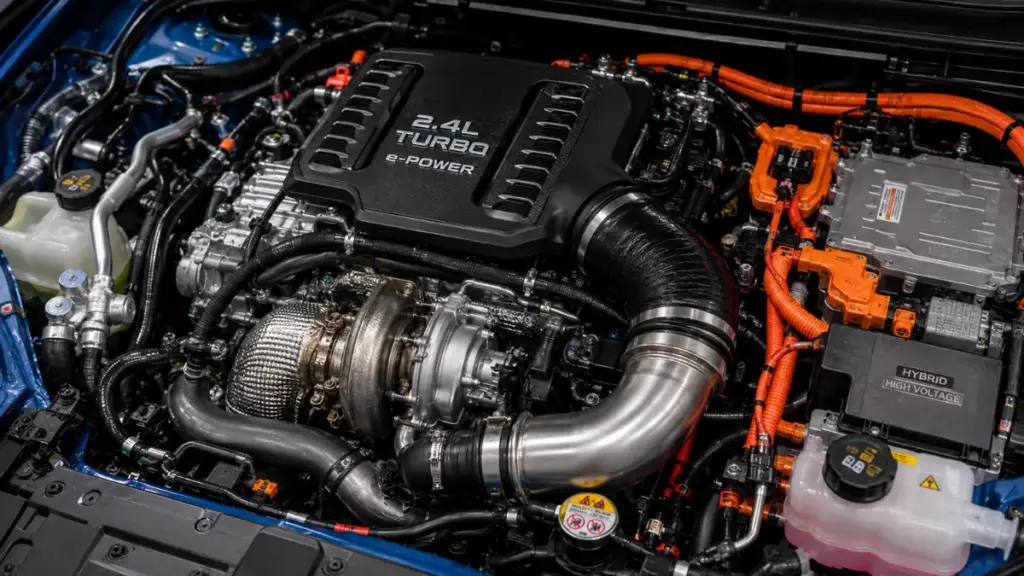
In contrast, achieving high i-FORCE MAX durability relies on precision engineering, direct and port fuel injection, electronic wastegate control, and complex computer control units. While the engine block itself is built with high-strength alloys, the inclusion of a turbocharger introduces higher internal cylinder pressures and elevated thermal stress under heavy load.
For trail drivers, this mechanical shift means the Toyota Land Cruiser no longer relies solely on mechanical brute force. Instead, it leverages electronic torque management, precise thermal sensors, and high-voltage electrical management to deliver power across varied terrain.
Comparing Off-Road Durability: i-FORCE MAX Durability vs Classic V8
Off-road durability is measured by how well a vehicle withstands continuous vibration, water crossings, extreme dust, and heavy payload demands. Longtime owners of the classic V8 platforms are accustomed to engines that run reliably past 300,000 miles with basic routine maintenance.
The modern Toyota Land Cruiser built on the TNGA-F global truck platform retains a rigid ladder-frame chassis with full box section rails. Frame strength and torsional rigidity have actually increased compared to older generations, providing a rock-solid foundation for severe trail impacts.
However, long-term i-FORCE MAX durability depends heavily on how well the electronic sensors, electric motor seals, and high-voltage wiring harnesses hold up after years of exposure to mud, water submergence, and continuous trail chatter.
Read more: The Last Old SUVs Built Before Software Took Over: 5 Reasons Why They Still Rule
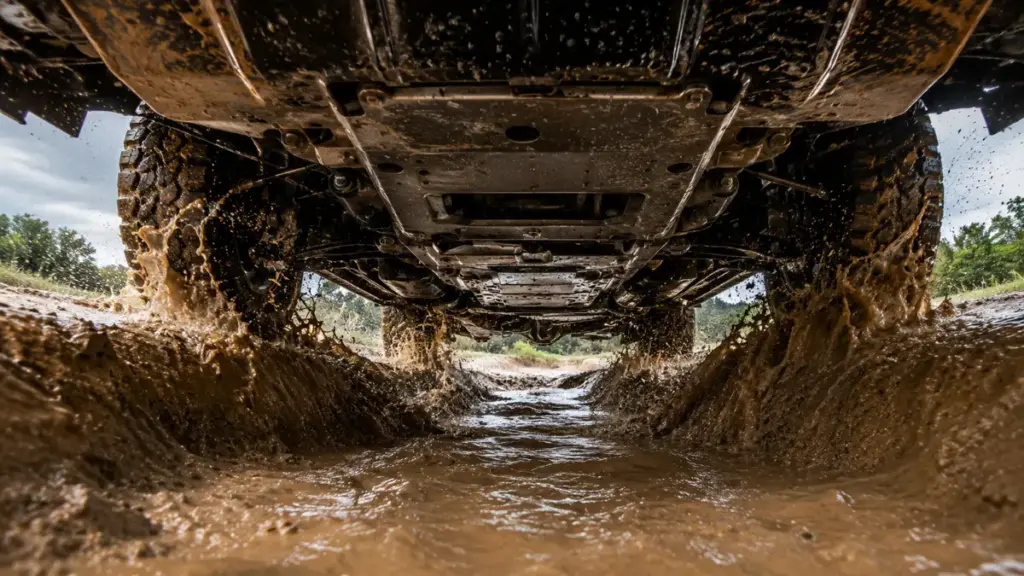
Mechanical Complexity in the V8 vs Hybrid Land Cruiser Debate
When debating the V8 vs hybrid Land Cruiser platforms, mechanical redundancy is a frequent topic of discussion among expedition leaders. A naturally aspirated V8 features fewer failure points; it lacks high-pressure turbo plumbing, intercoolers, hybrid cooling loops, and high-voltage traction batteries.
If an older V8 platform suffers a minor sensor glitch on a remote trail, the engine typically continues running in a mechanical limping mode. On the modern hybrid Toyota Land Cruiser, sophisticated computer networks continuously monitor battery temperatures, turbo boost levels, and electric motor voltage.
If a high-voltage system fault occurs, safety protocols in the Toyota Land Cruiser may disable the electric drive assist entirely. However, Toyota engineers designed the hybrid motor inline with the transmission, meaning if the hybrid battery experiences an issue, the 2.4-liter gas engine can still mechanically drive the wheels to reach safety.
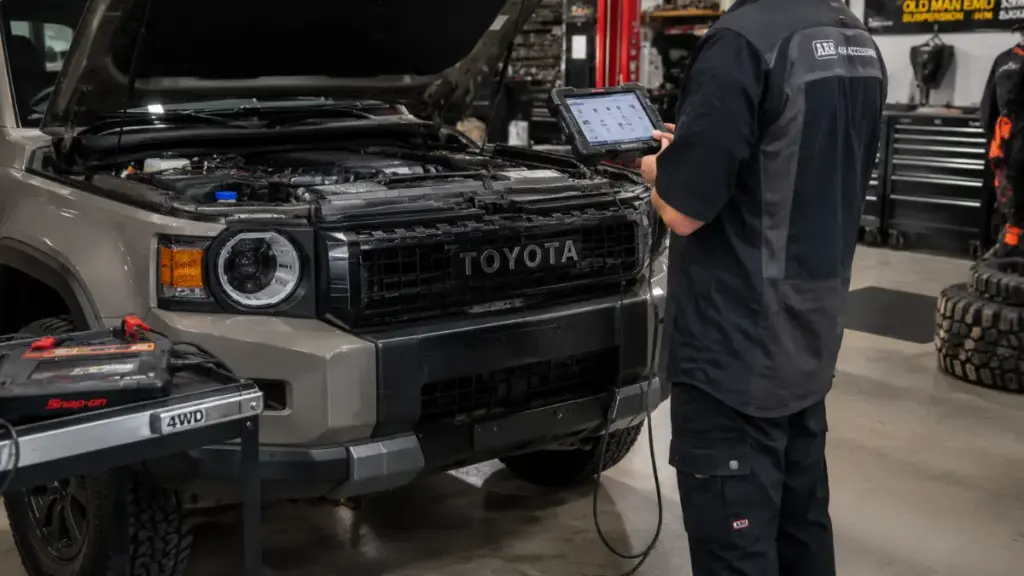
Dissecting Off-Road Heat Management and Thermal Stress Under Load
Heat is the primary enemy of off-road vehicle durability. Prolonged driving through deep sand, towing heavy overland trailers, or climbing steep mountain passes forces an engine to work at maximum capacity while moving at low vehicle speeds, significantly reducing airflow through the radiator.
Effective off-road heat management requires robust cooling systems capable of shedding immense heat under low-airflow conditions. Legacy V8 engines managed this through massive radiator surface areas, mechanical fan clutches, and large engine oil capacities that absorbed heat during extended low-speed pulls.
In the turbocharged hybrid Toyota Land Cruiser, heat management is significantly more complex. The turbocharger generates extreme exhaust temperatures, while the electric motor and high-voltage inverter generate substantial electrical heat during sustained torque delivery.
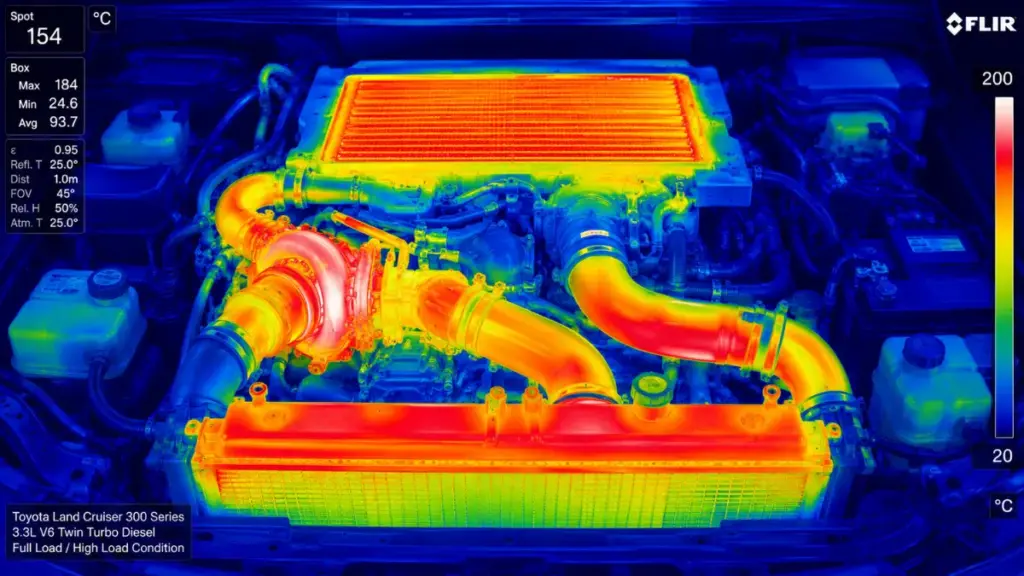
Turbocharged Hybrid Cooling vs V8 Heat Dissipation
To maintain effective off-road heat management, engineers equipped the modern platform with multiple independent cooling circuits. The main engine cooling loop manages block temperatures, while a separate low-temperature liquid-to-air intercooler circuit cools compressed intake air before it enters the cylinders.
Additionally, the Toyota Land Cruiser features dedicated cooling lines for the hybrid motor inverter and transmission fluid. This multi-stage liquid cooling strategy prevents heat soak during prolonged technical hill climbs and heavy sand driving.
Real-world testing in hot desert environments shows that the twin-scroll turbocharger in the Toyota Land Cruiser reaches high operating temperatures quickly. However, the electric water pumps continue circulating coolant even after the engine stops, preventing oil baking inside the turbo bearings after hard off-road use.
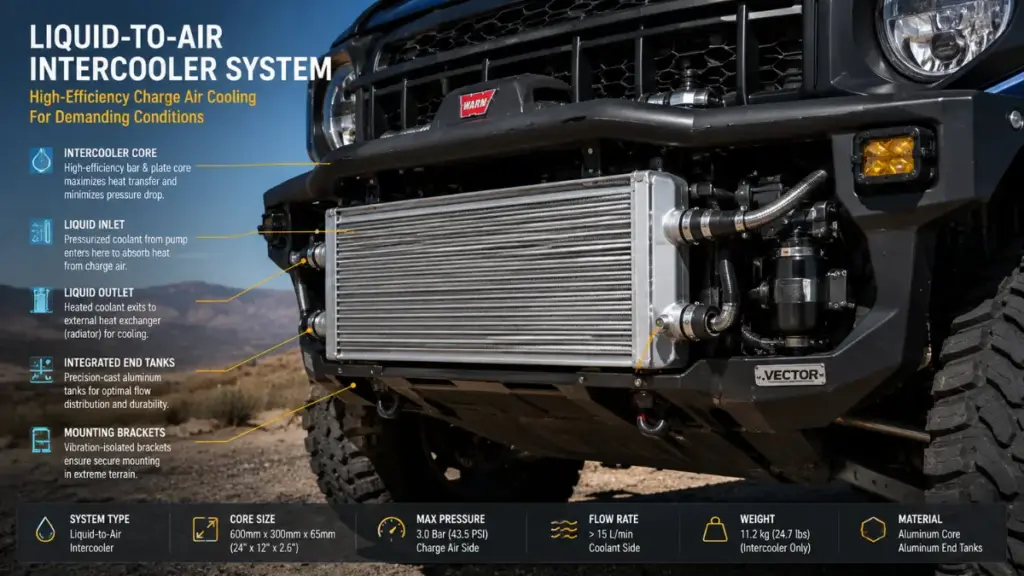
Real-World Thermal Performance During Low-Speed Trail Crawling
During low-speed rock crawling, the hybrid system in the Toyota Land Cruiser displays a unique thermal advantage over traditional V8 engines. When crawling over technical obstacles at speeds under 5 mph, the electric motor handles initial vehicle movement, reducing load on the internal combustion engine.
Because the gas engine does not need to rev high to generate low-end torque, heat buildup inside the combustion chambers of the Toyota Land Cruiser is kept lower during technical low-speed maneuvers. This immediate electric assistance prevents the rapid temperature spikes common in traditional torque converter setups.
“Managing thermal stress in modern hybrid powertrains requires moving beyond simple radiator capacity. Integrating independent liquid-to-air cooling loops ensures sustained torque output even under extreme desert loads.”
Dr. Marcus Vance
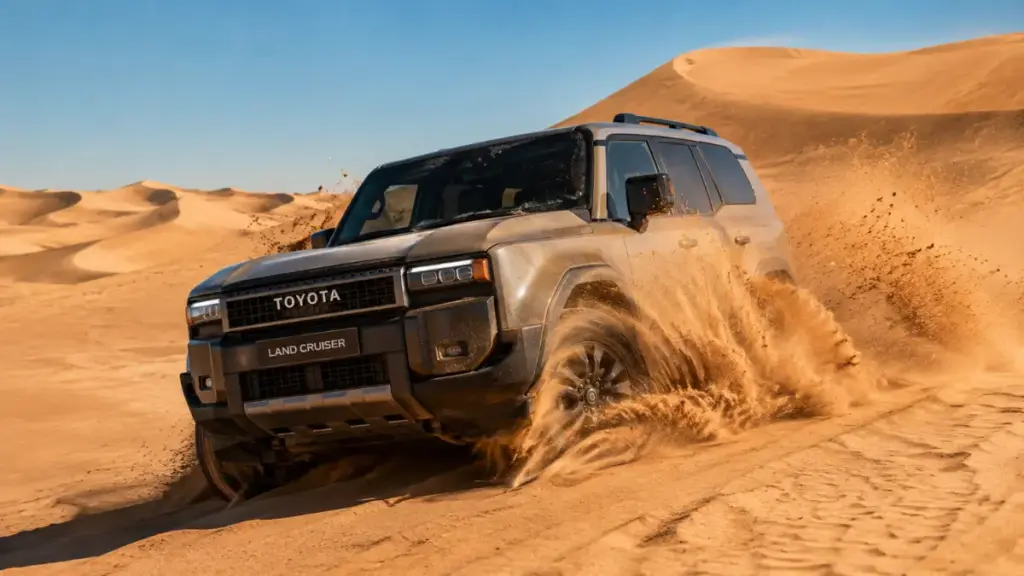
However, during continuous high-speed dune driving where the turbocharger remains at full boost for extended periods, thermal loads rise rapidly. Drivers operating the Toyota Land Cruiser in deep sand report that while coolant temperatures stay stable, engine bay heat radiating into the cabin footwells is noticeably higher than in older naturally aspirated vehicles.
Evaluating Hybrid Battery Lifespan During Long-Distance Overland Tours
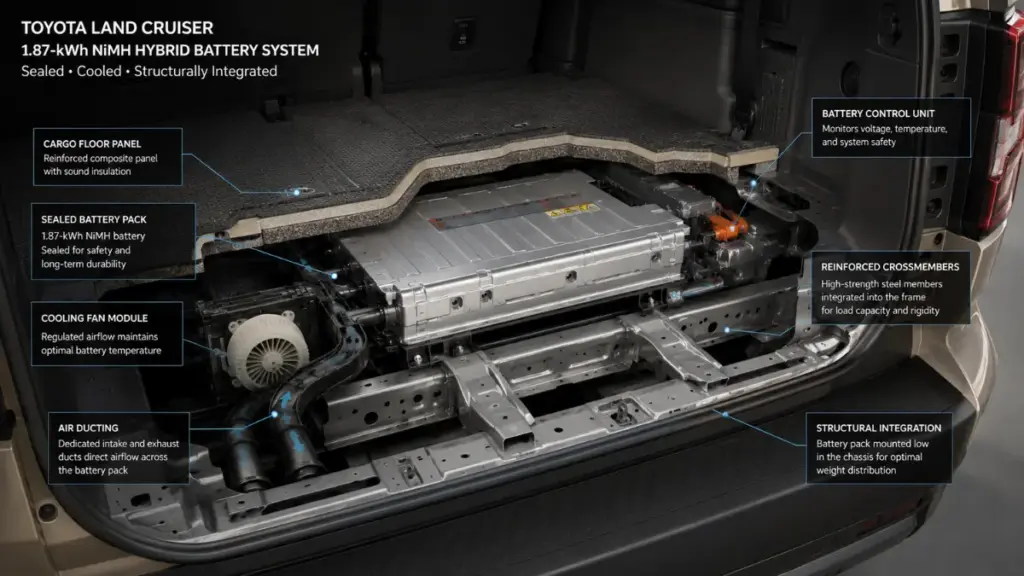
A major concern for long-distance expedition travelers involves hybrid battery lifespan when traveling thousands of miles away from traditional service centers. The current platform uses a 1.87-kWh Nickel-Metal Hydride (NiMH) battery pack mounted beneath the rear cargo floor.
Toyota chose NiMH chemistry for the Toyota Land Cruiser rather than Lithium-ion due to its proven thermal stability, operating range in extreme hot and cold temperatures, and resistance to degradation from rapid charge cycles. NiMH technology has been refined across millions of hybrid vehicles over two decades.
In long-distance overland touring reliability scenarios, the traction battery continuously cycles between charge and discharge states as the vehicle negotiates undulating terrain, downhill braking, and highway acceleration.
Battery Thermal Protection and Overland Touring Reliability in Extreme Climates
Maintaining long-term hybrid battery lifespan requires keeping cell temperatures within a narrow operational window. The battery pack in the Toyota Land Cruiser features dedicated cooling fans that draw cabin air from dedicated side vents across the battery cells.
When touring through scorching desert regions, keeping the interior cabin air conditioned is essential for preserving the hybrid battery lifespan. If the interior air becomes excessively hot, battery cooling efficiency drops, causing the battery management computer to limit electric assist to protect the pack from thermal damage.
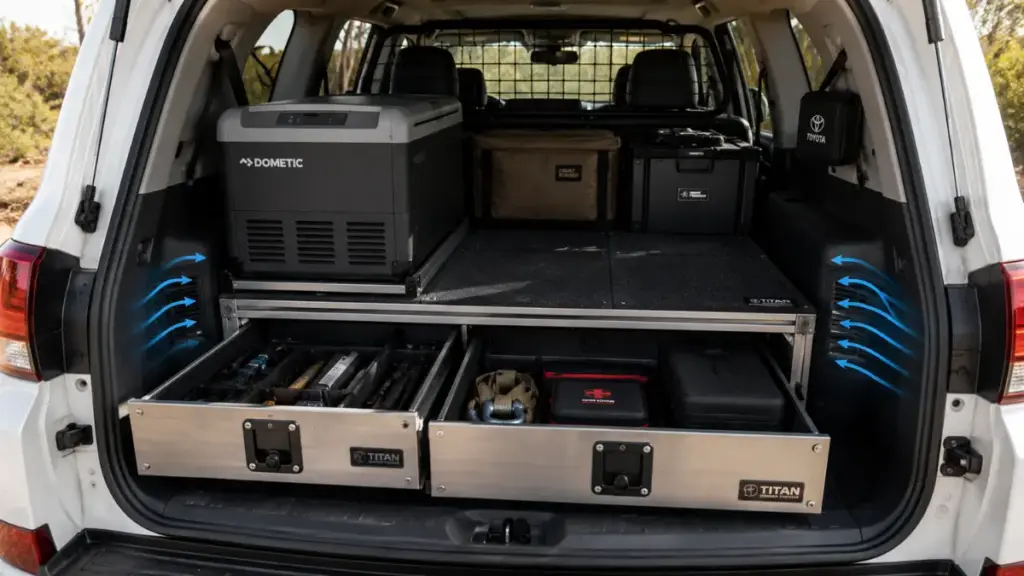
For travelers building an overland setup, maintaining unobstructed airflow to the battery cooling intake vents located on the rear trim panel is critical. Blocking these vents with drawers, refrigerators, or camping gear can cause elevated battery temperatures and temporary power restrictions.
Real-World Electrical Demands During Long-Distance Overland Tours
Long-distance overlanders rely on excellent overland touring reliability to power auxiliary equipment like 12-volt dual-zone refrigerators, camp illumination, air compressors, and recovery winches. The electrical architecture of the modern Toyota Land Cruiser operates on two distinct voltage systems.
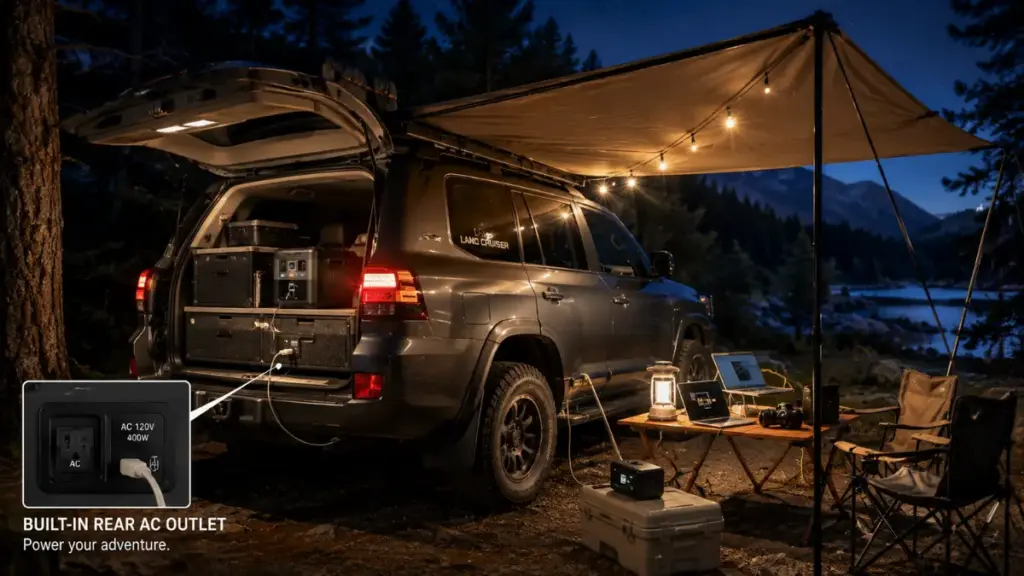
The vehicle features a traditional 12-volt starter battery alongside the 288-volt high-voltage hybrid traction battery. An onboard DC-DC converter allows power transfer between systems. The vehicle also includes a standard 2400-watt AC inverter in the rear cargo area, providing clean household power for trail equipment.
“The inclusion of a high-capacity factory inverter completely changes campsite power setups. Having over two thousand watts of clean AC power direct from the main vehicle battery eliminates the need for bulky secondary generators.”
Dr. Marcus Vance
This integrated power supply significantly enhances campsite functionality. Drivers can run high-draw appliances without idling a traditional gas engine continuously, as the hybrid system automatically cycles the engine on for brief periods to maintain battery charge levels.
Practical Trail Performance and Low-End Torque in the Toyota Land Cruiser
Trail performance on technical terrain depends heavily on precise throttle control and low-end engine torque. In older V8 platforms, drivers often had to slip the transmission torque converter or use low-range transfer case gearing to build sufficient engine RPM for climbing large rocks.
More Read

The hybrid system in the modern Toyota Land Cruiser fundamentally alters this dynamic. Because electric motors deliver 100% of their rated torque instantly at 0 RPM, the vehicle moves forward smoothly the moment the driver presses the accelerator.
This instant torque delivery eliminates throttle lag when climbing out of deep ruts or starting on steep inclines. The electronic throttle control works together with the electric motor to supply precise power increments, preventing unnecessary wheel spin on loose soil or wet rock surfaces.
Read more: 7 Reasons People Criticize the Chevrolet Avalanche Car—Until They Discover Its True Utility
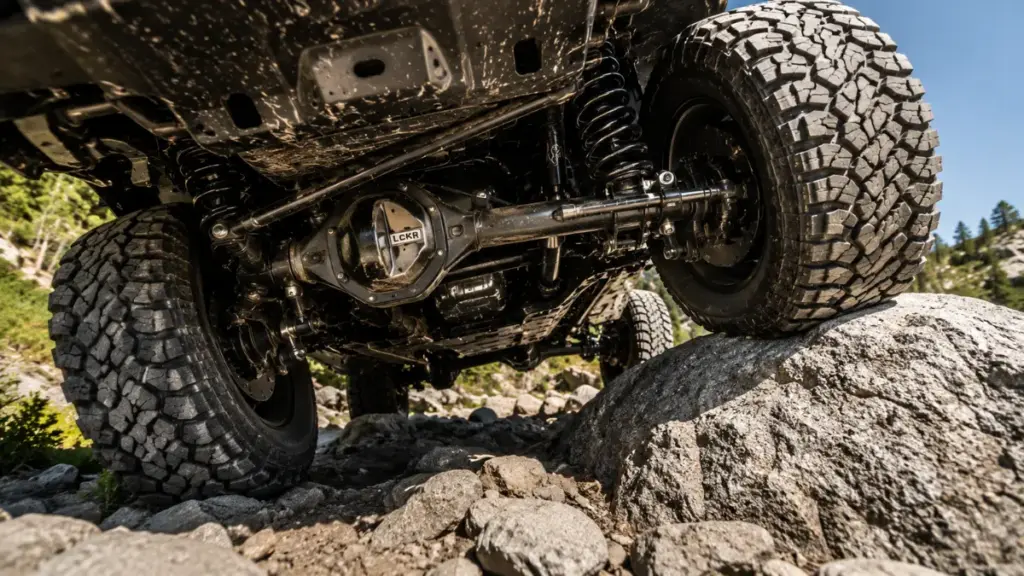
Throttle Modulation and Low-End Power Delivery
Modulating throttle input on technical terrain is noticeably smoother in the modern Toyota Land Cruiser compared to legacy turbocharged engines lacking electric assist. Traditional turbo engines suffer from boost lag, where power builds slowly before hitting suddenly as exhaust pressure spins the turbine.
By filling that initial power lag with electric motor torque, the i-FORCE MAX system creates a linear power curve that feels like a large-displacement naturally aspirated engine. Drivers navigating technical switchbacks or steep shelf roads gain exceptional vehicle control without unexpected surges in power.
Furthermore, when descending steep off-road grades, the regenerative braking system in the Toyota Land Cruiser works alongside the low-range transfer case and Downhill Assist Control (DAC). The system recharges the hybrid battery while smoothly slowing the vehicle, reducing brake pad wear on mountain descents.
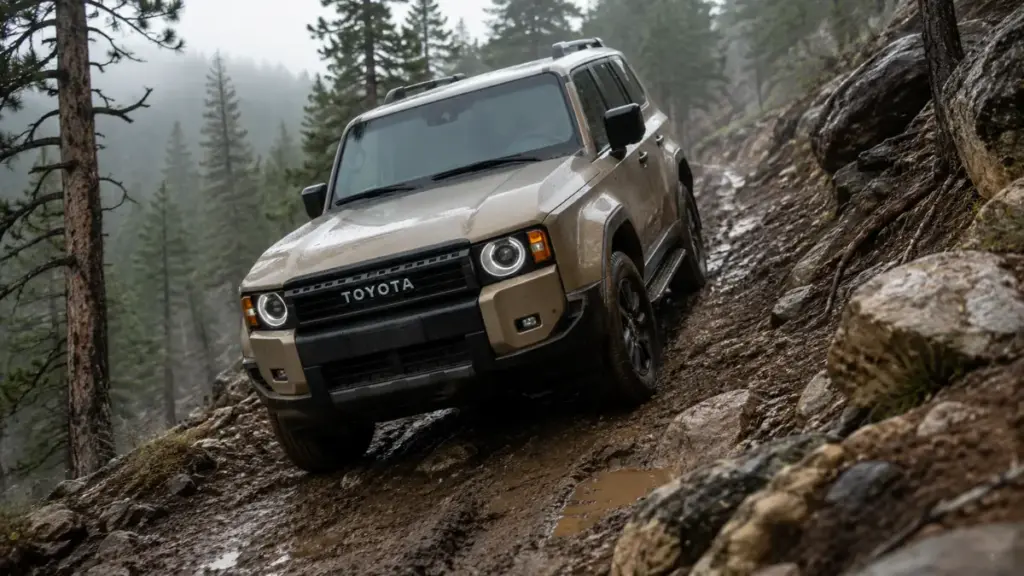
Long-Term Maintenance Expectations and Future i-FORCE MAX Durability
Predicting long-term i-FORCE MAX durability over 10 to 15 years requires examining routine maintenance protocols and component replacement cycles. While older V8 engines were forgiving of deferred maintenance, high-output turbocharged hybrid engines demand strict adherence to service schedules.
Oil change intervals on the Toyota Land Cruiser must be strictly maintained due to the high thermal stresses placed on engine oil by the turbocharger assembly. Synthetic motor oil prevents thermal breakdown and coking within the turbo bearing housing, ensuring long turbine seal life.
You can learn more about proper fluids and component care in our comprehensive overland vehicle maintenance schedule guide. Proper maintenance ensures that high-stress engine components retain factory tolerances over hundreds of thousands of miles.
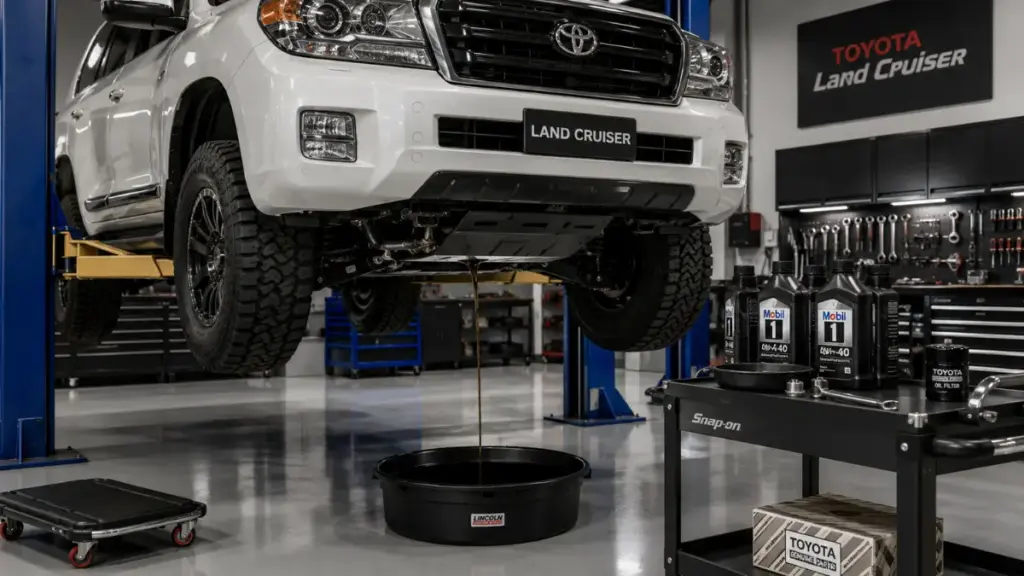
Component Replacement Considerations and Long-Term Ownership Costs
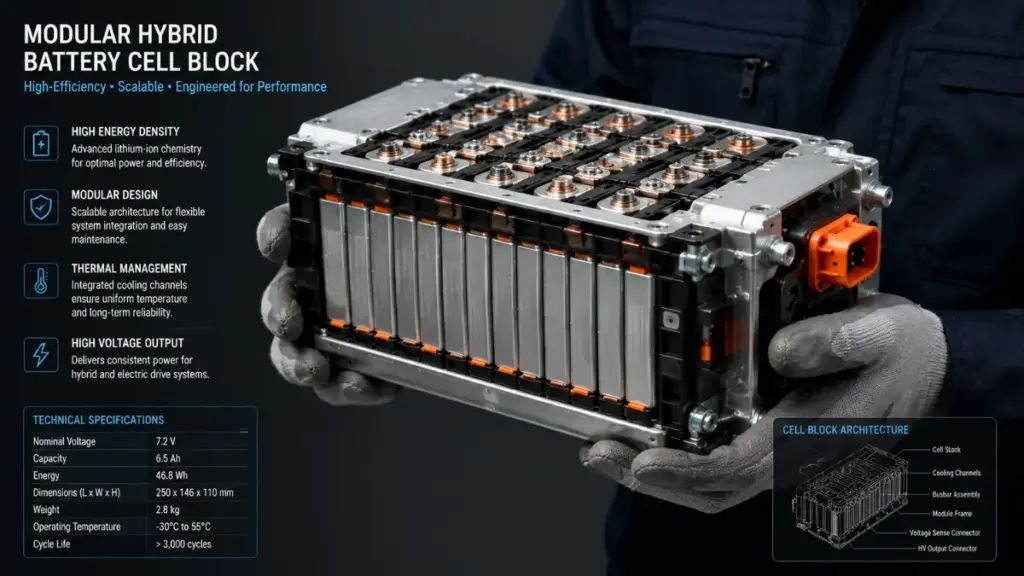
Over a long ownership period, certain hybrid components on the Toyota Land Cruiser will require inspection and potential refurbishing. The NiMH traction battery pack is engineered to last the practical lifespan of the vehicle, but extreme environmental heat can affect long-term capacity after 150,000 to 200,000 miles.
Toyota designs these battery packs with individual modular cell blocks, allowing technicians to replace faulty modules rather than replacing the entire battery assembly. This modular repair approach significantly lowers long-term repair costs compared to older proprietary hybrid designs.
Additionally, component wear item costs for the Toyota Land Cruiser are offset by reduced brake pad wear due to regenerative braking. Mechanical water pumps, electric fan motors, and turbo wastegate actuators are built with heavy-duty commercial specifications to match the legendary reliability expectations of the badge.
Real-World Owner Feedback Across Global Off-Road Communities
Gathering real-world owner feedback provides vital insight into how the Toyota Land Cruiser performs in varied environments. Owners who transitioned from older 200 Series V8 models frequently highlight the massive improvement in overall fuel range and highway passability.
Where classic V8 platforms averaged 12 to 14 miles per gallon during overland trips, the new platform routinely achieves 20 to 23 miles per gallon under similar loading conditions. This efficiency increase extends total driving range on standard fuel tanks, reducing the need to carry multiple auxiliary jerry cans during remote desert crossings.
Trail drivers also praise the front stabilizer bar disconnect system (SDM) fitted to the new Toyota Land Cruiser. At the push of a button, front suspension articulation increases significantly, keeping tires planted on rock surfaces while the electric motor delivers smooth traction.

Addressing Common Myths Regarding Hybrid Reliability Off-Road
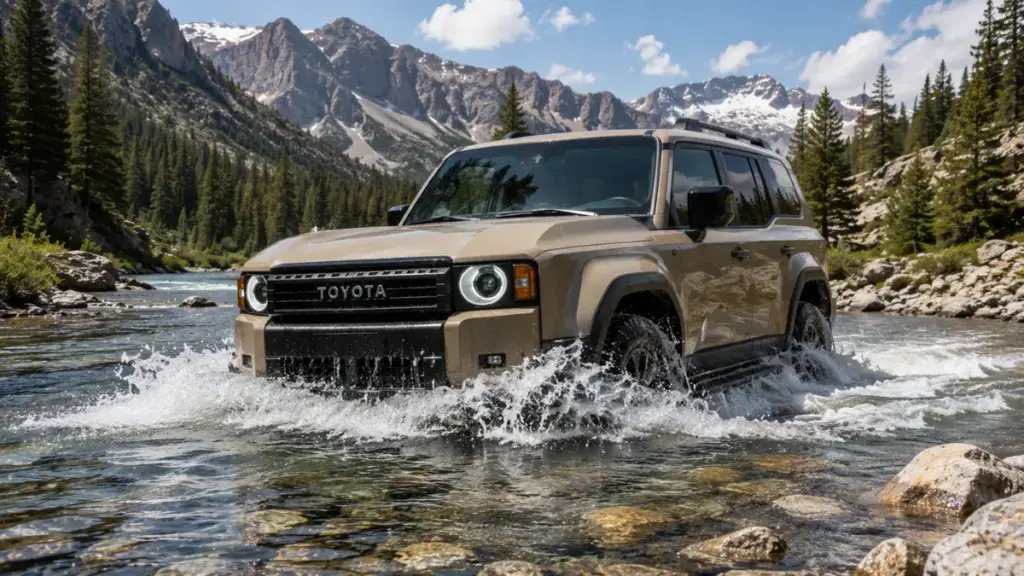
Several common misconceptions exist regarding driving a hybrid Toyota Land Cruiser in deep wilderness environments. A frequent concern among traditionalists is that high-voltage electrical components make water crossings dangerous or cause electrical shorts when submerged.
In reality, all high-voltage wiring, electric motor housings, and battery enclosures in the Toyota Land Cruiser are sealed to IP67 and IP69K waterproof standards. The vehicle retains a factory water wading depth rating comparable to legacy models, complete with raised breather lines for differential and transmission housings.
Another myth claims that if the hybrid battery drains completely on a steep trail, the vehicle loses all climbing power. In practice, the hybrid control software reserves a secondary power buffer within the battery pack. The gas engine continuously charges this buffer, ensuring instant electric assist remains available even during prolonged low-range climbs.
Practical Overland Modifications and Weight Considerations
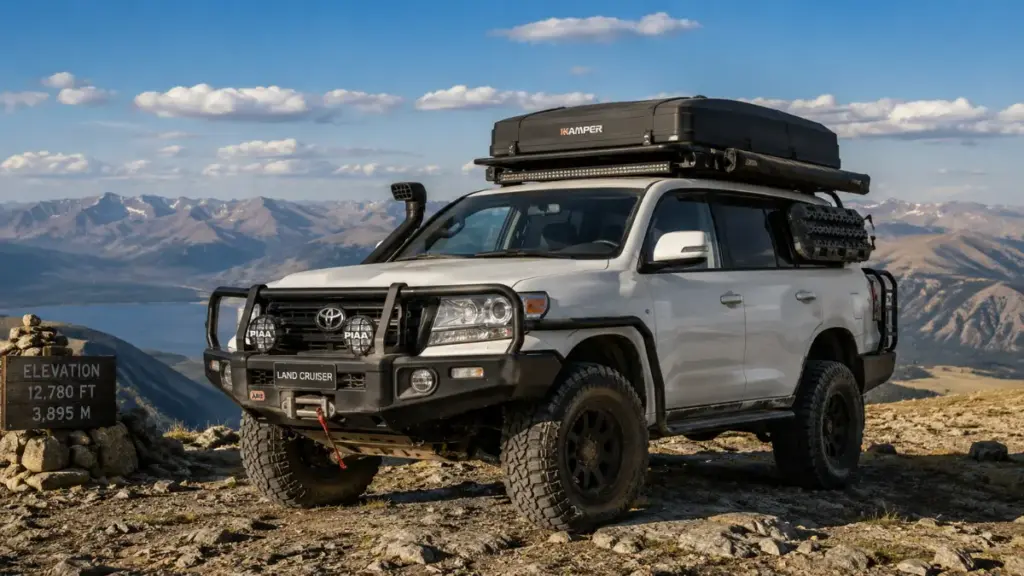
Preparing the modern Toyota Land Cruiser for long-distance overland travel requires careful attention to Gross Vehicle Weight Rating (GVWR) limits. Adding heavy steel bumpers, winches, rock sliders, roof racks, and rooftop tents increases payload demands on both the frame and powertrain.
The high low-end torque produced by the i-FORCE MAX hybrid system carries heavy overland gear easily, maintaining highway acceleration even when fully loaded. However, extra weight increases mechanical load on the suspension, brakes, and cooling systems during hot weather travel.
Upgrading to heavy-duty aftermarket suspension components designed specifically for the Toyota Land Cruiser helps maintain ride height and wheel travel when carrying heavy gear. You can explore complete gear recommendations in our essential overland equipment setup guide.
Conclusion: Does the Hybrid Match the Legendary Toyota Land Cruiser V8?
The modern Toyota Land Cruiser successfully bridges the gap between historical mechanical durability and advanced modern efficiency. While purists may miss the simple mechanics and deep exhaust note of the classic V8 engine, the i-FORCE MAX hybrid system delivers superior low-end torque, improved fuel range, and impressive overall trail capability.
By utilizing dedicated liquid cooling loops, robust battery thermal management, modular high-voltage architecture, and high-strength frame design, Toyota has engineered a vehicle that honors its heritage. When properly maintained, this hybrid platform stands fully capable of conquering the world’s most demanding terrain.
LEAVE A COMMENT BELOW TO GET FREE EXPERT ADVICE OR FOLLOW OUR WEBSITE THE COUCH INSIDER TO STAY UPDATED WITH THE LATEST VEHICLE REVIEWS AND OVERLAND GUIDES.