



The automotive industry is currently navigating a period of unprecedented transition, characterized by the widespread deployment of Level 2 autonomy. Marketing campaigns from major manufacturers often blur the lines between “advanced assistance” and “true self-driving,” leading to a dangerous paradox for the modern driver. While these systems, technically defined as Partial Driving Automation under SAE J3016, promise increased safety and convenience, the reality on the ground—often hidden from official press releases—is far more complex.
- The Core Deception: Why Level 2 Autonomy Is Not Self-Driving
- Trap 1: The Vigilance Decrement And The Illusion Of Safety
- Trap 2: Phantom Braking And The Latency Gap
- Trap 3: The Liability Gap And Operational Purgatory
- Trap 4: Sensor Degradation And Hardware Reliability
- Trap 5: The Cognitive Tunnel Vision Of The “Hand-Off”
- The Technical Reality Of Alarm Fatigue
- Evaluating The Safety Plateau
- The Human-Machine Interface Challenge
- Conclusion: Reclaiming Human Agency
This deep dive explores the systemic failures, psychological traps, and real-world hazards of Level 2 autonomy that only those behind the wheel truly understand.
The Core Deception: Why Level 2 Autonomy Is Not Self-Driving
To understand why Level 2 autonomy is so contentious, we must first strip away the marketing jargon. According to the Society of Automotive Engineers (SAE), a system qualifies as Level 2 if it can simultaneously control steering and acceleration/deceleration. Crucially, the driver remains the ultimate fallback.
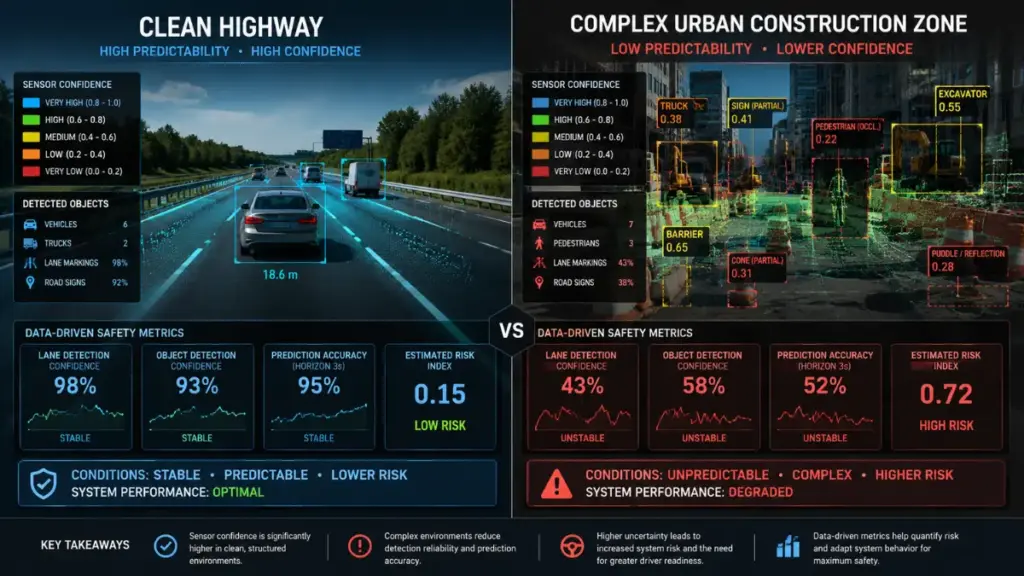
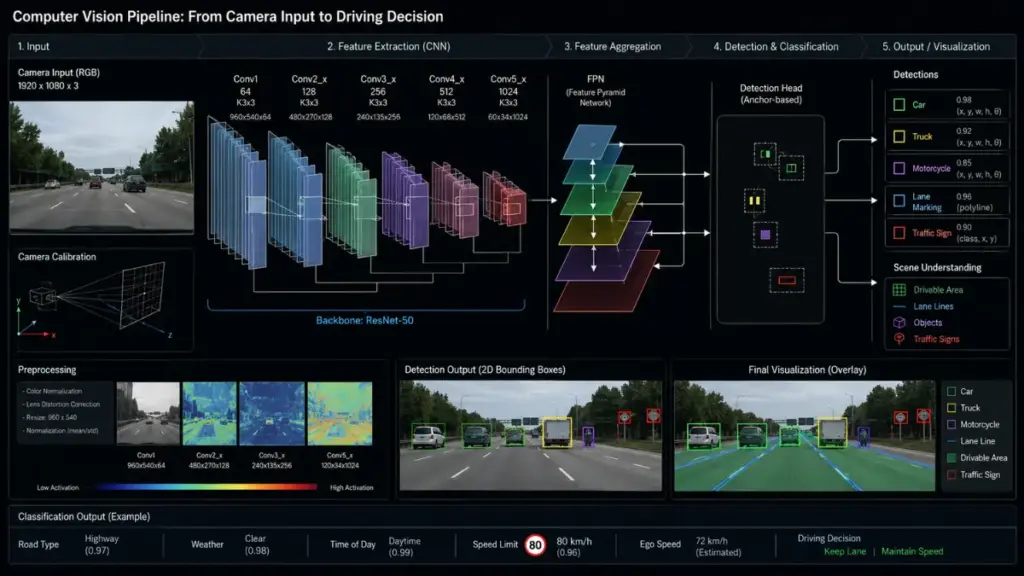
The danger arises because these systems are “reasoners,” not “autonomous agents.” They compute inputs from cameras, radar, and ultrasonic sensors to maintain lane positioning and speed, but they lack the metacognitive capability to handle scenarios outside their specific operational design domain. When the system encounters an ambiguous road sign, an unmapped construction zone, or unexpected debris, it does not “think”—it simply fails or defaults to a safe state, often leaving the human operator with mere milliseconds to regain full situational awareness.
“The most dangerous aspect of current vehicle automation is not what the system does, but what the human driver stops doing.”
Jade
Trap 1: The Vigilance Decrement And The Illusion Of Safety
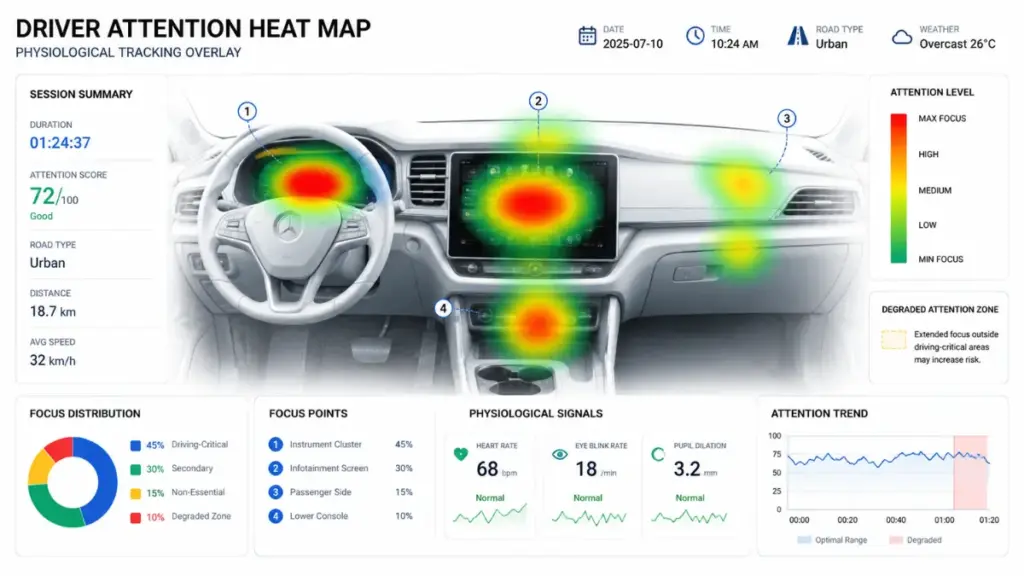
One of the most ignored side effects of Level 2 autonomy is the “vigilance decrement.” Human beings are evolutionarily wired to perform active tasks; we are notoriously poor at sustained, passive monitoring. When a vehicle manages the primary driving tasks, the driver’s brain naturally shifts toward a state of low arousal.
Psychological studies have consistently shown that after only 10 to 20 minutes of passive supervision, the ability of a driver to detect an infrequent, time-critical hazard drops significantly. This creates a lethal feedback loop: as the car gets “better” at driving, the driver gets “worse” at supervising it. When a critical failure occurs, the driver is often less responsive than if they were driving manually. This is not a failure of the driver; it is a fundamental flaw in the human-machine interface of modern Level 2 autonomy.
Trap 2: Phantom Braking And The Latency Gap
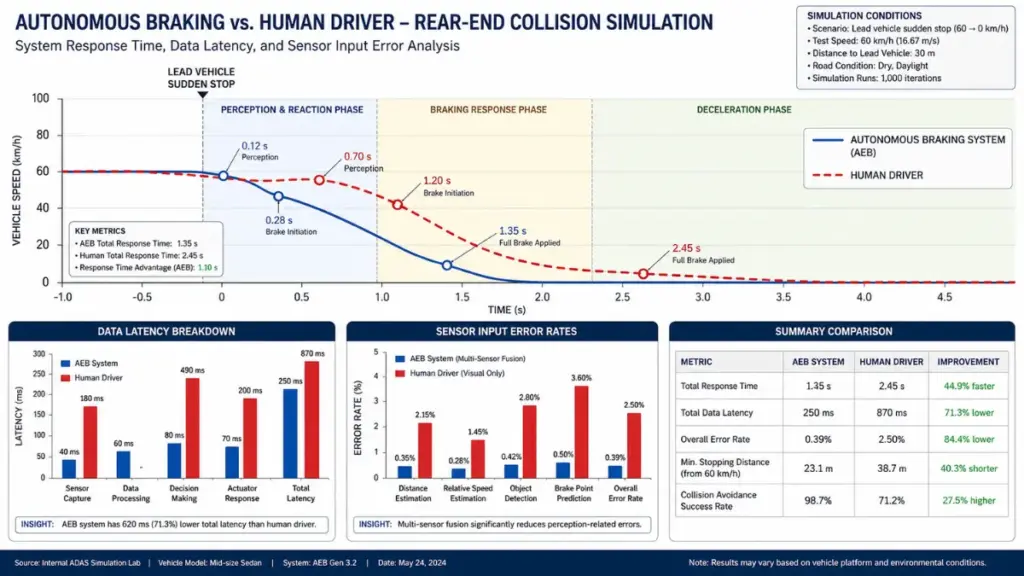
If you spend enough time in forums dedicated to vehicle diagnostics, you will inevitably encounter the term “phantom braking.” This is perhaps the most notorious failure mode of Level 2 autonomy. Because these systems rely on multi-sensor fusion, a misinterpreted shadow, an overhead bridge, or even the reflection of a metallic sign can trigger an emergency stop.
In high-speed traffic, a phantom braking event is not just a nuisance; it is a high-velocity hazard. The vehicle behind you—which is likely not utilizing the same autonomous system—has no warning. The system’s inability to differentiate between a non-existent obstacle and a genuine hazard demonstrates the profound technical gap between current consumer-grade ADAS and the robust, redundant perception stacks required for higher-level autonomy.
Trap 3: The Liability Gap And Operational Purgatory
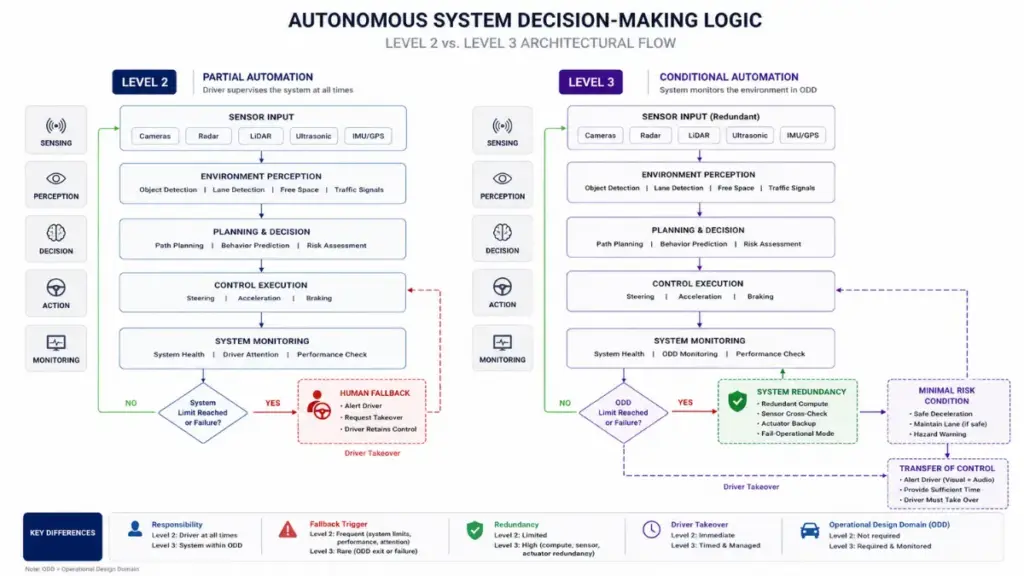
The industry remains locked in a “liability gap.” Level 2 autonomy places 100% of the responsibility on the driver. If the car crashes, the manufacturer points to the user manual; the user points to the system’s failure. This is why we have seen so little movement toward Level 3.
Moving to Level 3 requires the manufacturer to assume liability for safety-critical functions. It requires a complete architectural overhaul, including fail-safe hardware redundancies and advanced “hand-off” protocols. Until the cost of this transition decreases and the regulatory environment matures, manufacturers are incentivized to optimize current Level 2 autonomy features rather than solving the systemic reliability issues that would allow for a true hand-off.
Trap 4: Sensor Degradation And Hardware Reliability
For those interested in the technical side, the performance of Level 2 autonomy is inextricably linked to the quality of the onboard hardware. Modern vehicle architectures are becoming increasingly reliant on Edge AI—processing data locally to avoid the latency of cloud-based decisions.
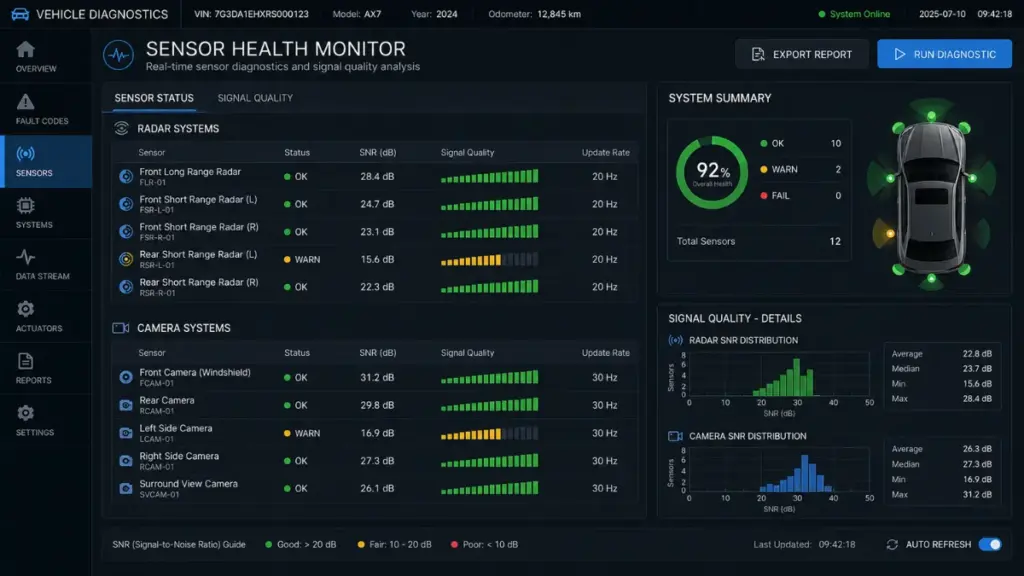
However, the hardware itself is subject to thermal degradation, electromagnetic interference, and physical wear and tear. A camera lens obscured by road film or a radar sensor misaligned by a minor parking nudge can subtly alter the system’s perception of the road. Maintaining these systems is no longer just about oil changes and tire rotations; it is about rigorous network hardware diagnostics to ensure that the “eyes” of your vehicle are providing accurate data.
More Read

Trap 5: The Cognitive Tunnel Vision Of The “Hand-Off”
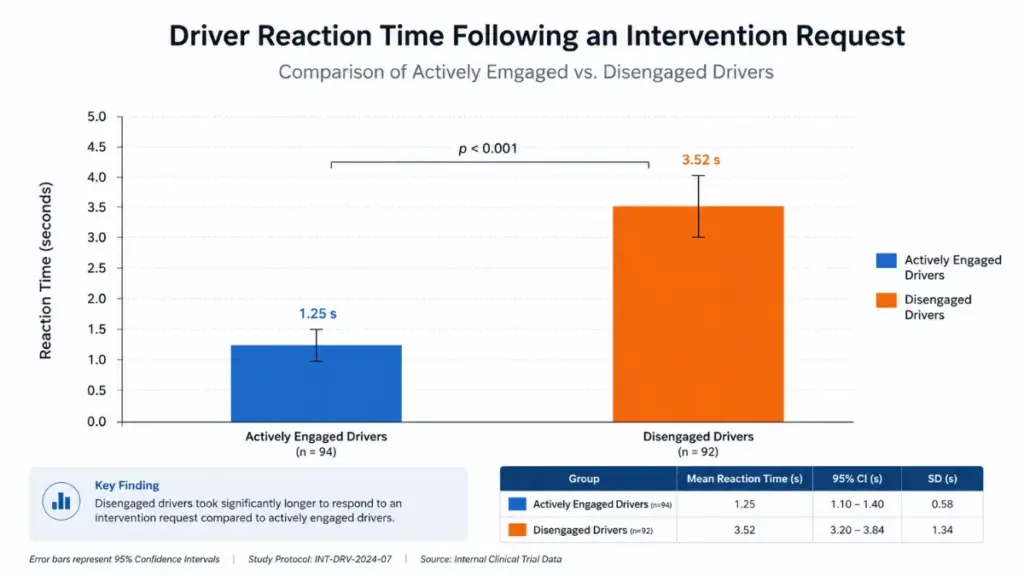
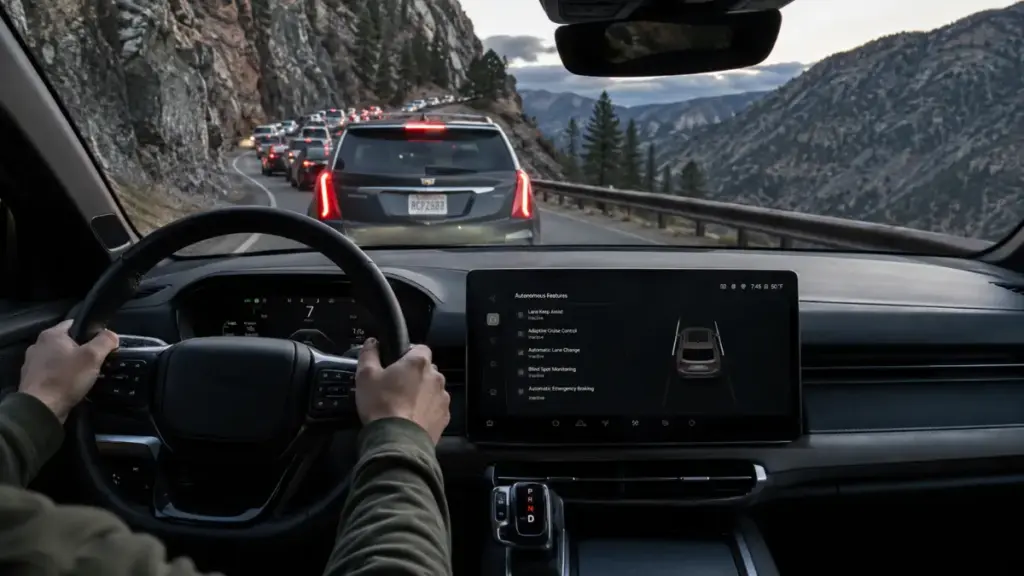
The “hand-off” is the most dangerous maneuver in modern driving. When a Level 2 autonomy system reaches its operational limit, it signals the human to resume control. The problem is that the human is often in a “state of cognitive tunnel vision” or distracted by an secondary task.
Research indicates that even with a multi-second warning, a driver who has been disengaged requires significant time to attain “situational awareness”—the ability to understand the context of the traffic around them. This lag is unacceptable in a high-speed, safety-critical environment. The industry is currently experimenting with haptic steering wheels, camera-based eye-tracking, and cabin monitoring, but these are merely “patches” for the inherent instability of the Level 2 model.
The Technical Reality Of Alarm Fatigue
To use these systems safely, one must approach them with a healthy dose of skepticism. The constant stream of audible and haptic alerts can lead to a desensitized driver who eventually ignores the one warning that actually precedes a critical collision. Furthermore, neural networks can be tricked by “adversarial perturbations”—small, intentional changes to road signs or markers that cause the AI to hallucinate a false state. Level 2 autonomy systems are highly sensitive to weather, and heavy rain or direct glare can render the perception stack nearly useless.
Evaluating The Safety Plateau
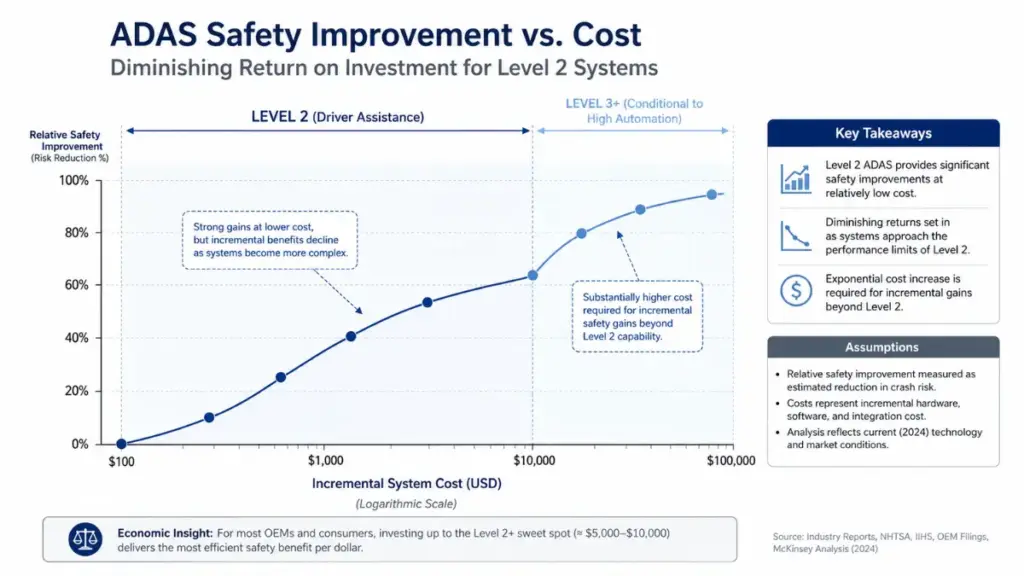
The most cynical take—and perhaps the most accurate—is that we are hitting a plateau in the development of Level 2 autonomy. By focusing on perfecting the “feel” of lane-keeping and adaptive cruise control, manufacturers may be neglecting the architectural changes needed to reach Level 3.
The reliance on massive amounts of driving data is not a substitute for robust safety engineering. Without a move toward standardized safety metrics and clearer regulatory guidance, we risk a future where drivers are increasingly over-reliant on systems that will never be truly “safe” by objective engineering standards.
The Human-Machine Interface Challenge
When we discuss the future of automotive safety, we must consider the artificial intelligence integration levels. Current Level 2 autonomy is a stepping stone, but it is a stone that is slippery and ill-placed. As a driver, your best strategy is to remain the primary operator. Use the convenience features, but never for a second believe that the vehicle is “driving.” Until the industry solves the fundamental problems of perception, environmental uncertainty, and human-machine interaction, the burden of safety remains exactly where it has always been: with you.
Conclusion: Reclaiming Human Agency
The frustration found in the user community reflects a deeper issue: the disconnect between AI’s cognitive potential and its operational reliability. We have identified five primary cognitive traps that compromise human control: the vigilance decrement, phantom braking anxiety, the liability gap, hardware reliability, and the hand-off lag. Each of these traps serves as a reminder that the most “advanced” technology in your car is the one sitting in the driver’s seat.

LEAVE A COMMENT TO GET EXPERT ADVICE OR FOLLOW THE COUCH INSIDER WEBSITE TO UPDATE THE LATEST KNOWLEDGE.