



The moment you hold the signed divorce decree in your hands, the world is supposed to stop spinning. You expect a rush of liberation, a clear signal that the chaos of legal battles and emotional friction has finally ceased. Yet, for thousands of individuals, this piece of paper does not signal a beginning; it signals a profound, confusing, and often paralyzing descent into mental exhaustion. Many assume that once the legalities are handled, the trauma will evaporate. They could not be more wrong.
- The divorce decree as a deceptive relief
- Ugly truths that mainstream media ignores about post-divorce mental health
- Is the divorce decree really the end of your identity crisis?
- Real-world coping mechanisms for the long haul
- FAQ: Navigating the dark side of legal finality
- The evolution of the self post-decree
- Understanding the emotional cycles
- Why your nervous system is the ultimate judge
- Building a life that does not need a court order
- Conclusion and the path forward
The divorce decree as a deceptive relief
The vacuum left by the finalization of a divorce decree is rarely filled with joy. Instead, it is frequently occupied by a deafening silence. When the lawyers stop calling and the court dates end, you are left alone with the internal wreckage.

The immediate vacuum: Why the final divorce decree often triggers more anxiety than closure
Society paints the divorce decree as a trophy of independence. In reality, it is often a catalyst for an identity crisis. The structure that once defined your daily existence—even if that structure was toxic—is now gone. Without the external conflict of a failing marriage, your mind finally has the space to process the accumulated stress of the past months or years.
This is where the cycle of mental exhaustion begins. You are not just mourning a person; you are mourning a lifestyle, a set of habits, and a version of yourself that no longer exists. The divorce decree essentially forces you to confront the void.
Decoding the cycle: Why the mental exhaustion intensifies right after the legal battle concludes
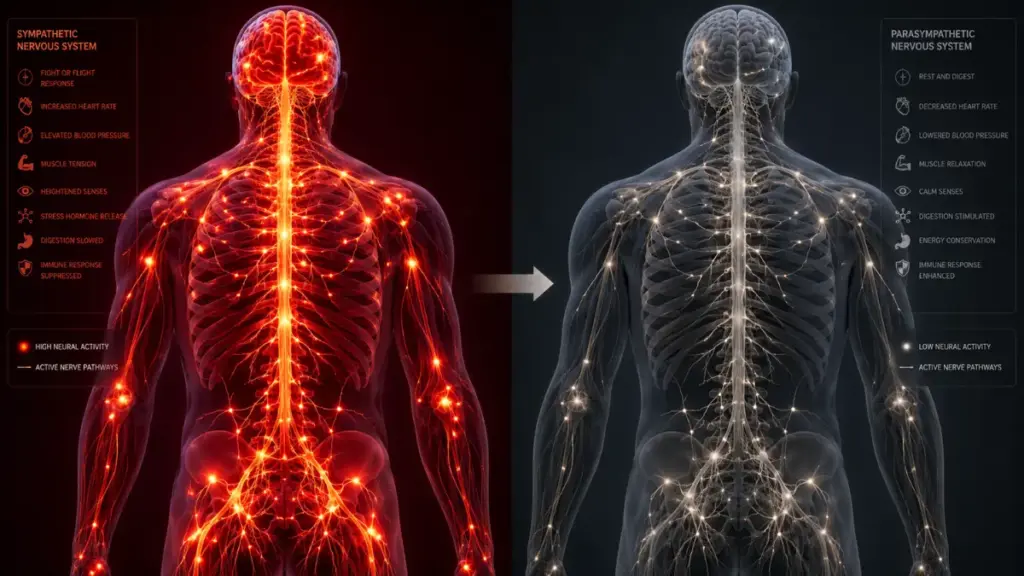
The human brain is wired to handle immediate threats. During the divorce process, your cortisol levels were likely at an all-time high, driving you through mediation, property division, and custody battles. Once the divorce decree is signed, the “threat” is removed, and your nervous system experiences a massive crash.
This post-legal crash is often mistaken for depression, but it is better described as a deep, systemic mental exhaustion. Your brain, having spent so much energy surviving the conflict, simply does not know how to “turn off.”
Ugly truths that mainstream media ignores about post-divorce mental health
Mainstream articles often tell you to “go to the gym” or “start a new hobby.” These suggestions feel insulting when you are staring at a divorce decree and feeling like your entire personality has been erased. We need to talk about the things that people actually whisper in support groups—the ugly truths that no one wants to print.
Weaponized trauma: How your mental health issues may have silently eroded your marriage
It is incredibly difficult to admit, but many of us have used our own trauma as a weapon. Perhaps you were the one who withdrew, the one who stonewalled, or the one who constantly projected your internal insecurities onto your partner. When you look at your divorce decree, it is easy to blame the other person for the failure. But the brutal truth is that your own unmanaged mental baggage likely played a massive, invisible role in the collapse.
Read more: Benefit of laughter: Is this a mental workout? What happens when you can’t stop chuckling?
Recognizing this is not about self-flagellation; it is about taking ownership. If you do not acknowledge how your struggles contributed to the end, the divorce decree will just be the first of many failed relationships in your future.
The toxic relief: Acknowledging the guilt of feeling happy while your world falls apart
There is a specific kind of shame that comes with feeling a sense of “relief” when the divorce decree arrives. You might feel like a monster for being happy that the fighting has stopped. However, this is a natural human reaction to the cessation of pain. You are not celebrating the death of your marriage; you are celebrating the fact that you are no longer in survival mode.
Managing the emotional aftermath of living with an unstable partner during the divorce decree process
If your former partner struggled with severe mental health issues, the process leading up to the divorce decree was likely a form of sustained psychological warfare. Living with someone who is mentally volatile creates a state of “hyper-vigilance” in you. Even after the legal separation, your brain continues to scan for danger. This is why you cannot sleep and why your heart races when your phone pings.

Is the divorce decree really the end of your identity crisis?
The divorce decree is a legal ending, but it is rarely a psychological one. You are navigating a world that feels completely foreign.
Beyond the legal battle: Reclaiming the self you lost in the process of divorce recovery
Reclaiming your identity requires a complete inventory of who you were before the marriage. This is not about returning to the past, but about identifying which parts of your personality were suppressed to keep the peace. When you are deep in a marriage, you compromise. When you are post-divorce decree, you must start the tedious, sometimes painful work of finding out what you actually enjoy.
Surviving the crash: Why the silence after the court hearing is the loudest part of your healing
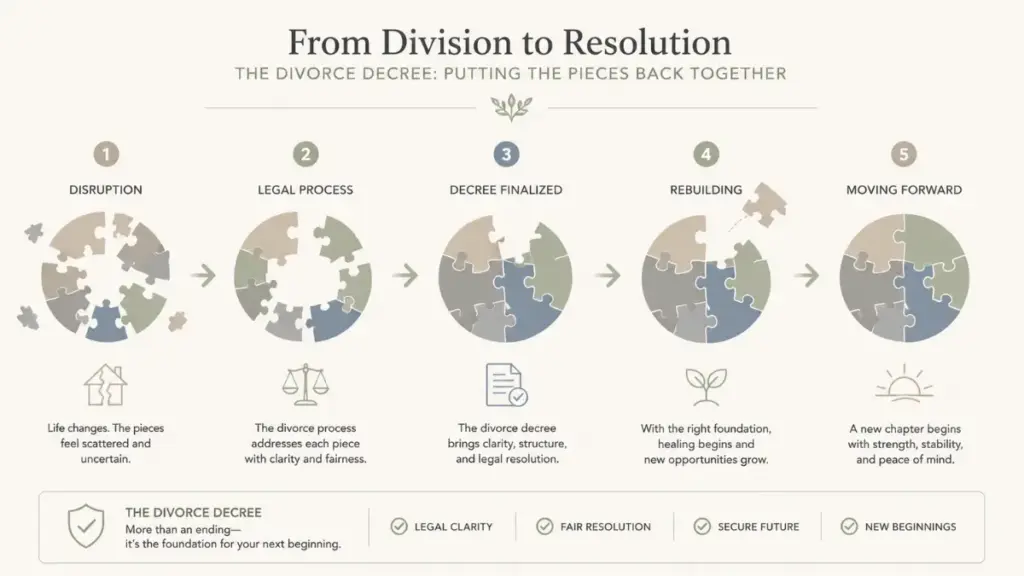
The “crash” usually happens about three to six months after the divorce decree is issued. The adrenaline of the fight has worn off, and the reality of your new living situation has set in. This is the stage where most people seek help. If you find yourself unable to concentrate, eating poorly, or isolating yourself, understand that this is the “withdrawal” phase of your nervous system regulating itself without the chaos of a toxic bond.
“True healing begins only after the legal finality of the divorce decree, when the noise fades and you are finally forced to sit with yourself.”
Senior Expert

Real-world coping mechanisms for the long haul
We need to move away from fluffy advice. Here is how you handle the reality of your post-divorce decree life.
Stop performing: Why you need to own your role in the marriage’s failure to move forward
The most liberating thing you can do is stop playing the victim. Whether you were cheated on, left, or left the other person, the fact remains that you participated in the dynamic. Owning your 50%—or even your 10%—of the failure is the fastest way to stop the cycle of mental exhaustion. It shifts your focus from what they did to you, to what you can do for yourself.

Practical steps to survive the “mental exhaustion” cycle when the legal finality is not enough
- Regulate your sensory environment: Your brain is overstimulated. Reduce noise, turn off unnecessary notifications, and keep your physical space clean.
- Audit your internal dialogue: Are you still talking to your ex in your head? Every time you catch yourself doing it, physically stand up and change your environment.
- Prioritize deep rest: Not just sleep, but “sensory rest.” Spend 30 minutes a day without any screens, audiobooks, or interaction. Just stillness.

FAQ: Navigating the dark side of legal finality
Does the mental health stigma vanish once the divorce decree is issued?
No. In fact, it often shifts. Now, the stigma is about how “long” it is taking you to recover. People will tell you that “you should be over it by now” since the divorce decree is signed. Ignore them. Your timeline is yours alone.
More Read

How do you identify if your divorce trauma is becoming chronic?
If you find that even a year after the divorce decree, your daily joy is consistently muted, or you are experiencing physical symptoms like chronic tension headaches, digestive issues, or insomnia, you are likely dealing with chronic trauma. This is not something you “willpower” your way through; it requires professional therapy focused on nervous system regulation.
The evolution of the self post-decree
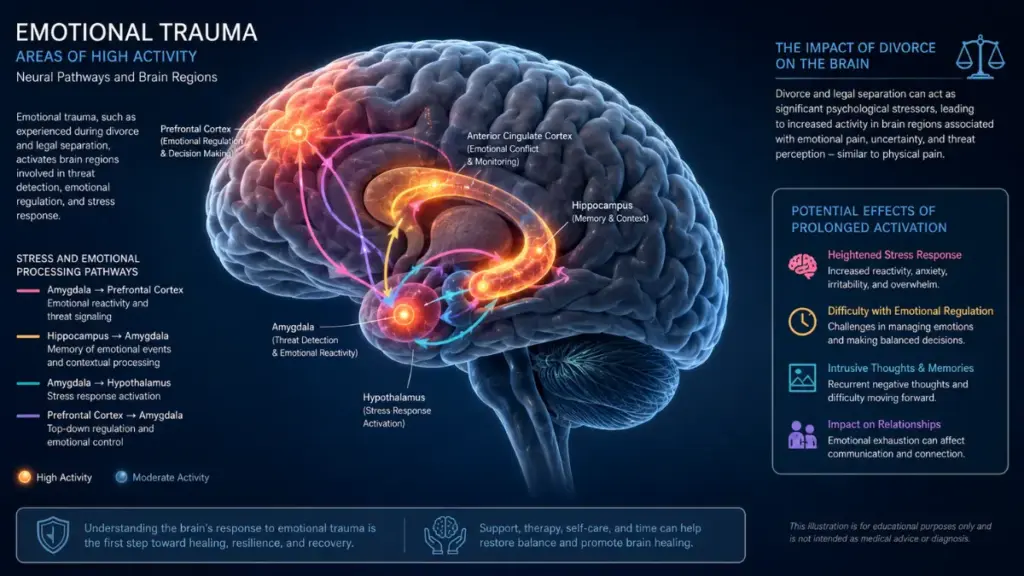
The process of moving past a divorce decree is not linear. You will have days where you feel invincible, and days where you cannot get out of bed. Both are valid. The mistake is trying to force a “recovery” timeline that matches your social circle’s expectations.
True progress is measured by your ability to tolerate your own company without needing the distraction of the conflict you left behind. When the silence no longer feels like a threat, you are beginning to heal.

Understanding the emotional cycles
It is helpful to view your recovery as a series of waves. Initially, the waves are crashing over you, and the divorce decree is the storm itself. As time passes, the waves become smaller, but they still come. You do not stop the waves; you learn how to surf them.
Mental exhaustion is a signal that you are pushing too hard to “get back to normal.” But there is no “back.” There is only “forward.” And moving forward requires a level of patience that many of us, conditioned by high-speed digital lives, have forgotten.

Why your nervous system is the ultimate judge
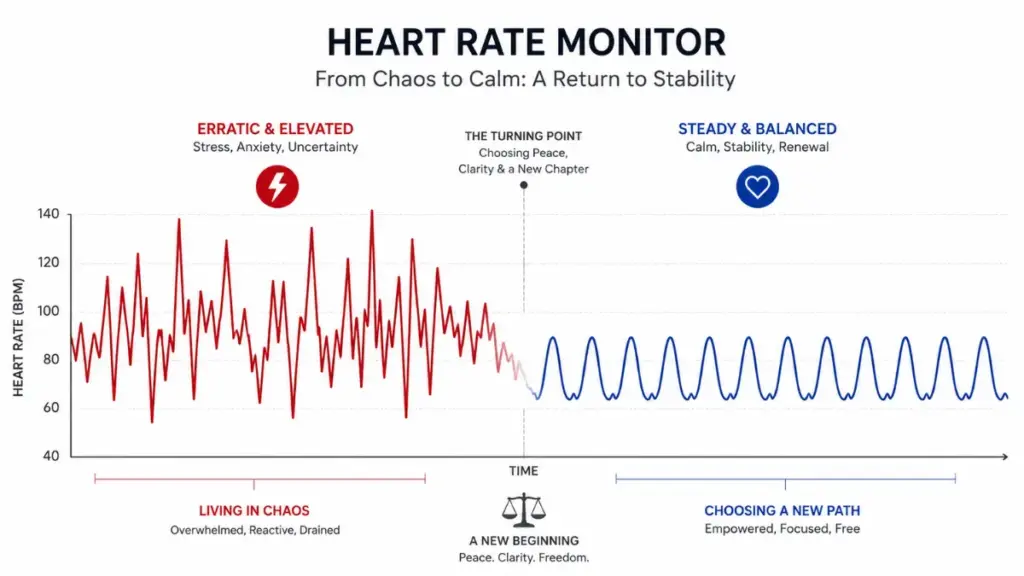
You can convince your friends you are fine. You can tell your family the divorce decree was a relief. But your nervous system is the ultimate record-keeper. It stores the tension, the unspoken words, and the fear. Ignoring these physical markers is what leads to the “cycle” we discussed.
Listen to your body. If it feels tight, stretch it. If it feels exhausted, rest it. If it feels anxious, find a way to soothe it. Your divorce decree is just a legal document; it does not have the authority to override your biology.
Building a life that does not need a court order
The goal is to reach a point where the divorce decree is just a file in a drawer—something you rarely think about and never define yourself by. This is the pinnacle of recovery. It is a life built on your terms, where your mental health is not tied to a legal outcome or the approval of a former spouse.
It is a long road, and it is often a lonely one, but it is the only road that leads to genuine, sustainable happiness.

Conclusion and the path forward
We have decoded the cycle of exhaustion that follows the divorce decree, but the actual work begins with your next decision. Do not rush to fill the silence. Do not rush to re-enter a relationship just to feel “normal.” Give yourself the grace to be tired, to be uncertain, and to be unfinished.
The divorce decree is not the end of your story, but it is the end of the chapter where you defined yourself through someone else’s lens. Now, you write the rest.
LEAVE A COMMENT BELOW TO BE ADVISED BY OUR EXPERTS OR FOLLOW THE COUCH INSIDER WEBSITE TO UPDATE THE LATEST KNOWLEDGE.