

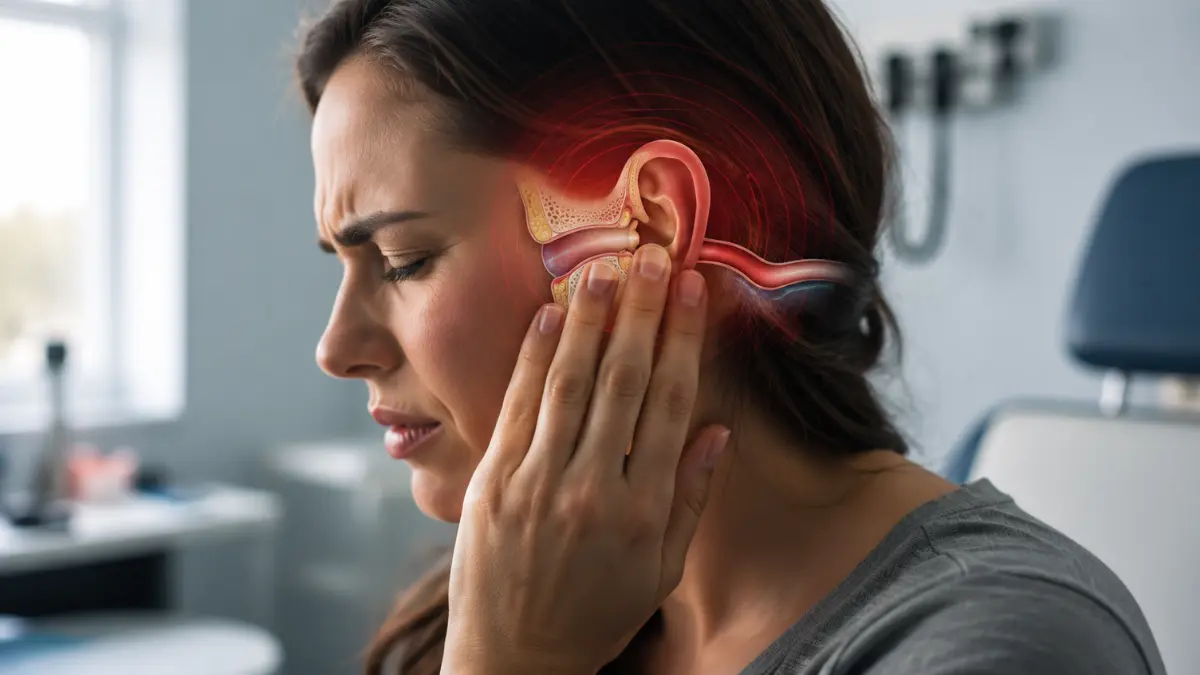

Ozempic side effects have expanded beyond common gastrointestinal issues as ENT specialists report a strange, troubling auditory symptom known as Patulous Eustachian Tube (PET) syndrome. Patients using GLP-1 receptor agonists for rapid weight loss are increasingly experiencing autophony—a condition where they hear their own breathing, voice, and vascular heartbeat echoing inside their head.
- Decoding Unusual Ozempic Side Effects Causing Users to Hear Their Own Voice and Heartbeat
- Middle Ear Anatomy and the Depletion of Ostmann’s Fatty Pad by Ozempic Side Effects
- Clinical Diagnosis and Mental Health Impacts of Ozempic Side Effects
- Safe Medical Solutions and Management Strategies for Ear-Related Ozempic Side Effects
- Frequently Asked Questions About Ozempic Side Effects
- Conclusion: Balancing Weight Loss Goals and Cranial Health
Analyzing middle ear anatomy reveals that sudden fat loss reduces the tissue cushion surrounding the Eustachian tube, leaving it continuously stuck open. This detailed breakdown examines clinical reports on how GLP-1 medications trigger this unusual symptom, the physiological mechanisms involved, and what patients experiencing these unexpected Ozempic Side Effects should do. Rapid metabolic changes from semaglutide alter fat storage throughout the entire body, including tiny specialized structural pads inside the cranial cavity, leading to novel Ozempic side effects.
Decoding Unusual Ozempic Side Effects Causing Users to Hear Their Own Voice and Heartbeat
Understanding auditory disturbances linked to GLP-1 receptor agonists requires looking beyond standard gastrointestinal warnings to examine metabolic impacts on delicate cranial structures and recognize all possible Ozempic side effects. While nausea and hypoglycemia dominate clinical literature, ear, nose, and throat (ENT) physicians are noting an unexpected influx of patients taking semaglutide who report intrusive, echoing internal sounds. These symptoms often stem directly from rapid systemic fat depletion impacting specialized soft tissues in the head.
The Autophony Phenomenon and Distressing Experiences Among GLP-1 Users
Autophony represents an abnormal acoustic perception where self-generated internal sounds echo intensely within an individual’s head, standing out as one of the most perplexing Ozempic side effects. Patients taking semaglutide report that everyday internal functions—such as breathing, swallowing, and blood pulsing—become overwhelmingly loud. Rather than hearing external sound normally, the voice reverberates within the tympanic cavity, creating a claustrophobic acoustic environment that significantly disrupts daily concentration and communication.
Describing Persistent Ear Fullness and Echoing Internal Breathing and Heartbeats
Patients suffering from these auditory disruptions describe a persistent sensation of ear blockage, similar to the pressure change felt during rapid altitude shifts on an airplane. However, unlike temporary pressure changes, swallowing or yawning fails to clear the sensation. Instead, every breath creates a rhythmic, rushing sound directly against the eardrum, accompanied by a distinct pulse echoing through the middle ear structures during exertion, highlighting how severe these Ozempic side effects can feel.
Reasons Otolaryngological Side Effects Were Overlooked in Early Clinical Trials
Early clinical testing for semaglutide focused primarily on glycemic control, HbA1c reductions, and primary weight loss benchmarks. Because otolaryngological complaints like autophony were extremely rare in general populations, trial monitoring protocols categorized sporadic reports of ear fullness as routine upper respiratory infections or transient eustachian tube dysfunction, causing researchers to overlook these auditory Ozempic side effects. Consequently, the specific link between rapid weight reduction and Eustachian tube patency remained unclassified during initial drug approvals.
Read more: Experimental Alzheimer’s Drug Shields Brain: How It Reduces 4 Levels of Alcohol Withdrawal Damage
Clinical ENT Reports on the Rise of Patulous Eustachian Tube After Rapid Weight Loss
As millions of patients started taking GLP-1 medications globally, otolaryngologists began observing a distinct pattern linking rapid adipose tissue loss with Patulous Eustachian Tube (PET) syndrome, shedding light on lesser-known Ozempic side effects. Clinical intake logs reveal that individuals losing significant body mass over short periods show a marked increase in persistent tube patency, directly correlating metabolic success with unexpected ear complications.
Reality Statistics and Observations from ENT Specialists Regarding PET Syndrome
ENT practices report that patients experiencing PET syndrome following semaglutide regimens often lose more than fifteen percent of their total body weight within a few months. Medical records indicate that while PET typically affects less than one percent of the general population, its incidence rises noticeably among patients undergoing rapid pharmaceutical weight reduction. Specialists emphasize that these Ozempic Side Effects correlate with the velocity of weight loss rather than the drug’s direct chemical interaction with ear tissues.

Common Confusion Between Patulous Eustachian Tube and Standard Otitis Media
Diagnosing PET is frequently delayed because its early symptoms closely mimic common conditions like otitis media with effusion or obstructive Eustachian tube dysfunction, making it difficult to identify these auditory Ozempic side effects immediately. General practitioners often misdiagnose the persistent ear fullness as fluid buildup or inflammation, incorrectly prescribing nasal steroids or decongestants. Unfortunately, decongestants reduce local tissue swelling further, which actually worsens PET symptoms by widening the open tube gap.
Middle Ear Anatomy and the Depletion of Ostmann’s Fatty Pad by Ozempic Side Effects
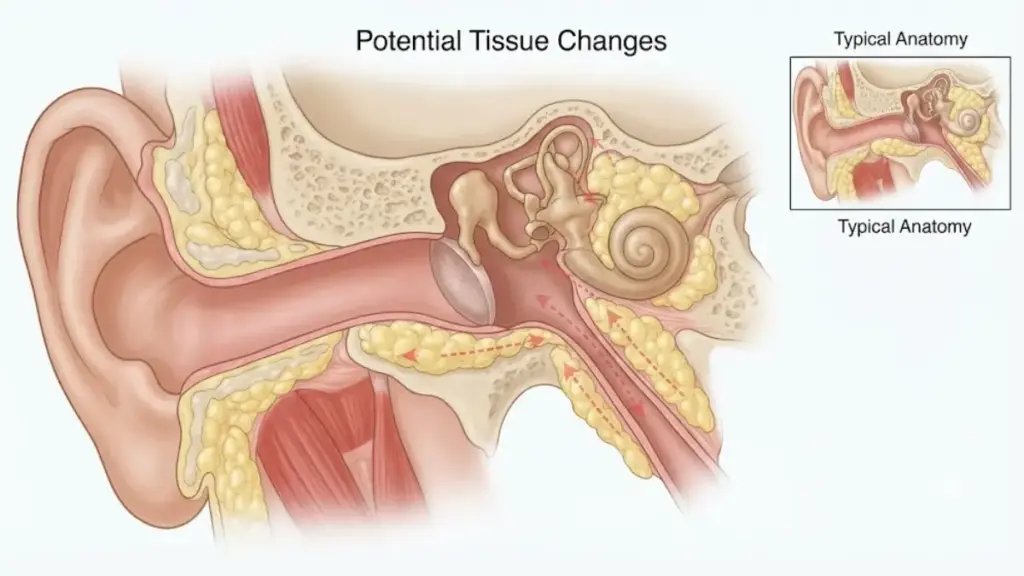
To comprehend why rapid weight loss affects hearing and causes complex Ozempic side effects, one must evaluate the physical architecture connecting the nasopharynx to the middle ear space. The Eustachian tube relies on surrounding muscular and adipose tissues to maintain its default closed state. When systemic fat burning depletes these surrounding support structures, normal mechanical valve functions fail.
Anatomy of the Eustachian Tube and Physiological Role of Ostmann’s Fatty Pad
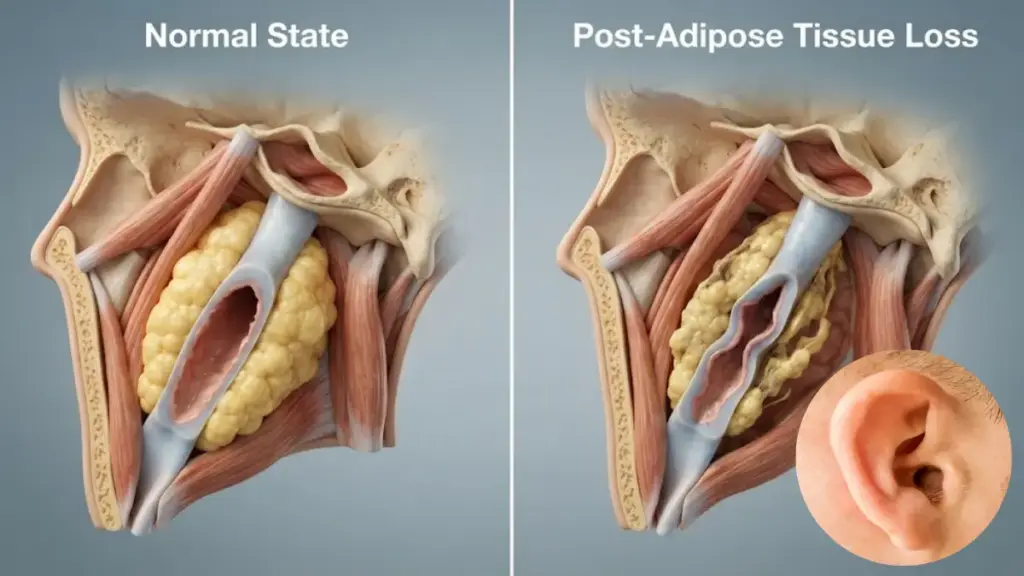
The Eustachian tube is a narrow canal lined with mucous membrane that connects the upper throat to the middle ear cavity. Ostmann’s fatty pad is a specialized adipose structure located along the lateral wall of the cartilaginous Eustachian tube. This fat pad provides essential physical bulk, acting as a soft cushion that keeps the tube closed when at rest, preventing throat sounds and respiratory pressures from traveling upward into the ear, a mechanism heavily involved in these Ozempic side effects.
Natural Opening and Closing Mechanics Balancing Tympanic Pressure
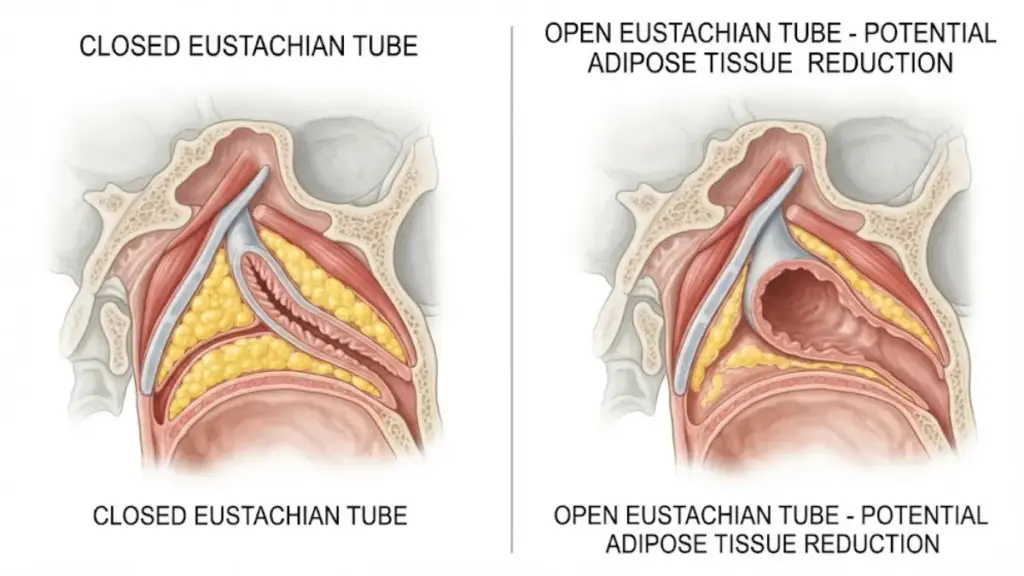
Under normal physiological conditions, the Eustachian tube remains securely closed to protect the delicate middle ear environment. It opens briefly during specific actions like swallowing, yawning, or chewing, driven by the tensor veli palatini and levator veli palatini muscles. This brief opening equalizes air pressure across the tympanic membrane and allows normal mucosal drainage into the throat before immediately snapping shut, preventing structural Ozempic side effects.
Cushioning Role of Surrounding Adipose Tissue in Maintaining Valve Closure
The resting closure of the tube depends almost entirely on external tissue pressure exerted by Ostmann’s fatty pad and surrounding vascular beds. Adipose tissue creates a gentle seal that prevents acoustic energy generated by voice, breathing, and carotid artery pulsation from entering the nasopharyngeal orifice. Without this adequate fat pad bulk, structural closure pressure drops below critical thresholds, setting the stage for auditory Ozempic side effects.
Impact of GLP-1 Receptor Agonists on Systemic Fat Reduction Speed
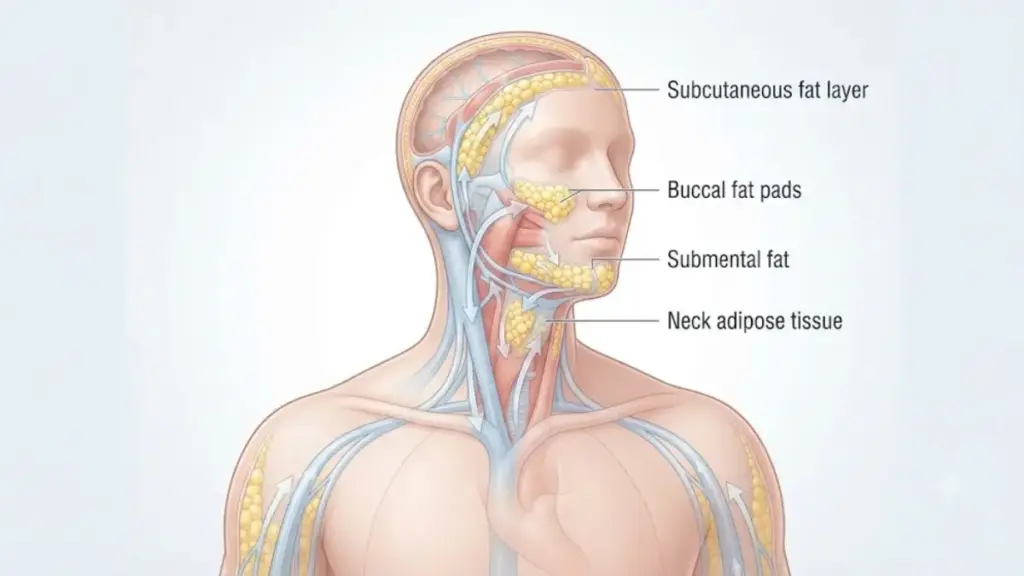
GLP-1 receptor agonists function by mimicking natural incretin hormones, delaying gastric emptying, and signaling satiety to the brain. While this process efficiently mobilizes visceral and subcutaneous fat stores throughout the body, the human body draws lipids from all adipose deposits indiscriminately, including specialized cranial fat structures, which can trigger unexpected Ozempic side effects.
Read more: Why measles symptoms spread at terrifying speed and cause immune amnesia after infection!
Rapid Weight Loss Causing Acute Shrinkage of Ostmann’s Fatty Pad
When semaglutide triggers swift caloric deficits, body mass drops at a rate that rapidly exhausts local lipid reserves. Ostmann’s fatty pad undergoes acute atrophy, shrinking faster than surrounding mucosal tissues can adapt. As the fat pad loses volume, the lateral wall of the Eustachian tube loses its supportive pressure, leaving the valve stuck in a continuously open or “patulous” state and manifesting prominent Ozempic side effects.
Acoustic Transmission Pathway from Nasopharynx to Middle Ear
With the Eustachian tube permanently open, a direct, unobstructed acoustic pathway opens between the throat and the middle ear chamber. Sound waves generated by vocal cord vibrations, air turbulence during nasal breathing, and blood movement through nearby arteries travel uninterrupted up the tube. These acoustic signals strike the internal surface of the eardrum, causing intense internal reverberation known as autophony, one of the most troubling Ozempic side effects.
Clinical Diagnosis and Mental Health Impacts of Ozempic Side Effects
Recognizing the distinct clinical hallmarks of Patulous Eustachian Tube syndrome is crucial for avoiding inappropriate medical treatments when managing Ozempic side effects. Beyond physical discomfort, living with continuous internal acoustic reverberation imposes a significant psychological strain on affected individuals.
Distinct Clinical Signs Distinguishing PET Syndrome from Other Ear Conditions
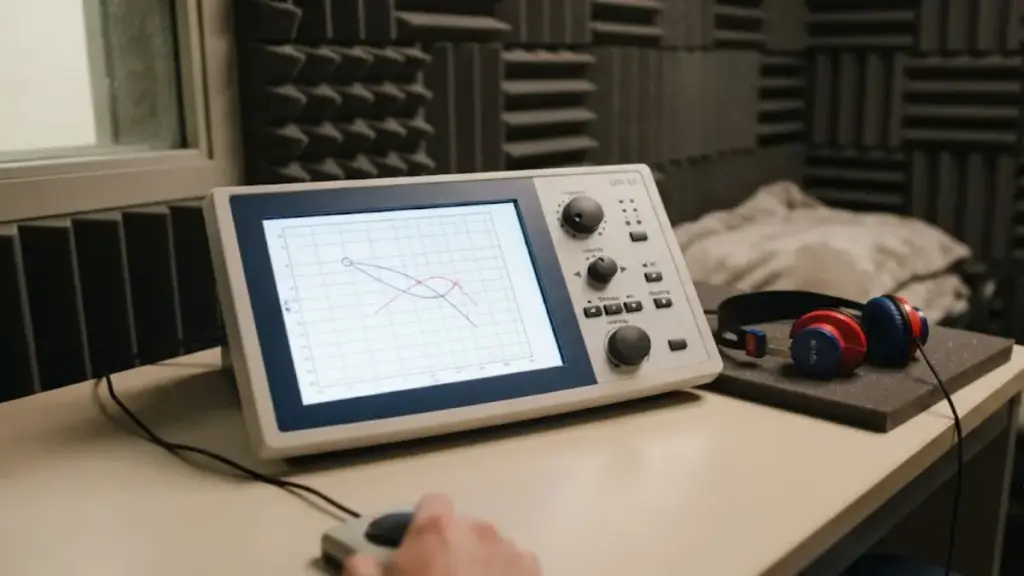
Unlike typical ear infections characterized by fluid buildup, conductive hearing loss, or sharp pain, PET syndrome manifests through unique physical and positional dynamic cues. Identifying these cues allows clinicians to distinguish weight-loss-induced auditory issues and secondary Ozempic side effects from infectious or inflammatory ear conditions.
Recognizing how rapid body composition changes impact delicate cranial structures empowers patients to address auditory issues proactively while managing their health goals.
Ri
Symptom Relief When Bending Forward or Lying Supine
More Read

A classic hallmark of PET syndrome and related Ozempic side effects is the rapid relief of symptoms when changing body posture. When a patient lies flat on their back or bends their head down between their knees, venous pressure in the head increases. This localized vascular congestion swells the tissues around the Eustachian tube, temporarily restoring the seal and eliminating the echoing voice and breathing sounds immediately.

Sensation of Eardrum Movement Synchronous with Respiration
Physicians examining patients with PET often observe real-time movement of the tympanic membrane during normal breathing. As the patient breathes in and out through their nose, air pressure fluctuations travel directly through the open tube, causing the eardrum to visually move inward and outward. This constant mechanical motion causes severe discomfort and an irritating clicking sensation inside the ear, complicating these Ozempic side effects.
Negative Effects of Persistent Autophony on Quality of Life
The psychological toll of unmanaged autophony can be profound. Hearing one’s own breathing sounds like a heavy bellows inside the head, combined with hearing every vocalized syllable echo loudly, transforms simple everyday tasks into exhausting challenges when dealing with such Ozempic side effects.
Risk of Neurological Stress, Poor Focus, and Sleep Disruption
Continuous internal acoustic feedback disrupts cognitive processing, making it difficult to hold conversations, read, or work in quiet environments. Many patients report severe anxiety, irritability, and chronic insomnia, as the sound of their own heartbeat and respiratory rhythm prevents them from resting. Over time, these persistent Ozempic Side Effects can cause significant mental fatigue.

Psychological Impact and Fears of Neurological or Vascular Disorders
Because many patients are unaware that rapid weight loss can affect ear mechanics, experiencing a booming vascular pulse inside the ear often sparks fear of dangerous medical conditions. Patients frequently worry they are experiencing brain aneurysms, severe hypertension, or neurological tumors rather than simple Ozempic side effects. Reassuring these individuals requires clear communication regarding how metabolic fat loss alters Eustachian tube function.

Safe Medical Solutions and Management Strategies for Ear-Related Ozempic Side Effects
Managing PET syndrome triggered by GLP-1 weight loss therapies involves a step-by-step approach starting with simple, non-invasive adjustments. If symptoms persist despite lifestyle modifications, specialized otolaryngological treatments can help restore proper Eustachian tube function and mitigate these Ozempic side effects.
Temporary Interventions and Lifestyle Adjustments to Relieve Symptoms
Initial management focuses on stabilizing body weight, maintaining optimal tissue hydration, and using physical techniques to increase local tissue swelling around the Eustachian valve to counter these Ozempic side effects.
Hydration, Electrolyte Balance, and Calibrating Weight Loss Speed
Increasing daily fluid intake helps maintain mucosal tissue turgor throughout the body, including the mucosal linings of the middle ear. Supplementing with electrolytes helps retain fluids in tissues, encouraging minor swelling that can narrow the open tube gap. Furthermore, working with prescribing physicians to adjust semaglutide dosages can moderate the speed of weight loss, giving cranial fat structures time to adapt and reducing severe Ozempic side effects.
Daily Postures and Exercises to Increase Head Venous Pressure
Patients experiencing active autophony can use temporary physical maneuvers to gain immediate relief from these Ozempic side effects. Tilting the head downward, sitting with the head between the knees, or lying flat for brief periods increases venous engorgement in the head, temporary swelling the mucosal tissue to close the gap. While temporary, these physical techniques offer valuable breaks from persistent internal noise.

Specialized ENT Treatment Protocols for Severe PET Patients
When conservative measures fail to provide adequate relief and autophony continues to impair daily living, ENT specialists can intervene with targeted medical therapies designed to close the Eustachian tube opening and manage severe Ozempic side effects.
Specialized Nasal Sprays to Induce Mucosal Swelling
Otolaryngologists may prescribe specialized nasal drops or sprays containing mild irritants, such as dilute hydrochloric acid or hypertonic saline solutions. These solutions intentionally induce mild mucosal edema around the pharyngeal opening of the Eustachian tube, effectively swelling the surrounding tissue to restore a functional closure seal and alleviate these Ozempic side effects.

Surgical Procedures: Fillers, Fat Grafts, and Ventilation Tubes
For chronic, severe cases of PET that do not respond to non-invasive treatments, surgical interventions offer long-term structural solutions. Specialists can inject biocompatible fillers or perform autologous fat grafts directly into Ostmann’s region to rebuild the lost tissue volume. Alternatively, placing a small ventilation tube (grommet) across the tympanic membrane helps equalize acoustic impedance, reducing the intense reverberation of autophony associated with severe Ozempic side effects.

Frequently Asked Questions About Ozempic Side Effects
Can weight loss from GLP-1 medications permanently damage my hearing?
No, PET syndrome triggered by rapid weight loss does not damage the delicate hair cells or nerves responsible for sound perception. The condition is a mechanical valve issue where sound waves travel too freely into the middle ear space. Once body weight stabilizes or specialized medical interventions are used, normal acoustic balance can be restored without long-term hearing loss, reassuring those concerned about permanent Ozempic side effects.
How long do ear-related symptoms usually last after weight loss stabilizes?
For many individuals, symptoms improve once body weight reaches a stable plateau for several months. As overall metabolic rates normalize, remaining soft tissues and localized fluids rebalance within cranial structures, helping resolve these temporary Ozempic side effects. However, if fat loss around Ostmann’s pad is significant, dedicated ENT treatments may be needed to resolve symptoms fully.
Should I stop taking semaglutide immediately if I develop autophony?
You should never discontinue prescribed GLP-1 medications without consulting your healthcare provider first. Abruptly stopping treatment can disrupt blood sugar control and metabolic stability. Instead, discuss your ear symptoms with your prescribing doctor and an ENT specialist to explore hydration adjustments, dose modifications, or conservative therapies to manage these Ozempic side effects safely.
Conclusion: Balancing Weight Loss Goals and Cranial Health
Experiencing auditory disruptions while undergoing GLP-1 treatment highlights the complex relationship between systemic fat loss and delicate head anatomy. While autophony and Patulous Eustachian Tube syndrome can be unsettling, understanding that these symptoms stem from mechanical changes in Ostmann’s fatty pad helps demystify the experience. By recognizing symptoms early, maintaining adequate hydration, moderating weight loss velocity, and consulting otolaryngology specialists, patients can successfully address these uncommon Ozempic Side Effects while continuing to pursue their broader health and metabolic goals.
PLEASE LEAVE A COMMENT TO SHARE YOUR FAVORITE THOUGHTS OR FOLLOW OUR BLOG FOR THE LATEST UPDATES.