



Recognizing early Measles Symptoms is essential for preventing rapid community transmission and avoiding severe post-infection complications.
- Uncovering the Destructive Power of the Virus Through R_0 and Immune Amnesia in Measles Symptoms
- Biological Progression and Clinical Timeline of Measles Symptoms
- Four-Step Emergency Protocol for Managing Measles Symptoms
- MMR Vaccine Guidelines and Building Sustainable Immune Barriers
- Frequently Asked Questions About Measles Symptoms
- Strategic Summary on Countering Measles Symptoms
Early Measles Symptoms present as high fever, coughing, and a characteristic rash, but the underlying virus is remarkably dangerous due to its extreme basic reproduction number and its ability to wipe out previously acquired immune memory through immune amnesia.
Uncovering the Destructive Power of the Virus Through R_0 and Immune Amnesia in Measles Symptoms
Understanding how Measles Symptoms spread requires analyzing both the physical dynamics of viral transmission and the long-term biological consequences within the human host’s immune infrastructure.
Extreme Airborne Transmission Capabilities
The virus responsible for Measles Symptoms is one of the most infectious respiratory pathogens known to modern medicine, relying on fine aerosol particles to traverse significant distances effortlessly.
Transmission Index R_0 = 12–18: Population Spread Dynamics
The basic reproduction number (R_0) for the pathogen driving Measles Symptoms ranges between 12 and 18. This metric indicates that a single infected person in an unvaccinated, non-immune population will pass the pathogen to an average of 12 to 18 secondary individuals. This exponential growth model explains why localized outbreaks rapidly escalate into massive public health emergencies if vaccination coverage slips even slightly below the critical community threshold.

Airborne Micro-Droplet Dynamics and Two-Hour Suspension
Respiratory secretions emitted when a patient manifests classic Measles Symptoms like coughing or sneezing generate microscopic aerosol droplets under 5 microns in size. Unlike heavier droplets that settle quickly, these micro-aerosols remain suspended in ambient indoor air for up to two hours after the infected individual has left the physical environment. Anyone entering the unventilated space during this window faces an extreme risk of inhaling the live virus and subsequently developing Measles Symptoms.
Landmark Discoveries Regarding “Immune Amnesia”
While acute Measles Symptoms resolve after two weeks, the virus leaves behind a quiet biological vulnerability that systematically dismantles the host’s previously acquired immunological defenses.
Wiping Out 11%–73% of Existing Antibody Diversity
Groundbreaking studies published in the journal Science revealed that the virus causing Measles Symptoms targets memory lymphocytes expressing the CD150 receptor. By infecting and destroying these specialized memory B and T cells, the virus erases between 11% and 73% of the patient’s existing antibody repertoire. This phenomenon, known as immune amnesia, essentially wipes out the immune system’s historical memory of past infections and vaccines.

The Immunological Reset Paradox: Post-Infection Vulnerability
As a result of immune amnesia, patients recovering from Measles Symptoms return to an immunologically naive state resembling that of a newborn baby. Their bodies lose the ability to recognize common secondary pathogens, such as influenza, pneumonia, and bacterial enteritis, which they had successfully defeated years prior. Consequently, children who successfully survive primary Measles Symptoms remain at a significantly heightened risk of severe secondary infections and mortality for up to three years following initial viral clearance.
Biological Progression and Clinical Timeline of Measles Symptoms
The clinical course of Measles Symptoms follows a distinct, predictable progression divided into clear physiological phases, each marked by specific clinical markers.

Incubation Period and Early Prodromal Signs
Following exposure, the virus undergoes an asymptomatic incubation phase lasting 10 to 14 days before initial Measles Symptoms begin to manifest.
The “3C” Rule: Cough, Coryza, and Conjunctivitis
The onset of primary Measles Symptoms is marked by a rising fever accompanied by the classic diagnostic triad known as the “3Cs”:
- Cough: A dry, persistent, and increasingly hacking cough caused by mucosal inflammation in the upper respiratory tract.
- Coryza: Severe nasal congestion, inflammation, and continuous clear rhinorrhea similar to acute rhinitis.
- Conjunctivitis: Marked redness, swelling, and light sensitivity (photophobia) in both eyes due to viral replication in the ocular membranes.
Pathognomonic Diagnostic Marker: Koplik Spots
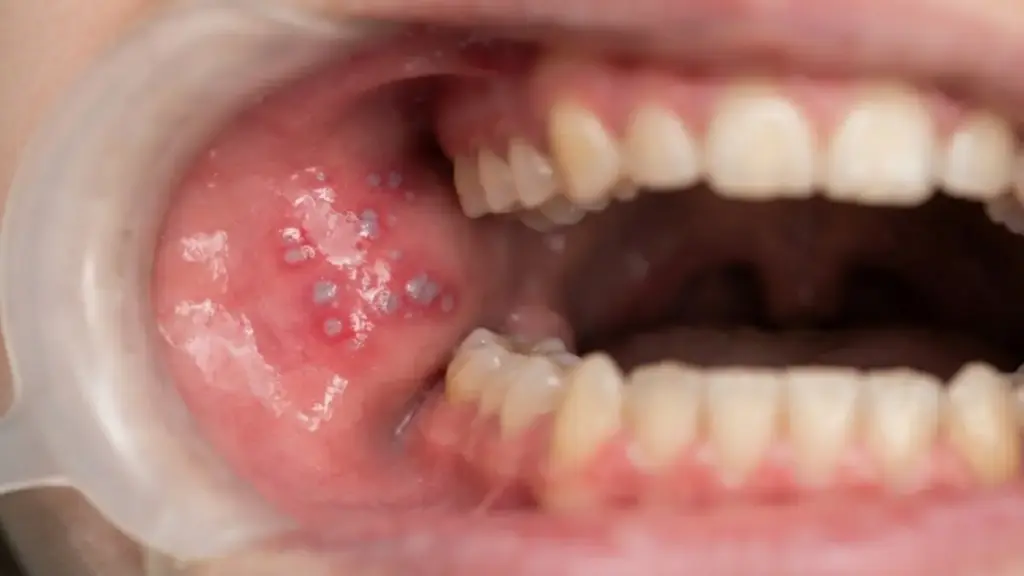
Two to three days after initial Measles Symptoms begin, a definitive pathognomonic sign appears inside the oral cavity: Koplik spots. These tiny, irregular, blue-white lesions surrounded by an erythematous halo develop on the buccal mucosa opposite the lower molars. Spotting these unique lesions allows clinicians to confirm Measles Symptoms days before the characteristic skin rash erupts across the body.
Rash Eruption Phase and Severe Acute Complications
The peak phase of Measles Symptoms involves widespread dermatological changes alongside a substantial risk of organ-system complications.
Maculopapular Rash Evolution: Sequence and Distribution
Approximately three to five days after the prodromal phase starts, the classic erythematous maculopapular rash begins to erupt. The rash follows a distinct cephalocaudal progression: it originates behind the ears and along the hairline, moves downward over the face and neck, spreads across the trunk and abdomen, and finally reaches the hands and feet. As new lesions emerge, older spots merge into blotchy patches, changing from bright red to a dark brownish hue before desquamating.

Dangerous Respiratory and Neurological Complications
Systemic dissemination during severe Measles Symptoms can lead to acute, life-threatening secondary conditions:
- Post-Infectious Encephalitis: Brain tissue inflammation occurring in roughly 1 in 1,000 cases, leading to seizures, permanent neurological damage, or coma.
- Interstitial Pneumonia: Viral or secondary bacterial lung infections, accounting for the vast majority of fatal outcomes related to Measles Symptoms.
- Otitis Media: Acute middle ear infections occurring in nearly 1 in 10 children, which can cause permanent hearing loss.
Four-Step Emergency Protocol for Managing Measles Symptoms
When an individual exhibits suspected Measles Symptoms, immediate structured containment protocols must be initiated to protect the patient and surrounding community.
More Read


Step 1: Patient Isolation and Infection Control Procedures
Containing aerosol spread is the immediate priority upon identifying potential Measles Symptoms in a household or institutional setting.
Strict Home Quarantine Protocols
The affected individual must be isolated immediately in a private, well-ventilated room equipped with dedicated sanitary facilities. Household members should avoid entering the room, particularly unvaccinated individuals, infants under 12 months, pregnant women, and immunocompromised patients. The patient must remain in strict isolation for at least four full days after the initial rash appears, as viral shedding remains extremely high during this phase of Measles Symptoms.
Personal Protective Equipment and Surface Disinfection
Caregivers entering the isolation room must wear properly fitted N95 or FFP3 respirators to filter airborne viral aerosols generated by patient Measles Symptoms. All high-touch surfaces, such as door handles, light switches, and bed rails, should be wiped down daily using medical-grade disinfectants containing sodium hypochlorite or 70% ethanol to eliminate deposited viral particles.

Step 2: Monitoring Vital Signs and Identifying Danger Signals
Continuous clinical surveillance helps distinguish mild disease progression from life-threatening secondary complications arising from Measles Symptoms.
Tracking Body Temperature, Respiratory Rate, and Consciousness
Caregivers should maintain a detailed log recording the patient’s body temperature, breathing frequency, and alertness every two to four hours. Severe high fevers exceeding 104°F (40°C) that persist beyond four days after rash onset signal possible secondary bacterial invasion or systemic inflammatory overload requiring rapid medical re-evaluation.
Recognizing early Measles Symptoms and maintaining global two-dose MMR vaccination coverage remains our most powerful strategy for preventing airborne transmission, avoiding immune amnesia, and protecting public health.
Ri
Red Flag Warning Signs Requiring Emergency Intervention
Immediate emergency medical care must be sought if any of the following severe signs emerge alongside baseline Measles Symptoms:
- Chest Retractions & Stridor: Intercostal muscle sinking during inhalation, rapid shallow breathing, or grunting noises indicating respiratory distress.
- Febrile Convulsions: Involuntary muscle twitching, loss of consciousness, or eye-rolling caused by extreme fever spikes.
- Profound Lethargy: Severe drowsiness, confusion, or inability to wake the patient.
- Dehydration from Dysentery: Sunken eyes, absent tears, and extreme dryness of oral membranes caused by persistent diarrhea.

Step 3: Symptom Support and Cellular Nutritional Replenishment
Because no specific antiviral medication halts viral replication, managing Measles Symptoms relies on supportive clinical care and targeted nutrient supplementation.
High-Dose Vitamin A Therapeutic Administration
The World Health Organization recommends administering high-dose Vitamin A supplements to all children diagnosed with acute Measles Symptoms. Vitamin A depletes rapidly during active viral replication, leading to epithelial tissue damage and severe ocular damage. Providing two age-appropriate oral doses (up to 200,000 IU for children over one year) on consecutive days restores cellular immune integrity, protects corneal membranes, and reduces overall mortality by up to 50%.
Oral Rehydration and Gentle Dietary Management
Combating fluid losses from high fever and diarrhea associated with Measles Symptoms requires structured rehydration using Oral Rehydration Salts (ORS) containing optimal sodium and glucose ratios. Patients should be offered soft, nutrient-dense foods such as pureed vegetable soups, warm broths, and porridge to maintain calorie intake without irritating inflamed gastrointestinal mucosa.

Step 4: Safe Hospital Transfer and Epidemiological Notification
Transporting individuals with active Measles Symptoms requires strict adherence to public health containment guidelines to prevent clinical cross-contamination.
Safe Medical Transport Procedures
If a patient requires hospital transfer due to severe Measles Symptoms, transport must occur via private vehicle or specialized ambulance with open windows or isolated airflow systems. Emergency departments must be alerted prior to the patient’s arrival so healthcare personnel can clear waiting areas and place the patient immediately into a negative-pressure isolation room.
Contact Tracing and Ring Vaccination Protocols
Public health authorities must be notified immediately upon confirming clinical Measles Symptoms. Epidemiologists conduct contact tracing to identify all individuals exposed to the index case within the infectious window (four days before to four days after rash onset). Unvaccinated contacts should receive post-exposure MMR vaccination within 72 hours, or immunoglobulin therapy within six days, to halt further community transmission.

MMR Vaccine Guidelines and Building Sustainable Immune Barriers
The primary defense against the resurgence of viral outbreaks and severe Measles Symptoms relies on population-wide vaccination protocols.

Medical Dosing Schedule for the MMR Vaccine
The trivalent MMR vaccine provides long-lasting immunity against measles, mumps, and rubella, preventing the onset of acute Measles Symptoms.
Standard Two-Dose Pediatric Immunization Schedule
Optimal pediatric protection against Measles Symptoms requires a standardized two-dose vaccine regimen:
- Dose 1: Administered between 12 and 15 months of age, providing initial protection in approximately 93% of recipients.
- Dose 2: Administered between 4 and 6 years of age (prior to kindergarten entry), raising overall clinical efficacy to roughly 97%.
Adult Catch-Up, Maternal, and Travel Immunity Protocols
Adults born after 1957 without documented evidence of immunity or laboratory proof of prior infection should receive at least one dose of MMR vaccine. Women planning to become pregnant should verify their immune status and receive MMR vaccination at least one month before conception, as live attenuated vaccines cannot be administered during pregnancy. International travelers moving toward endemic regions should ensure their two-dose immunization status is fully up to date prior to departure.

Maintaining Herd Immunity and Post-Infection Immune Reconstruction
Vaccination protects both the vaccinated individual and vulnerable members of society who cannot receive immunizations due to medical conditions.
The Herd Immunity Threshold (> 95%)
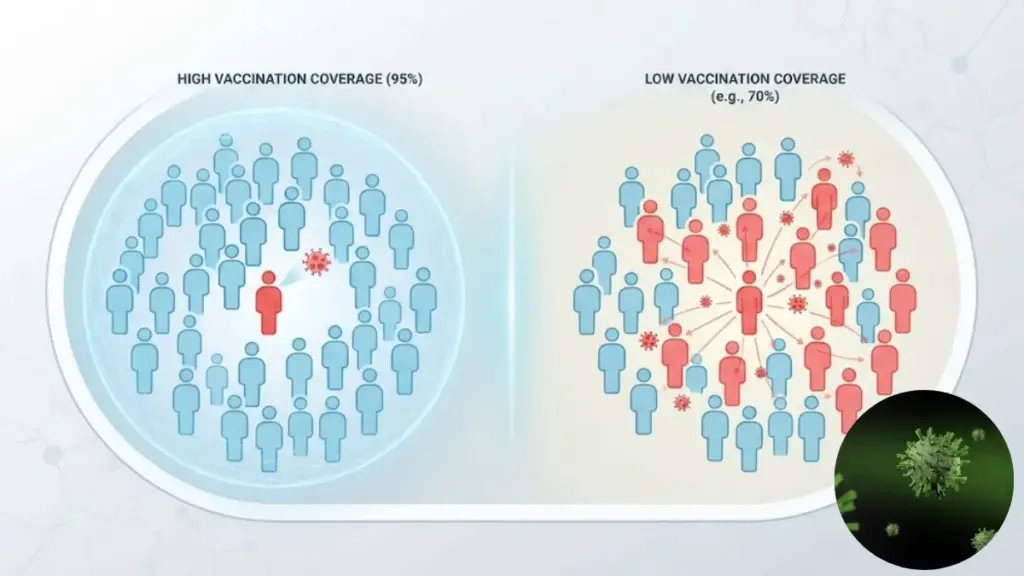
Because the basic reproduction rate of the virus causing Measles Symptoms is exceptionally high, community protection relies on maintaining population vaccination coverage strictly above 95%. When coverage dips below this threshold, immune gaps form in the community, enabling airborne viral clusters to ignite rapid localized outbreaks among unvaccinated individuals.
Immune Reconstruction for Children Post-Infection
Because experiencing acute Measles Symptoms causes immune amnesia, affected children require a deliberate strategy to rebuild their damaged immune memory. Healthcare providers recommend carefully updating routine immunizations for other childhood pathogens following recovery to restimulate antibody production and rebuild protective immune barriers.
Frequently Asked Questions About Measles Symptoms
Can a fully vaccinated person still develop Measles Symptoms?
Vaccine breakthrough cases occur in roughly 3% of fully vaccinated individuals due to non-response or waning immunity over time. However, when breakthrough infections occur, the resulting Measles Symptoms are typically mild, with lower fevers, minimal rash coverage, and a drastically reduced risk of severe secondary complications or onward viral transmission.
How soon after exposure to the virus do initial Measles Symptoms appear?
The incubation period between exposure and the onset of initial Measles Symptoms (such as high fever, coughing, and runny nose) ranges from 7 to 14 days. The characteristic maculopapular rash typically appears approximately 14 days after original viral exposure.
Why is the risk of catching other infections higher after Measles Symptoms clear?
Because the virus infects memory lymphocytes, it causes immune amnesia, eliminating antibodies previously generated against other pathogens. Consequently, patients recovering from Measles Symptoms are temporarily left without immunological memory, making them susceptible to common secondary respiratory and intestinal infections for months or years after recovery.
Strategic Summary on Countering Measles Symptoms
Protecting communities against the threat of Measles Symptoms requires an integrated approach built around high vaccination coverage, rapid clinical identification, and swift public health containment. Understanding the dual threat of extreme airborne transmission and post-infection immune amnesia highlights why maintaining the 95% herd immunity threshold is essential. Through systematic MMR vaccination and prompt supportive care, healthcare systems can prevent severe complications and eliminate widespread outbreaks.
PLEASE LEAVE A COMMENT TO SHARE YOUR FAVORITE THOUGHTS OR FOLLOW OUR BLOG FOR THE LATEST UPDATES.