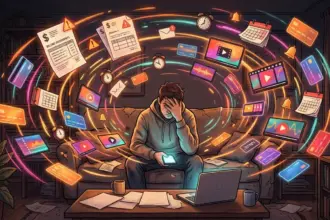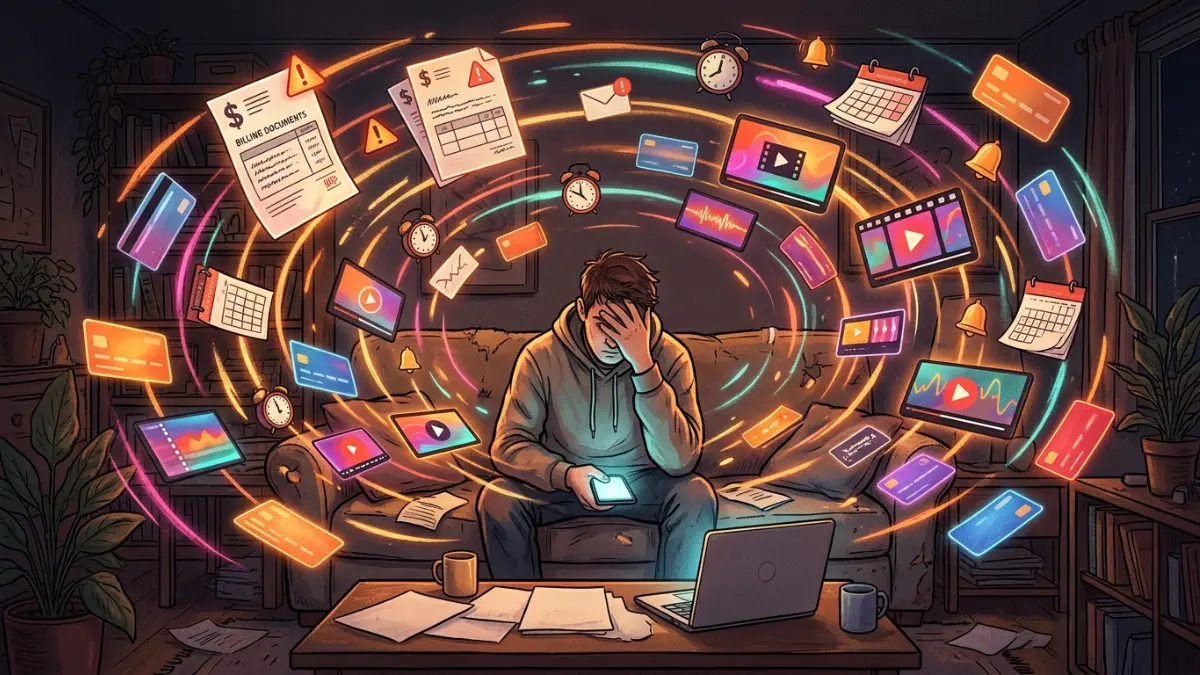

Netflix, Disney+, HBO Max, a music app, cloud storage, an AI chatbot, maybe even your car. Somewhere along the way, everything turned into a monthly bill. If you’ve ever opened your bank statement and winced, that feeling has a name: subscription fatigue. Here’s why it’s happening, whether the golden age of streaming is really over, and how to stop paying for things you barely use.

What is subscription fatigue, and how bad has it gotten?
Subscription fatigue is that worn-out, slightly annoyed feeling you get from juggling too many recurring payments. It’s not just the money. It’s keeping track of free trials, remembering which app has which show, and noticing that every few months, something quietly costs a little more.
The numbers back it up. According to Deloitte’s 2026 Digital Media Trends research:
- The average streaming household now pays $76 a month for streaming video alone, up 9% from a year earlier, across an average of four paid services.
- 73% of consumers say they’re frustrated with price hikes, and 45% feel they pay too much for streaming.
- 43% canceled at least one service in the past six months, and 27% canceled one and then signed right back up within six months.
- About half are actively looking for ways to lower their streaming bill.
That last pair tells the whole story. People aren’t quitting streaming. They’re cycling in and out of it, trying to keep the bill under control. That’s subscription fatigue in action.
Why does everything have a monthly fee now?
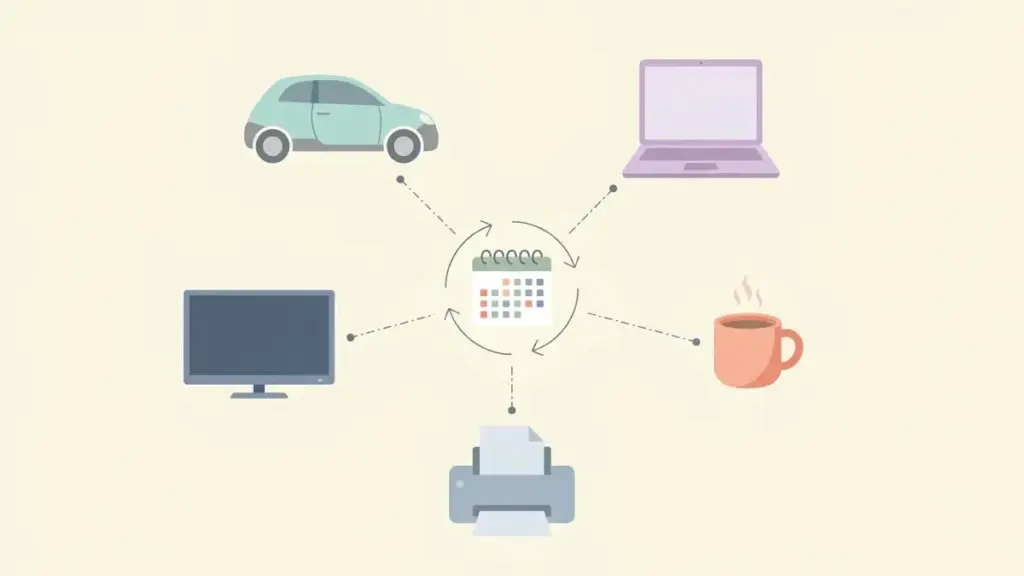
It’s not just streaming. Software you used to buy once now renews every month. AI chatbots have paid tiers. Security cameras charge for cloud video storage. Printers offer ink plans. Some carmakers have even experimented with charging monthly for features already built into the car, like heated seats, and backed off after customers revolted. So why is every company doing this?
1. Monthly money is predictable money
A one-time sale is great until next month, when you have to find a new customer. A subscription pays again and again. Investors love that kind of steady, recurring revenue, and companies that have it are often valued much higher. That’s a big reason businesses keep pushing everything toward a plan.
2. $9.99 a month feels smaller than $120 a year
They’re the same amount of money, but a small monthly charge is much easier to say yes to. Most people never add it all up, which is exactly why a dozen “small” subscriptions can quietly turn into hundreds of dollars a month.
3. Small price hikes are easy to miss
Once you’re subscribed, raising the price by a dollar or two rarely makes people leave. Deloitte found that many leading streaming services raised their ad-free prices at least once in a 12-month period, by an average of about $1.20 a month. Each bump is small. Over a few years, they add up fast.
4. People forget to cancel
Free trials that turn into paid plans, auto-renewals, cancellation buttons buried five menus deep: companies know that many people simply forget. Regulators have noticed. The FTC tried to require a simple “click to cancel” option, but a federal appeals court threw out that rule in 2025 over a procedural issue. In 2026, the FTC started the process of bringing it back, while still going after companies for tricky sign-up and cancellation practices. One of those cases ended in a $2.5 billion settlement with Amazon. About 30 states also have their own automatic renewal laws.
5. Some products really do cost money to keep running
To be fair, not every subscription is a cash grab. Cloud storage, constantly updated software and AI tools cost real money to run every single day. The problem is that the model has spread far beyond the products that actually need it.
Is the golden age of streaming over?

Remember 2015? One Netflix account, maybe split with a few friends, about $10 a month, no ads, and a huge library of other studios’ movies and shows. That was the deal that made millions of people cut the cord. That deal is gone. Here’s what replaced it.
Prices keep climbing

Here’s what the biggest services cost in the U.S. as of September 2026:
| Service | Ad-free plan | Plan with ads |
|---|---|---|
| Netflix | $19.99 (Standard) | $8.99 |
| Disney+ | $18.99 | $11.99 |
| Hulu | $18.99 | $11.99 |
| Peacock | $19.99 (Premium Plus) | $12.99 (Premium) |
| HBO Max | $18.49 (Standard) | Cheaper plan with ads available |
| Paramount+ | $13.99 (Premium) | $8.99 |
| Apple TV | $14.99 | No ad plan |
| Prime Video | $4.99 add-on to remove ads, on top of Prime | Included with Prime |
Add up all eight without ads and you get about $139 a month, or more than $1,670 a year, according to Fortune’s 2026 tally. For comparison, the average pay-TV bill in 2016 was about $103 a month, which works out to roughly $143 in today’s dollars. In other words, paying for every major streamer now costs about what cable used to.
And 2026 alone brought another round of hikes: Paramount+ in January, Netflix in March, Prime Video’s ad-free add-on in April, Peacock in August and Apple TV in late August.
Read more: Brewers World Series History: Have They Ever Won, and What a 2026 Title Would Mean
Ads are back
The whole point of streaming used to be “no commercials.” Now almost every major service has a cheaper plan with ads, and it’s often the one they push hardest. Deloitte found that about 65% of streaming subscribers already have at least one ad-supported plan. Even Prime Video started showing ads by default, and now charges extra to remove them.
No more sharing
Netflix started cracking down on password sharing in 2023, charging extra to add people outside your household. Other major services followed with their own crackdowns. The days of one login for the whole friend group are mostly over.
Bundles: cable, reinvented
To keep people from canceling, streamers now sell themselves in packages, like Disney+, Hulu and HBO Max together. Half of streaming subscribers now have at least one bundle, according to Deloitte, up from 44% a year earlier. If that sounds a lot like a cable package, that’s because it basically is.
Fewer, bigger companies
The industry is also shrinking into a few giants. After a bidding war with Netflix, Paramount Skydance completed its roughly $110 billion acquisition of Warner Bros. Discovery on October 6, 2026. The new company’s leadership has said it plans to merge Paramount+ with HBO Max, while keeping HBO as its own brand. Fewer separate services might mean fewer bills, but also less competition on price.
So, is it over?
The golden age of cheap, ad-free, all-in-one streaming is over. But the golden age of great shows and movies isn’t. There’s still more good stuff to watch than ever. The difference is that you can’t have all of it at once without paying a cable-sized bill. The good news: you don’t have to.
How to beat subscription fatigue (and keep watching what you love)

You don’t have to give up streaming to get your bill under control. These steps can take a real bite out of your monthly bill.
1. Find every subscription you’re paying for
You can’t cut what you can’t see. Check three places:
- Your phone: on iPhone, go to Settings, tap your name, then Subscriptions. On Android, open the Google Play Store, tap your profile picture, then Payments & subscriptions.
- Your bank and credit card statements: look back three months for anything that repeats.
- Your email: search for “receipt,” “renewal” and “your subscription.”
Most people find at least one charge they forgot about.
2. Rotate instead of hoarding
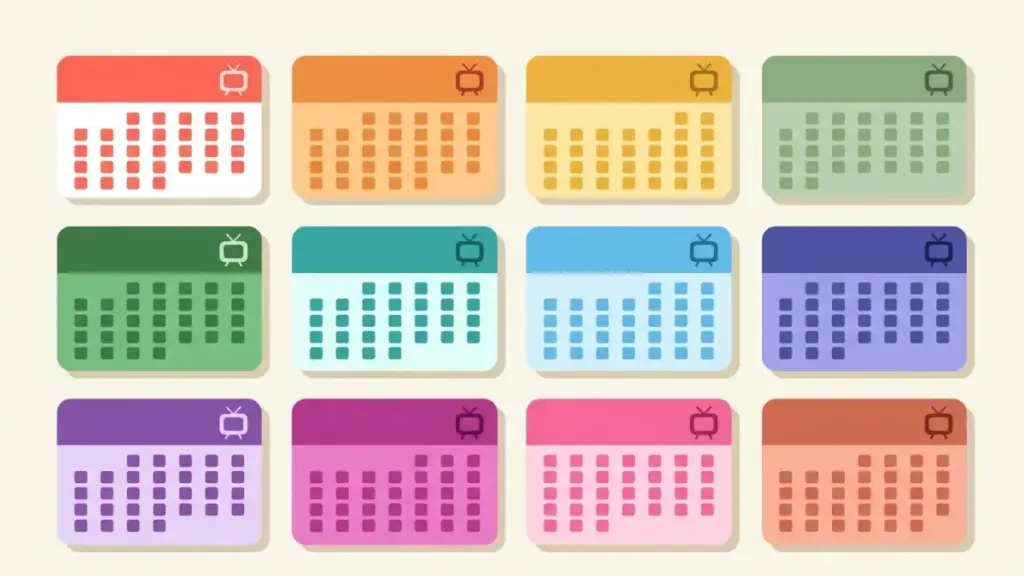
This is the single biggest money-saver. Instead of paying for five services all year, keep one or two, then add another for a month when a show you want drops. Binge it, cancel, move on. You won’t lose anything: your account and watch history usually stay put when you come back. More than a quarter of subscribers already do this.
3. Switch to the plan with ads where you can live with it
The ad plans are usually $5 to $11 a month cheaper. On a service you watch casually, that’s an easy trade.
4. Look for streaming you already get for free
Many phone plans, internet providers and credit cards include a streaming service as a perk. Check before you pay for it separately. And don’t forget the free options: Tubi, Pluto TV, The Roku Channel and Plex are free with ads, and apps like Kanopy and Hoopla are free with a library card.
5. Pay yearly only for the one you’ll never cancel
Annual plans usually cost less than 12 monthly payments, but only make sense for the service you truly watch all year. For everything else, stay monthly so you can rotate.
6. Be careful with bundles
A bundle saves money only if you actually use everything in it. If you’re paying for three services to watch one, a single plan is cheaper.
7. Set a reminder every time you start a free trial
Put a calendar reminder two days before the trial ends. It takes 10 seconds and is the easiest way to avoid paying for something you forgot about. If a company makes canceling hard, check your state’s automatic renewal law; many require an easy way to cancel online.
FAQ
What is subscription fatigue? It’s the frustration of paying for, and keeping track of, too many recurring subscriptions, especially as prices keep going up.
How much does the average household spend on streaming? About $76 a month for streaming video, across an average of four services, according to Deloitte’s 2026 research.
How much would every major streaming service cost? About $139 a month without ads for eight major services, or roughly $90 a month on their cheaper plans with ads, based on September 2026 prices.
Is the golden age of streaming over? The era of cheap, ad-free streaming with shared passwords is over. Prices are up, ads are back and services are merging. But there’s still plenty worth watching if you choose and rotate services wisely.
What’s the easiest way to save on streaming? Keep one or two services, rotate the rest month by month, and switch to ad plans on the ones you watch casually.
Subscription fatigue is real, but it’s fixable. Spend 15 minutes this week finding every charge, cancel the ones you don’t use and start rotating the rest. Your wallet will feel the difference by next month.
At The Couch Insider, we help you get more out of every night on the couch: honest reviews, what’s worth watching, and smart ways to pay less for it. Bookmark The Couch Insider and follow us for our monthly “what to keep, what to cancel” picks.