You have followed every guideline in the book to optimize your sleep quality. Your bedroom is pitch black, the temperature is set to a precise 65 degrees Fahrenheit, you have eliminated blue light two hours before bed, and your sleep tracker confirms you are hitting your numbers. Yet, you wake up feeling like you were hit by a freight train. If this sounds familiar, you are not alone. There is a silent epidemic among high-achievers and self-improvers: the trap of “perfect” sleep hygiene.
- The dark side of sleep perfectionism: When tracking destroys rest
- Unmasking the invisible barriers: What the mainstream won’t tell you
- The raw truth: Which hacks actually improved sleep quality?
- Biohacking vs. biological reality: Is it worth the cost?
- The “reset” button: How to stop overthinking your night
- Understanding the “one question” for recovery
- When to seek deeper diagnostics
- The path forward: Reclaiming your rest
- The role of consistency in recovery
- Final thoughts on long-term rest
The dark side of sleep perfectionism: When tracking destroys rest
Many individuals have spent over a decade chasing the holy grail of sleep quality, only to find that the pursuit itself is the primary barrier. When you treat sleep like a performance metric, your nervous system remains in a hyper-vigilant state. This is the physiological cost of performance anxiety. The human body is not a machine that resets simply because a green checkmark appears on a wearable device.
When your sleep quality becomes an obsession, you are essentially monitoring your own failure. Every time you wake up and check your watch to see why your “deep sleep” score was low, you trigger a cortisol spike. This stress hormone is the antithesis of a restorative night. The irony is palpable: the harder you try to quantify your sleep quality, the further away you move from the genuine relaxation required for neurological repair.
“The hardest part of optimizing rest is realizing that the pursuit of perfection is often the very thing keeping you awake at night.”
Ri

Unmasking the invisible barriers: What the mainstream won’t tell you
If standard hygiene is not the answer, what is? After years of analyzing community experiences, it is clear that many people suffer from deep-seated, non-obvious issues. Some have struggled for 15 years, only to realize that their sleep quality was being destroyed by systemic inflammation, undiagnosed neurodivergence, or even micro-nutrient deficiencies that standard blood panels overlook.
Many individuals with ADHD, for instance, discover that their “awful sleep” for a decade was not a lack of discipline, but a regulatory issue. The brain simply does not know how to shut down when it is chronically underserviced in specific neurotransmitters. You cannot fix a neurological regulation problem with a blackout curtain. If your sleep quality remains poor despite perfect habits, it is time to look at the internal environment, not just the external one.

The raw truth: Which hacks actually improved sleep quality?
Let’s bypass the generic advice and look at what actually moves the needle. While there is no silver bullet, the most consistent reports from those who have finally “fixed” their sleep quality revolve around biological consistency, not just timing.
- Magnesium Glycinate: Many report a significant shift in relaxation, though dosage and timing must be individualized.
- Thermal Regulation: Beyond room temp, using weighted blankets or cooling pads has shown tangible effects on parasympathetic nervous system activation.
- The “Brain Dump” Method: Writing down every intrusive thought 90 minutes before bed prevents the “racing mind” phenomenon that ruins sleep quality.
- Early Morning Sunlight: Not just “outside,” but direct retinal exposure within 20 minutes of waking to set the circadian rhythm clock.
Read more: 10 Harsh Realities of Insomnia After Chemotherapy and How Survivors Actually Cope

Biohacking vs. biological reality: Is it worth the cost?
The biohacking community often suggests expensive interventions—smart mattresses, heavy-duty air filters, and high-tech hormone panels. While these can provide data, they often distract from the biological reality. If you are spending thousands of dollars to optimize your sleep quality but are still fundamentally stressed by your daily environment, you are fighting a losing battle.
The most effective “hack” is often the most boring: stress management. If your day is high-conflict, your sleep quality will be low. It is a direct reflection of your sympathetic nervous system’s tone. No gadget can override a nervous system that feels unsafe or constantly under pressure.

The “reset” button: How to stop overthinking your night
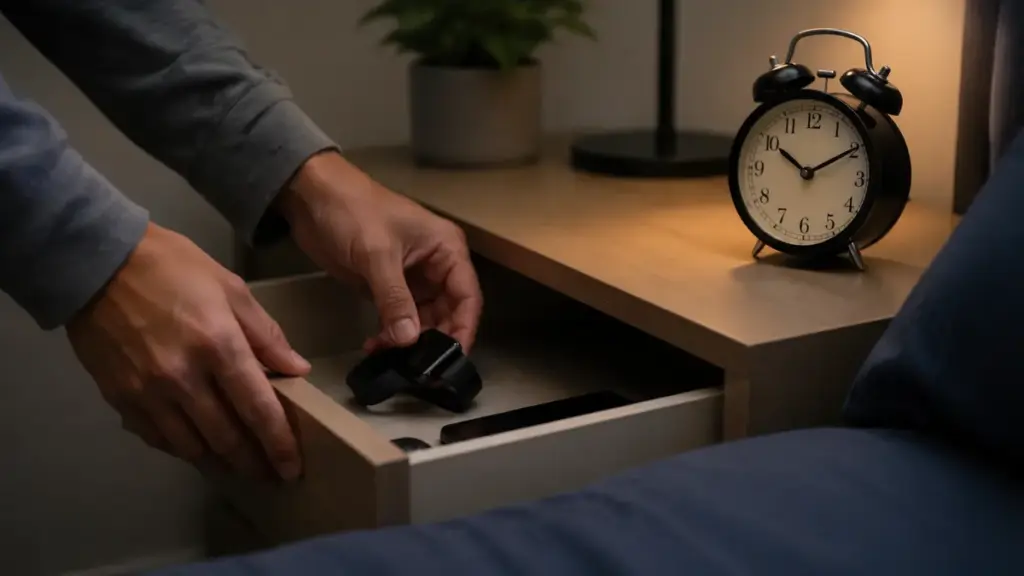
To reclaim your sleep quality, you must learn to “let go” of the data. For one week, stop looking at your sleep score. Force yourself to assess how you feel in the morning without the bias of an app. Does your back hurt? Do you feel mentally sharp? These internal indicators are far more reliable than a proprietary algorithm on a wrist-worn plastic band.
More Read

This is not to say that technology is useless, but it must be relegated to a tool, not a master. When you stop worrying about sleep quality, you lower your performance anxiety, which paradoxically leads to better actual sleep.
Understanding the “one question” for recovery
As noted in recent research, one specific question can reveal whether your body is truly resting: “Do I feel refreshed upon waking, or am I merely waiting for the caffeine to kick in?” If you are the latter, your sleep quality is superficial.
Your body has a built-in feedback loop. If you have been ignoring the signals for years, the system becomes desensitized. The path to recovery is not found in a new supplement or a better app, but in the slow, deliberate work of re-aligning your lifestyle with your biological needs.

When to seek deeper diagnostics
Sometimes, sleep quality issues are not behavioral. If you have done the “hard work” of removing stress, fixing your diet, and optimizing your light exposure, and you are still struggling, it is time for professional medical intervention. Sleep apnea, thyroid disorders, and complex hormonal imbalances are real conditions that require more than just “hacks.”
Do not let your pursuit of self-improvement blind you to the possibility of an underlying health issue. The most responsible thing you can do is to advocate for a comprehensive medical workup that looks beyond just “sleep hygiene.”

The path forward: Reclaiming your rest
Ultimately, your sleep quality is a reflection of your overall life balance. If you are constantly running a deficit in your personal life, your body will eventually balance the books during your sleep cycles—often by sacrificing the very quality you are desperate to achieve.
Stop treating your sleep quality as a project to be solved and start treating it as a physiological state to be supported. Support your biology, reduce the performance pressure, and trust that your body wants to rest just as much as you do.

The role of consistency in recovery
Consistency in your sleep quality does not mean perfection. It means creating a buffer zone where your body can consistently enter a state of recovery. If you have a bad night, do not overcorrect the next day. The temptation to “make up for it” with long naps or excessive supplements usually backfires.
Acceptance is a vital part of the process. If you can cultivate a mindset where a bad night is simply a bump in the road rather than a sign of failure, you have already improved your sleep quality more than any device ever could.
“Your body is not a machine that resets simply because a green checkmark appears on your wearable device; it requires safety, not just data.”
Ri

Final thoughts on long-term rest
Your journey toward optimal sleep quality is a long-term investment. There is no instant fix, and those who promise you one are usually selling something you do not need. Look at your life holistically. Are you happy? Are you physically active? Are you connected to your purpose? All of these elements influence how deeply you sink into the mattress each night.

LEAVE A COMMENT BELOW FOR FREE EXPERT CONSULTATION, OR FOLLOW THE COUCH INSIDER TO STAY UPDATED WITH THE LATEST INSIGHTS.