



Push ups are far more than a basic bodyweight exercise—they serve as a vital biological indicator of cardiovascular health and overall longevity. A landmark study from the Harvard T.H. Chan School of Public Health revealed that the number of consecutive repetitions a person can complete directly correlates with their risk of developing heart disease and cardiomyopathy.
- Why standard Push Ups serve as a precise biomarker for cardiovascular longevity
- Comprehensive Push Ups chart by age for measuring biological longevity
- Technical variables and common errors distorting Push Ups test accuracy
- Progressive scaling strategies and safe implementation plans
- Expert tactical tips for converting physical testing into a lifelong longevity routine
- Frequently Asked Questions regarding Push Ups and heart health
- Transforming daily bodyweight movement into sustained cardiovascular longevity
Completing more than 40 consecutive Push Ups reduces your overall risk of suffering a major cardiovascular event by 96% compared to individuals who manage fewer than 10 repetitions. This simple, zero-equipment bodyweight assessment acts as a powerful surrogate measure for functional VO2 max, upper-body muscular endurance, and vascular resilience. By evaluating your baseline capacity against age-adjusted fitness standards, you gain an immediate, actionable insight into your true biological age and long-term metabolic health.
Why standard Push Ups serve as a precise biomarker for cardiovascular longevity
Evaluating functional fitness through dynamic bodyweight resistance provides a comprehensive snapshot of how well your circulatory and musculoskeletal systems collaborate under stress. While traditional clinical assessments rely heavily on expensive laboratory equipment, routine bodyweight testing offers an accessible, highly accurate metric for functional capacity.
Groundbreaking findings from the Harvard T.H. Chan School of Public Health study
The medical community’s understanding of upper-body endurance shifted dramatically following a multi-year longitudinal investigation conducted by Harvard researchers among active adult populations.
Correlation between completing over 40 Push Ups and a 96% reduction in cardiovascular events
The Harvard study tracked middle-aged men over a ten-year observation period to analyze the statistical relationship between baseline exercise capacity and primary heart incidents. Participants capable of completing more than 40 Push Ups demonstrated a staggering 96% lower risk of developing coronary artery disease, heart failure, or experiencing sudden cardiac events compared to those who could not complete 10 reps. This profound inverse relationship highlighted that dynamic muscular stamina directly reflects systemic arterial integrity and myocardial reserve capacity.
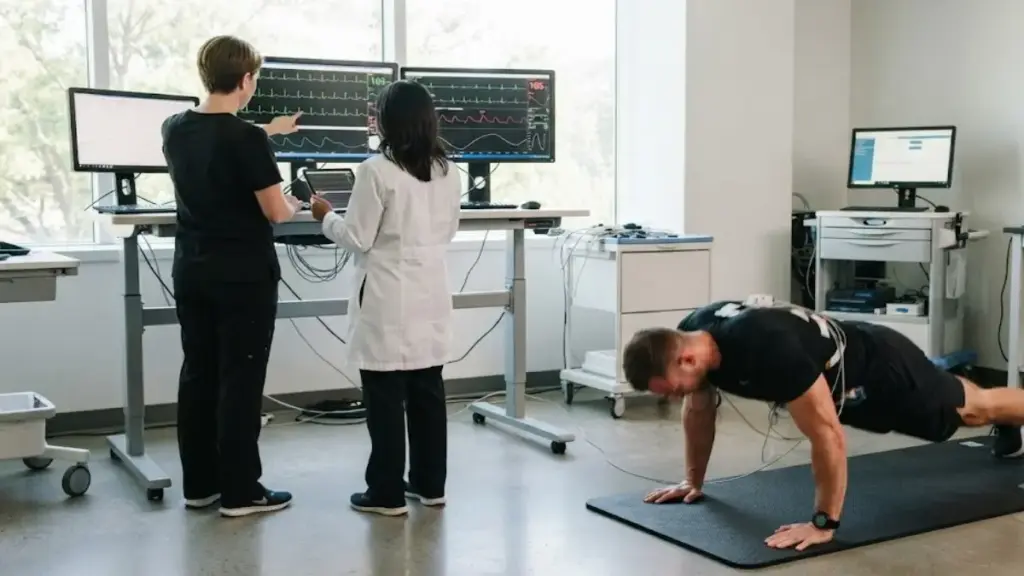
Comparative predictive value between Push Ups assessments and traditional treadmill stress tests
Historically, submaximal treadmill stress testing served as the gold standard for estimating aerobic capacity and ischemic heart risk. However, the Harvard dataset demonstrated that a simple baseline test of Push Ups offered equal, and in several parameters superior, predictive accuracy for long-term cardiovascular outcomes. Unlike passive treadmill walking, moving your own body mass against gravity demands acute neuromuscular coordination, rapid cardiac output recruitment, and sustained vascular compliance.
Read more: Exercise Brain Health: 3 Running Benefits That Lower Your Risk Of Decline
Physiological mechanisms linking upper-body muscular stamina to circulatory health
The ability to perform high-repetition bodyweight press movements relies on complex physiological interactions between peripheral muscle beds and the central pumping mechanism of the heart.
Maximum functional capacity of cardiac muscle during multi-joint compound recruitment
When executing compound movements like Push Ups, the brain simultaneously recruits the pectoralis major, anterior deltoids, triceps, and stabilizing core musculature. This massive synchronous muscular activation demands a sudden surge in oxygenated blood flow. To meet this metabolic demand, the heart must rapidly elevate stroke volume and cardiac output. Individuals possessing high muscular stamina effectively train their myocardium to handle acute volume overload without experiencing pathological wall stress or premature peripheral fatigue.
Explosive strength capacity and arterial wall elasticity reflected through body load tolerance
Sustaining continuous push repetitions requires healthy vascular endothelial function. As active muscle groups contract, peripheral blood vessels must dilate smoothly to minimize systemic vascular resistance. Performing full-range Push Ups tests the elastic recoil of arterial walls under pressure. High movement capacity indicates superior nitric oxide production within the vascular endothelium, preventing premature arterial stiffening—a primary biomarker of cardiovascular aging.
Comprehensive Push Ups chart by age for measuring biological longevity
To evaluate your current biological age against epidemiological benchmarks, compare your maximum strict-form repetition count against age- and sex-adjusted standard charts derived from exercise physiology databases.
Evaluation of age and sex-stratified physical fitness standard charts
Physical conditioning naturally undergoes physiological shifts across decades due to changes in muscle mass index, tendon compliance, and peak cardiac capacity.

Fitness standards for ages 20–39: Minimum thresholds for long-term cardiovascular protection
During early to mid-adulthood, maintaining optimal baseline muscular endurance sets the physiological foundation for lifelong metabolic health.
| Age Range | Biological Category | Male Target Reps | Female Target Reps |
| 20–29 Years | Excellent / Protection | 36 – 45+ | 30 – 38+ |
| 20–29 Years | Average / Baseline | 22 – 35 | 15 – 29 |
| 20–29 Years | At-Risk / Low | < 17 | < 9 |
| 30–39 Years | Excellent / Protection | 30 – 39+ | 24 – 33+ |
| 30–39 Years | Average / Baseline | 17 – 29 | 11 – 23 |
| 30–39 Years | At-Risk / Low | < 12 | < 6 |
Achieving the upper tier for Push Ups in this age window ensures adequate muscle mass reserve and optimal insulin sensitivity.
Fitness standards for ages 40–59+: Measuring age-related muscle loss and respiratory decline
As age advances, age-related muscle mass decline (sarcopenia) and diminished lung vital capacity typically reduce raw exercise performance unless actively counteracted.
| Age Range | Biological Category | Male Target Reps | Female Target Reps |
| 40–49 Years | Excellent / Protection | 25 – 34+ | 20 – 27+ |
| 40–49 Years | Average / Baseline | 13 – 24 | 10 – 19 |
| 40–49 Years | At-Risk / Low | < 10 | < 5 |
| 50–59+ Years | Excellent / Protection | 20 – 29+ | 15 – 22+ |
| 50–59+ Years | Average / Baseline | 10 – 19 | 7 – 14 |
| 50–59+ Years | At-Risk / Low | < 7 | < 3 |
Consistently hitting target numbers for Push Ups past age 40 indicates preserved type-II muscle fiber density and robust cardiorespiratory efficiency.
Read more: Group Workouts: 5 Critical Venue Pitfalls That Can Ruin Your Team Fitness
Stratifying stamina levels based on individual performance testing
Categorizing your testing outcome provides immediate clarity regarding your systemic cardiovascular health and functional longevity.

High-risk group (Under 10 reps): Warning signs of physical decline and metabolic disease risk
Failing to complete 10 full-range repetitions highlights significant neuromuscular deconditioning and potential systemic vascular dysfunction. Individuals falling into this category often display elevated markers of chronic inflammation, impaired glucose tolerance, and reduced myocardial reserve, warranting immediate lifestyle intervention through structured conditioning involving Push Ups.
Optimal group (30–40+ reps): Ideal biological indicators reflecting a younger vascular system
Exceeding 30 to 40 consecutive strict repetitions demonstrates exceptional capillarization within skeletal muscle and superior stroke volume. This level of physical capacity correlates with reduced arterial stiffness, lower systemic blood pressure, and a functional vascular age significantly younger than chronological age, largely driven by routine Push Ups.
Technical variables and common errors distorting Push Ups test accuracy
Obtaining a valid assessment of your cardiovascular health requires strict adherence to standardized testing protocols. Executing poor form distorts performance data and invalidates baseline measurements.
The paramount importance of strict technical form in fitness assessments
Standardized bio-testing relies on maintaining absolute consistency across every single repetition.
Full range of motion: Chest lowered to floor level and elbows locked at top extension
A valid repetition demands lowering the body until the sternum hovers approximately one to two inches above the ground, maintaining a straight rigid line from ankle to crown. Returning to the starting position requires fully extending the elbows without harsh joint locking. Cutting movement depth invalidates the mechanical work performed during Push Ups.

Harmful effects of half-repetitions on cardiovascular assessment reliability
Executing superficial half-reps reduces mechanical tension on the chest and core while minimizing cardiorespiratory strain. Relying on partial repetitions inflates your score artificially, creating a false perception of physical capacity while failing to generate the hemodynamic demand required to accurately gauge heart health via Push Ups.
Body constitution variables directly influencing performance outcomes
Individual physiological metrics significantly alter force output requirement and cardiorespiratory fatigue thresholds during bodyweight testing.
Body mass index and excess adipose tissue loading the shoulder girdle and circulatory system
Carrying elevated body fat percentages increases the absolute deadweight that must be moved against gravity. Excess adipose tissue acts as non-contractile mass, placing elevated biomechanical stress on the glenohumeral joint and demanding higher cardiac output to perform identical repetitions of Push Ups.

Impact of psychological stress, sleep deprivation, and elevated resting heart rate prior to testing
Central nervous system fatigue heavily dampens motor unit recruitment and maximal force output. Acute sleep deprivation elevates resting sympathetic tone, raising baseline heart rate and reducing heart rate variability. Attempting an exhaustive assessment of Push Ups under high stress leads to premature central fatigue and inaccurate performance readings.
Progressive scaling strategies and safe implementation plans
Improving your baseline repetition capacity requires structured loading strategies tailored to your current physical conditioning, ensuring steady adaptation without overloading vulnerable joint structures.
More Read

Entry-level progression paths for beginners and deconditioned individuals
Beginners must systematically build tendinous strength and motor control before attempting full floor-level variations.
Load-scaling progressions: Wall-supported presses, incline variations, and standard execution
Scaling leverage allows deconditioned individuals to train the identical motor pattern under reduced gravitational resistance.
1.Wall-Supported Press:Phase 1: 2-3 Weeks.
Stand arm’s-length from a solid wall. Perform controlled pressing movements focusing on scapular retraction and core contraction to build foundational wrist and shoulder stability before progressing to harder Push Ups.
Building lifelong cardiovascular resilience starts with simple, consistent daily habits; testing your baseline capacity through Push Ups empowers you to monitor your heart health and preserve functional vitality for decades to come.
Alexander Vance
2.Incline Box Press: Phase 2: 3-4 Weeks.
Place hands on a sturdy elevated bench or counter (24-36 inches high). This angle reduces total load to roughly 40-50% of bodyweight while reinforcing a rigid plank posture required for Push Ups.
3.Floor-Level Standard Execution: Phase 3: Target Goal.
Transition to the floor once 15 clean incline reps are achieved. Maintain full body tension to safely perform standard floor-based Push Ups.

Controlled breathing mechanics to optimize myocardial oxygen delivery under strain
Proper respiration prevents dangerous spikes in intrathoracic pressure (Valsalva maneuver) during intense exercise. Inhale deeply through the nose during the eccentric lowering phase to expand the rib cage and facilitate venous return. Exhale forcefully through pursed lips during the concentric pushing phase to stabilize the core and deliver steady oxygenation during Push Ups.
Advanced progressive overload protocols for breaking through performance plateaus
Trained individuals aiming to push past 30–40 repetitions require structured neuromuscular stimulus without triggering systemic overtraining.
Applying the “Grease the Groove” submaximal frequency volume distribution method
The “Grease the Groove” protocol involves performing multiple submaximal sets (50% of max effort) spread across the entire day, separated by at least an hour of rest. This continuous low-fatigue neurological practice strengthens motor pathways, dramatically building total capacity for high-repetition Push Ups.

Supplemental core and latissimus dorsi training to stabilize spinal neutrality
A weak core leads to anterior pelvic tilt and energy leaks along the kinetic chain. Incorporating heavy planks, paloff presses, and lat pull-downs creates a rigid torso support structure, preventing spinal sagging during maximal-effort sets of Push Ups.
Expert tactical tips for converting physical testing into a lifelong longevity routine
Transforming an intermittent assessment tool into a sustainable health habit provides continuous protection against age-related physical and cardiovascular decline.
Establishing an at-home heart health self-assessment protocol
Conducting structured home assessments provides reliable tracking data without requiring clinical laboratory visits.
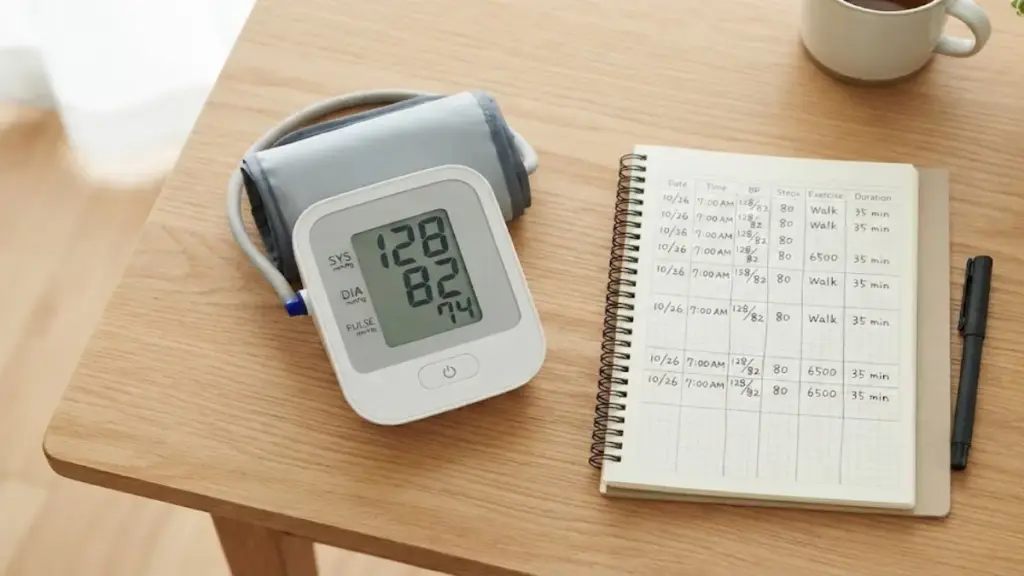
Maintaining a progress tracking log connecting repetition growth to blood pressure and pulse trends
Documenting exercise metrics alongside resting cardiovascular stats offers powerful feedback regarding metabolic improvements.
| Assessment Week | Max Strict Reps | Resting Heart Rate | Systolic / Diastolic BP |
| Week 1 (Baseline) | 14 reps | 76 bpm | 128 / 82 mmHg |
| Week 4 | 22 reps | 72 bpm | 124 / 80 mmHg |
| Week 8 | 31 reps | 67 bpm | 120 / 78 mmHg |
| Week 12 | 40 reps | 63 bpm | 116 / 75 mmHg |
Tracking continuous improvement in Push Ups performance alongside dropping resting pulse rate confirms positive arterial and myocardial adaptation.
Identifying optimal time windows for high-accuracy fitness assessments
Perform baseline assessments during mid-morning hours when body temperature is stable, cortisol levels have normalized, and spinal discs have hydrated. Avoid testing immediately after consuming heavy meals or consuming high doses of caffeine, as artificial heart rate spikes distort performance tracking for Push Ups.
Essential safety principles to protect wrist and shoulder complex integrity
Maintaining joint health ensures you can train continuously over decades without joint degeneration.
Hand placement geometry and 45-degree elbow tuck for joint capsule preservation
Placing hands slightly wider than shoulder-width with fingers pointing forward or slightly outward optimizes mechanical tension. Flaring elbows out at a 90-degree angle subjects the rotator cuff tendons to severe shoulder impingement. Angling upper arms inward at a 45-degree arrow shape protects the shoulder capsule during Push Ups.

Listening to internal biological signals: Knowing when to stop tests to avoid acute cardiac overload
Pushing for maximum repetitions should never compromise personal safety. If you experience sharp chest tightness, unusual dizziness, joint pain, or extreme nausea, stop the test immediately. Valid fitness tracking using Push Ups relies on testing controlled muscular endurance, not inducing dangerous cardiovascular stress.

Frequently Asked Questions regarding Push Ups and heart health
Can performing Push Ups daily lower high blood pressure?
Yes, engaging in daily bodyweight resistance like Push Ups stimulates endothelial nitric oxide production, promoting systemic vasodilation and reducing resting systolic and diastolic blood pressure over time.
Why do I feel dizzy when doing high-repetition Push Ups?
Dizziness typically results from improper breathing mechanics, such as holding your breath (Valsalva maneuver), which temporarily spikes intrathoracic pressure and reduces oxygen flow to the brain during heavy sets of Push Ups.
Is the Harvard Push Ups benchmark applicable to women?
While the original Harvard study focused on active male cohorts, subsequent exercise physiology research confirms that relative upper-body stamina in women serves as an equally strong predictor of cardiovascular health and metabolic longevity when using female-adjusted target charts for Push Ups.
Transforming daily bodyweight movement into sustained cardiovascular longevity
Consistently tracking your physical capacity using the standard age-based benchmark charts provides an invaluable, cost-free window into your internal circulatory health. By committing to progressive overload, maintaining strict motion mechanics, and integrating regular bodyweight training into your weekly lifestyle, you directly strengthen your cardiac output, preserve vascular elasticity, and dramatically reduce long-term disease risk. Start testing your baseline performance today to take active ownership of your biological age and functional future through structured Push Ups.

PLEASE LEAVE A COMMENT TO SHARE YOUR FAVORITE THOUGHTS OR FOLLOW OUR BLOG FOR THE LATEST UPDATES.