


The rapid acceleration of automated AI emergency dispatch technology across public safety systems introduces both immense potential and unprecedented challenges. Municipalities around the world are facing historic staffing shortages, leading many administrative decision-makers to view automation as a silver bullet for modern emergency communication infrastructures. However, implementing automated tools into life-or-death workflows requires a deep, critical examination of where efficiency ends and systemic vulnerability begins. While a computer can process a data packet in milliseconds, managing a human crisis demands layers of cognitive analysis that algorithms cannot replicate. Evaluating the true limitations of automated systems is essential for safeguarding communities.
- WHY FASTER DOESN’T ALWAYS MEAN BETTER IN EMERGENCY DISPATCH
- WHERE AI EMERGENCY DISPATCH WORKS WELL
- THE HIDDEN RISKS THAT SPEED CAN’T SOLVE
- WHY EMERGENCY CALLS ARE DIFFERENT FROM CUSTOMER SERVICE CALLS
- THE BEST ROLE FOR AI ISN’T REPLACING DISPATCHERS
- A SIMPLE FRAMEWORK FOR DECIDING WHETHER AI SHOULD HANDLE A TASK
- FAQ
- CONCLUSION
WHY FASTER DOESN’T ALWAYS MEAN BETTER IN EMERGENCY DISPATCH
Public safety metrics have historically prioritized response velocity as the primary indicator of operational success. While reducing answer times is a critical goal, treating speed as the sole benchmark ignores the immense complexity of emergency call handling. An ultra-fast connection is useless if the system fails to accurately diagnose the nature of the crisis. True emergency management requires a delicate balance between rapid data entry and precise situational assessment.
Speed solves waiting time, not decision quality
When automation tools are deployed to answer incoming streams of calls, they excel at clearing queues instantly. However, minimizing wait time does not automatically guarantee that the subsequent triage will be accurate or safe. An AI emergency dispatch platform can ingest words at incredible speeds, but speed alone does not ensure the correct allocation of emergency response units.
“A rapid dispatch to the wrong location or with the incorrect equipment poses a greater danger to public safety than a slight delay that yields accurate intelligence.” – Author: Luna
Optimizing for speed often forces automated systems to cut off critical contextual exploration. If a system pushes an incident through the queue based entirely on initial keywords, it may bypass the deeper questioning necessary to identify hidden hazards. This mechanical rush directly compromises the safety of both citizens and field responders.
The difference between processing information and understanding a crisis
Computers process variables, but humans interpret chaotic situations through context and shared experience. An automated tool matches incoming speech patterns against pre-programmed templates to determine the next step in a script. This structural limitation prevents the software from recognizing when a caller is masking their true situation due to immediate danger.
| Aspect of Call | Faster Response (Automated) | Better Response (Human-Centric) |
| Initial Action | Answers immediately | Understands context |
| Data Analysis | Processes keywords | Interprets human behavior |
| Workflow Logic | Follows workflows | Adapts to unexpected situations |
A human operator notices the tremor in a voice, the brief silence, or the subtle background noises that contradict a caller’s spoken words. These soft data points are often the most critical elements of a high-stakes call. Without this cognitive depth, automated systems remain blind to the true realities of an evolving crisis.
WHERE AI EMERGENCY DISPATCH WORKS WELL
Despite structural limitations in high-stress scenarios, automated software provides undeniable value when deployed within specific, tightly bounded operational parameters. By offloading high-volume, low-complexity tasks, technology can free up human operators to focus entirely on critical events. Understanding these strengths allows agencies to build a safer, more resilient emergency response system.
Non-emergency information requests
Public safety answering points are frequently overwhelmed by non-urgent inquiries, ranging from administrative questions to local utilities updates. Implementing an AI emergency dispatch filter for these routine requests dramatically lowers the burden on human dispatch staff. This automated separation ensures that life-threatening calls never get stuck behind routine municipal inquiries.
Call routing and language translation
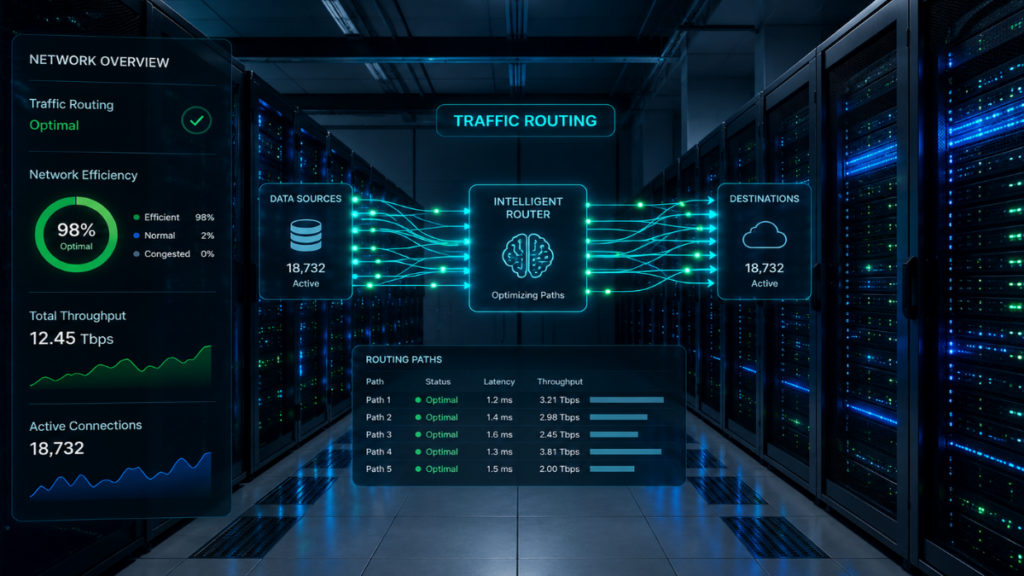
During multi-lingual crises, traditional translation services can add minutes to total call handling times. Advanced natural language processing tools within an AI emergency dispatch system can instantly identify foreign dialects and provide real-time translation assistance to the operator. This immediate linguistic bridge allows human dispatchers to gather actionable intelligence without structural delays.
Duplicate-call detection
When a major vehicle accident or natural disaster occurs, dozens of citizens frequently call to report the exact same incident. An intelligent AI emergency dispatch network can analyze geographic data and incoming keywords to flag these redundant notifications instantaneously. By grouping duplicate records, the software prevents communication lines from becoming completely paralyzed during widespread public incidents.
Real-time transcription
Automated speech-to-text tools can create a running digital log of a call as it unfolds in real time. This automated transcription allows supervisors to quickly review active incidents without needing to interrupt the primary call taker. It also provides immediate visual assistance to the operator, ensuring that specific details like street spellings or descriptions are caught accurately.
| Task Category | AI System Capability | Human Operator Role |
| Call transcription | ✅ Independent | ❌ Secondary |
| Translation | ✅ Independent | ❌ Secondary |
| Address verification | ✅ Independent | ❌ Secondary |
| Duplicate call detection | ✅ Independent | ❌ Secondary |
| Resource coordination | △ Limited Support | ✅ Primary Driver |
Read more: Tata Breach and the Secret Development of the iPhone Fold: A Critical Analysis
THE HIDDEN RISKS THAT SPEED CAN’T SOLVE
The most dangerous vulnerabilities of automated systems appear during highly volatile events where human behavior becomes completely unpredictable. Algorithms rely on structured logic, but true human emergencies are inherently chaotic, emotional, and non-linear. When speed is prioritized over deeper human evaluation, critical pieces of information can easily be lost in translation.
Emotional distress changes how people communicate
An individual experiencing extreme trauma rarely speaks in a clear, chronological narrative. Callers may scream, stammer, or become entirely non-verbal due to sudden shock or physical injury. An AI emergency dispatch algorithm trained on clean, articulate voice datasets often struggles to accurately parse words heavily distorted by raw panic.

When a system misinterprets fragmented sentences, it can categorize a high-priority event as a routine matter. A human dispatcher knows how to apply active listening techniques, matching the caller’s breathing patterns to de-escalate panic and extract actionable details. Software simply cannot provide the emotional grounding needed to stabilize a frantic citizen during an AI emergency dispatch process.
Panic rarely follows a predictable script
Automated logic models operate on decision trees, assuming that an answer to question A will naturally lead to question B. However, a panicked individual might suddenly shift topics, flash back to earlier moments, or stop responding altogether. When a user departs from the expected conversational script, an automated AI emergency dispatch workflow can stall or loop incorrectly.
Missing context can change the priority of an emergency
A phrase that seems completely benign on the surface can take on an entirely different meaning when combined with subtle background environmental cues. For example, a caller quietly stating they are locked in a closet requires a vastly different response if faint glass breaking is audible nearby. Standard AI emergency dispatch algorithms frequently miss these quiet, non-verbal indicators, leading to dangerous under-categorization.
Multiple emergencies can evolve during a single call
A routine medical call can instantly transform into a violent domestic situation or an active structure fire while the line is still open. Human operators continuously evaluate the audio environment, pivoting their deployment strategy the moment they detect a change in risk levels. Static AI emergency dispatch frameworks lack the contextual flexibility required to manage multiple cascading crises simultaneously.
| Scenario Type | Fast AI Response Capability | Human Judgment Critical Needs |
| Panic attack | Immediate intake, poor categorization | De-escalation, emotional grounding |
| Domestic violence | Flags keywords, risks exposing caller | Stealth listening, nuanced silent cues |
| Child calling 911 | Speech parsing failures likely | Patience, adaptive vocabulary scaling |
| Suicide intervention | Matches keywords to cold scripts | Empathy, building trust, dynamic negotiation |
| Active shooter | Maps location data quickly | Real-time hazard updates, crowd control |
WHY EMERGENCY CALLS ARE DIFFERENT FROM CUSTOMER SERVICE CALLS
It is a profound mistake to view public safety communications through the same lens as commercial automated customer service systems. In a corporate environment, a misrouted call or a dropped connection results in a minor customer service complaint. In the public safety sector, an identical technical glitch within an AI emergency dispatch interface can lead directly to preventable loss of life.
There is no second chance in emergency communication
If a retail chatbot misinterprets a customer’s request for a product return, the user can simply restart the application or try again later. During an ongoing violent crime or a sudden cardiac arrest, a single communication failure is permanent. The high stakes of public safety leave absolutely zero margin for algorithmic experimentation or software errors.
More Read

Every missing detail can change the outcome
An automated interface might successfully gather a general street address but fail to capture the specific apartment number or building access code. If emergency vehicles are left searching a massive complex because an AI emergency dispatch system dropped a detail, precious minutes evaporate. Human call takers understand that every single descriptive nuance could be the detail that saves a life.
Uncertainty is often more important than certainty
In traditional data processing, uncertain data inputs are typically discarded or flagged for deletion. In a crisis, what the caller does not know or cannot see is often a major indicator of overall scene danger. Human dispatchers are highly trained to navigate this ambiguity, using intuition to piece together a coherent picture from vague, fragmented clues.
THE BEST ROLE FOR AI ISN’T REPLACING DISPATCHERS
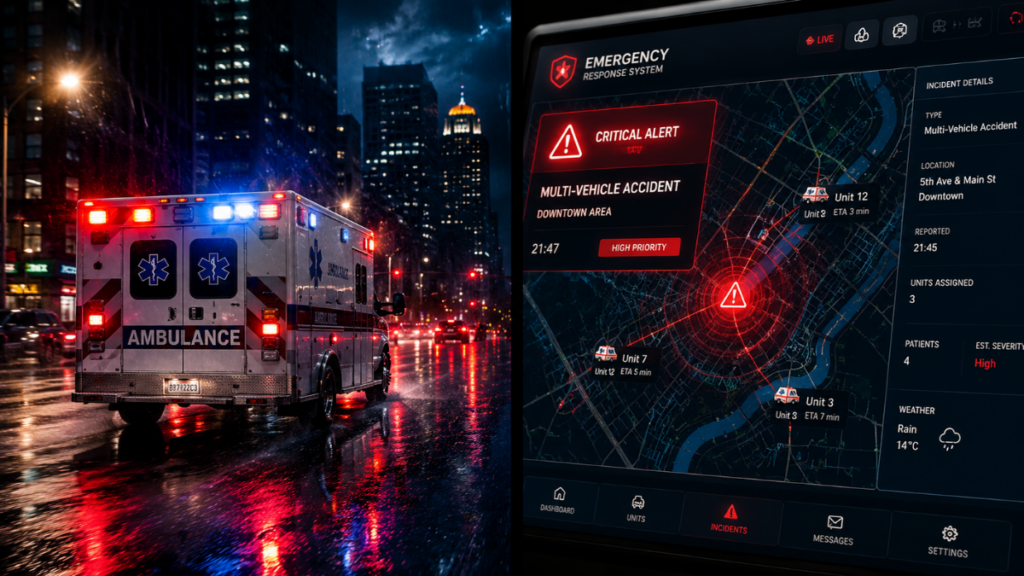
The goal of public safety technology should never be the complete replacement of human operators, but rather the strategic enhancement of their capabilities. When designed as a collaborative tool, an AI emergency dispatch architecture can absorb administrative friction, allowing human experts to handle the core human challenges. Coexistence, rather than total replacement, represents the safest path forward.
AI as a triage assistant
Automated systems can act as an initial buffer, gathering basic data like location verification and primary contact numbers the instant a call hits the system. Once this basic spatial foundation is established, the automated AI emergency dispatch system should instantly route the call to a live professional. This hybrid approach captures the speed of automation while retaining the safety net of human intelligence.
AI as a documentation assistant
While a dispatcher is actively calming a caller, an underlying AI emergency dispatch logging system can automatically populate dispatch fields in the background. By handling the secondary administrative documentation, the software allows the human operator to dedicate 100% of their cognitive focus to the person on the other end of the line.
AI as a workload reduction tool
By automating outbound administrative notifications to secondary utility departments or tow truck services, technology minimizes the manual tasks a dispatcher must perform. This reduction in cognitive load directly lowers workplace burnout and keeps dispatchers fresh for high-stress events. Protecting the mental bandwidth of operators improves overall system reliability.
Human operators remain the final decision makers
No piece of software should possess the autonomous authority to independently cancel an emergency response or downgrade an incident level without human sign-off. The final confirmation to deploy resources must always rest with an experienced human professional who can be held legally accountable. Technology must remain subordinate to human command structures.
| Emergency Operational Step | Automation Software Role | Human Dispatcher Role |
| Initial routing | ✅ Automates initial sort | ❌ Monitored only |
| Speech transcription | ✅ Generates real-time text | ❌ Audits accuracy |
| Risk assessment | △ Suggests base category | ✅ Confirms final priority |
| Resource deployment | ✅ Suggests closest unit | ✅ Customizes response plan |
| Emotional de-escalation | ❌ Incapable of empathy | ✅ Provides vital comfort |
A SIMPLE FRAMEWORK FOR DECIDING WHETHER AI SHOULD HANDLE A TASK
To help municipal leaders and technology developers navigate these complex deployments, we have constructed a universal task-evaluation framework. This system goes beyond specific emergency networks, offering a clear rubric for assessing automation risks in any high-stakes environment. Before automating any workflow, decision-makers must ask four critical structural questions to determine if deploying an AI emergency dispatch model is truly safe.

Does the task require emotional judgment?
If a task requires evaluating a user’s emotional state, detecting subtle deception, or providing psychological comfort, it must remain a human responsibility. Algorithms cannot experience empathy, meaning they cannot safely navigate situations driven by intense human emotion.
Can missing context cost a life?
When a dropped word, a misunderstood accent, or a missed environmental sound carries fatal consequences, automation is too high a risk. High-consequence environments require the adaptive verification capabilities that only a human brain can provide, rendering fully autonomous AI emergency dispatch systems dangerous in unverified contexts.
Is the decision legally accountable?
Automated systems cannot stand in a court of law to defend their operational logic or answer for a tragic outcome. If an AI emergency dispatch process requires clear legal accountability and professional liability, a certified human operator must make the final decision.
Can the outcome change in seconds?
Static workflows excel in stable, highly predictable environments where parameters remain constant over time. If an active situation can instantly shift from peaceful to lethal in a matter of heartbeats, it demands the fluid responsiveness of human oversight rather than a rigid AI emergency dispatch routine.
| Critical Assessment Question | If Answer is YES | If Answer is NO |
| Emotional judgment required? | Assign to Human | AI assistance may support |
| Situation changes rapidly? | Assign to Human | AI assistance may support |
| Strict rule-based task? | Optimize with AI | Mandate Human review |
| Life-critical decision? | Assign to Human | AI role-support only |
FAQ
Can AI replace emergency dispatchers?
No, automated software cannot fully replace human dispatchers because it lacks the capacity for empathy, ethical judgment, and contextual synthesis. While technology can effectively manage administrative background data, human operators are absolutely essential for navigating the unpredictable human elements of a true crisis. Relying entirely on an AI emergency dispatch platform to manage life-or-death scenarios creates significant vulnerabilities within community safety nets.
Why is human judgment still essential in emergency calls?
Human judgment is necessary because emergency communication is rarely structured or predictable. Callers frequently exhibit severe emotional distress, use non-linear language, or intentionally hide their true situation due to active danger. Human operators use intuition and life experience to notice these subtle indicators and adapt their approach instantly, filling critical gaps that an AI emergency dispatch routine would overlook.
What types of emergency calls are safest for AI assistance?
While some jurisdictions are experimenting with automated initial screening to combat extreme staffing shortages, total reliance on software as a frontline barrier introduces significant risks. The safest systems use technology as a supportive layer that immediately passes complex or emotional calls to human experts. Implementing an AI emergency dispatch screen requires strict human oversight to prevent catastrophic screening errors.
Will AI become the first point of contact for all emergency calls?
While some jurisdictions are experimenting with automated initial screening to combat extreme staffing shortages, total reliance on software as a frontline barrier introduces significant risks. The safest systems use technology as a supportive layer that immediately passes complex or emotional calls to human experts.
CONCLUSION
The integration of automated systems into public safety infrastructure must never be viewed as a simple race toward maximum speed. True operational efficiency is measured by lives saved and injuries mitigated, not just by how fast a digital connection is completed by an AI emergency dispatch network. By establishing clear operational boundaries and keeping human experts firmly in control, municipalities can harness the power of technology without sacrificing public safety.
PLEASE LEAVE A COMMENT BELOW FOR FREE EXPERT CONSULTATION OR FOLLOW OUR SITE THE COUCH INSIDER TO UPDATE THE LATEST KNOWLEDGE.