
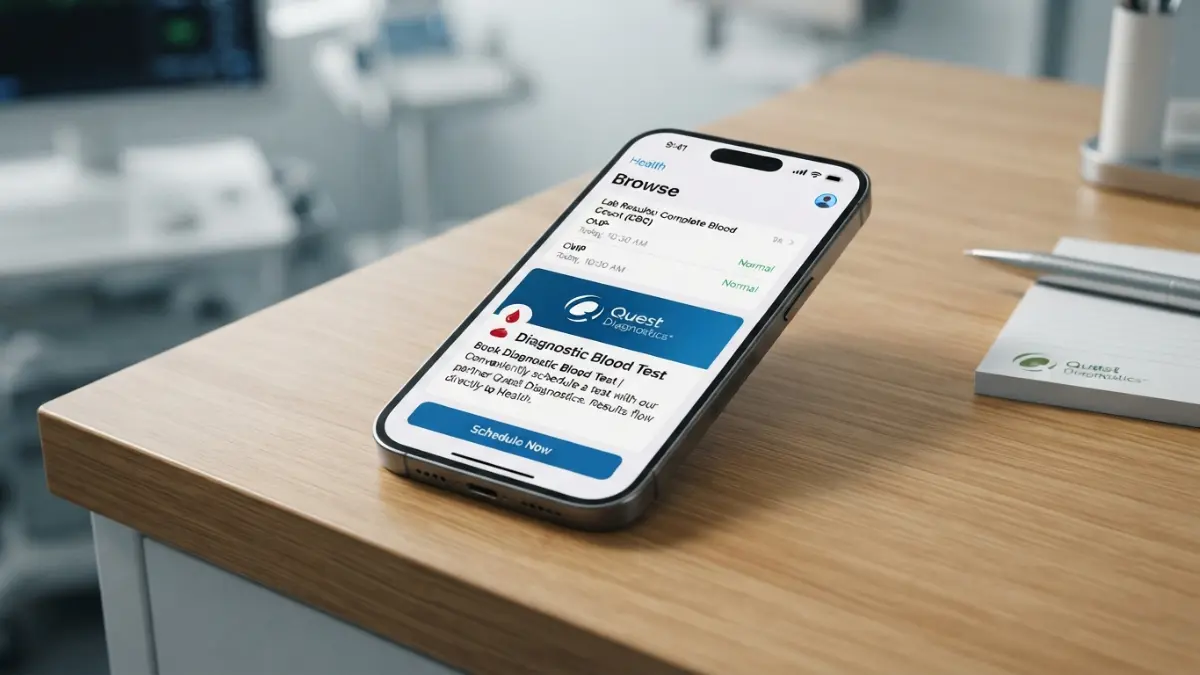

By integrating on-demand diagnostic lab orders and biomarker panels directly into iOS, Apple Health is transforming the iPhone from a passive biometric recorder into an active, preventive healthcare portal.
- From Passive Wrist Metrics to Molecular Diagnostics
- Decoding the $119 Biomarker Panel: What Apple & Quest Are Measuring
- Algorithm Fusion: How Blood Chemistry Powers “Health Age”
- The Competitive Landscape: Disruption in Direct-to-Consumer Diagnostics
- Privacy, Data Security, and the Ethics of Consumer-Ordered Labs
- Conclusion: The Era of Proactive Healthcare Has Arrived
Apple has officially broken that barrier. By expanding the Apple Health ecosystem to support direct-to-consumer lab orders—highlighted by an integrated $119 Quest Diagnostics 50+ biomarker blood panel—the iPhone is evolving from a daily activity tracker into a comprehensive medical management dashboard.
From Passive Wrist Metrics to Molecular Diagnostics
While the Apple Watch pioneered continuous consumer health monitoring with ECG, VO₂ max, and sleep apnea detection, optical wrist sensors possess fundamental physical limitations. They cannot measure blood chemistry, lipid particle counts, metabolic function, or hormonal balances.
To bridge this gap, Apple’s updated Health framework connects continuous wearable data with episodic clinical diagnostics:
- Direct In-App Lab Booking: Users can select, order, and pay for comprehensive blood draws without requiring an upfront physician visit.
- Seamless Patient Service Center Scheduling: The app interfaces directly with lab networks (including over 2,000 Quest Diagnostics locations in the U.S.), allowing users to schedule appointments and complete biometric measurements (blood pressure, waist circumference, BMI) in a single workflow.
- Automatic Inverted Result Sync: Once processed, raw biomarker data bypasses cumbersome PDF patient portals and populates natively into the Health app, updating historical trend lines automatically.
Decoding the $119 Biomarker Panel: What Apple & Quest Are Measuring
The centerpiece of Apple’s lab integration is a targeted panel tailored specifically for preventive wellness and metabolic risk assessment. Rather than offering isolated tests, the $119 panel focuses on root causes of chronic disease.
| Health Domain | Key Biomarkers Tested | Clinical Significance | Apple Health Integration |
| Cardiometabolic | HbA1c, Fasting Blood Glucose | Evaluates long-term insulin resistance and prediabetes risk | Informs insulin sensitivity trends over time |
| Lipid Profile | LDL-C, HDL-C, Triglycerides, Total Cholesterol | Measures cardiovascular risk and plaque accumulation potential | Combines with VO₂ max for cardiovascular scoring |
| Organ Function | Comprehensive Metabolic Panel (CMP), Liver Enzymes, Kidney Filtration (eGFR) | Assesses liver detox capacity, fluid balance, and renal health | Identifies hidden metabolic strain before symptoms show |
| Biometric Diagnostics | Blood Pressure, Waist-to-Hip Ratio, BMI | Establishes baseline physical metrics during lab visit | Cross-references optical PPG readings from Apple Watch |
Algorithm Fusion: How Blood Chemistry Powers “Health Age”
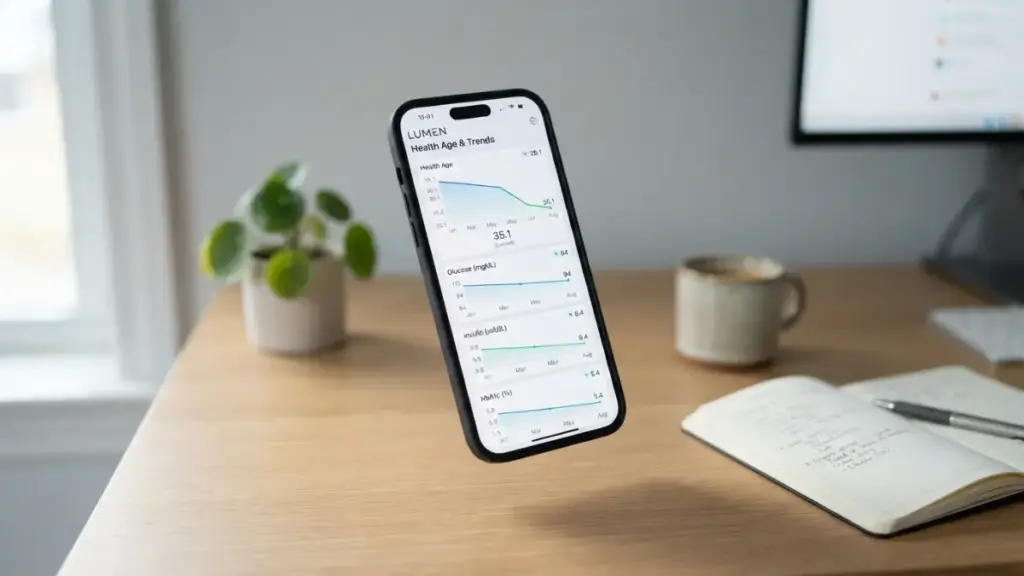
The true technical innovation of Apple’s new architecture is not merely selling lab draws; it is data fusion. Raw lab numbers are notoriously difficult for laypeople to interpret. A standalone HbA1c reading of 5.7% or an LDL score of 130 mg/dL means little without longitudinal context.
Apple’s calculation engine ingests blood panel results and fuses them with continuous sensor metrics to generate an algorithmic Health Age:
| Data Stream Source | Primary Metrics Ingested | Processing Engine | Actionable Preventive Output |
| Apple Watch Telemetry | VO₂ Max, Heart Rate Variability (HRV), Sleep Strain | Apple Health Age Engine (On-Device Neural Engine) | Calculates biological vs. chronological health age score |
| Quest Diagnostic Blood Work | HbA1c, Glycemic Control, LDL Lipid Ratios | Cross-Reference Analytics | Highlights hidden metabolic risks & cellular aging factors |
| In-Clinic Biometrics | Resting Blood Pressure, BMI, Waist Circumference | Clinical Risk Scoring | Delivers targeted nutrition, sleep, and activity guidance |
| Telehealth Integration | Physician Oversight & Escalation Flags | Automated Clinical Review | Triggers free physician consultation if critical values appear |
- Cardiovascular Synergy: The app overlays blood lipid profiles (LDL/Triglycerides) onto continuous VO₂ max and resting heart rate data gathered by Apple Watch.
- Metabolic Mapping: Continuous wrist-based sleep tracking and physical strain metrics are paired with glycemic markers (HbA1c) to evaluate how lifestyle habits impact cellular aging.
- Clinical Guidance: Quest and affiliated telehealth networks review all incoming lab panels. If critical values emerge, users are immediately offered physician consultations directly through the digital ecosystem at no additional charge.

The Competitive Landscape: Disruption in Direct-to-Consumer Diagnostics
Apple’s entry into direct lab ordering disrupts an increasingly crowded cash-pay health optimization market. Companies like Function Health ($365/year), InsideTracker, and WHOOP Advanced Labs have built multi-million-dollar businesses offering broad biomarker panels to biohackers and fitness enthusiasts.
More Read

However, Apple’s model alters the economics of consumer diagnostics:
- Price Accessibility: At $119 per draw, Apple and Quest undercut high-ticket annual subscription platforms, making baseline preventative blood work accessible to mainstream consumers.
- Zero Ecosystem Friction: Users do not need to download third-party health management apps or manage separate account credentials. Everything resides within the native iOS Health ecosystem.
- Open Health Record Architecture: Apple Health continues to support existing FHIR (Fast Healthcare Interoperability Resources) standards, allowing users who get lab work done at traditional hospital networks (like LabCorp, Mayo Clinic, or Kaiser Permanente) to auto-sync their records alongside self-funded Quest draws.
Privacy, Data Security, and the Ethics of Consumer-Ordered Labs
Digitizing clinical blood work naturally raises critical questions regarding data sovereignty, HIPAA compliance, and medical safety.
1. On-Device Encryption and Health Data Sovereignty
Health records in the iOS ecosystem are encrypted end-to-end when backed up to iCloud using 2FA. Apple cannot read or decrypt user blood work results on its servers. The mathematical processing for Health Age algorithms occurs locally on the device’s Apple Silicon Neural Engine.
2. The Risk of Self-Diagnosis Anxiety
Medical professionals express cautious optimism regarding consumer empowerment, alongside concerns over “cyberchondria.” When consumers order blood panels without a primary care doctor overseeing the context, minor biological fluctuations outside standard reference ranges can cause unnecessary alarm.
“Democratizing diagnostic access is a massive leap forward for preventive medicine. However, raw biomarker numbers are not diagnostic endpoints—they are conversation starters between patients and board-certified clinicians.”
Luna

Conclusion: The Era of Proactive Healthcare Has Arrived
Apple’s decision to integrate direct-to-consumer lab ordering turns the iPhone into a comprehensive preventive health hub. By pairing continuous wearable telemetry with accessible, affordable blood chemistry, Apple is shifting healthcare from reactive treatment (waiting until you feel sick to visit a doctor) to proactive management (monitoring cellular markers to prevent illness).
As direct lab ordering rolls out, the traditional barrier between consumer technology and clinical diagnostics will continue to dissolve—putting long-term longevity metrics directly into the hands of the individual.