


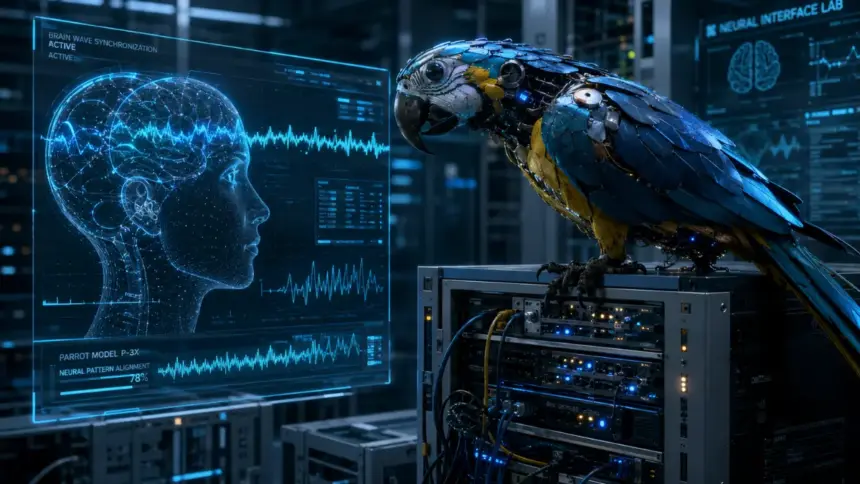
The term artificial artificial intelligence has emerged as a critical lens through which we evaluate the current state of machine learning. We often marvel at the output of large language models, assuming they possess a form of sentience or deep reasoning. However, as researchers dig deeper, it becomes evident that what we are witnessing is not thinking, but a sophisticated, statistically driven form of mimicry. Understanding this distinction is vital for anyone looking to navigate the future of technology without falling prey to marketing hype.
- Artificial artificial intelligence – The illusion of the great mimic
- Blind spots of LLMs and the “doomsday” prank
- Practical solution 1 – 1-bit (FP1/INT1) algorithmic structure and BitNet architecture
- Practical solution 2 – Quantum computing hardware (Quantum AI)
- Frequently asked questions (FAQ)
- Conclusion
Artificial artificial intelligence – The illusion of the great mimic
1. The hypnotic illusion of the “smart simulator”
The perception that machines have achieved a level of human-like intelligence often stems from the seamless way they generate content. When an LLM generates a thesis or passes a standardized exam, it creates a “halo effect.” We attribute human-like cognitive processes to what is essentially a pattern-matching engine. This is the core trap of artificial artificial intelligence; it fools the observer by reflecting the sum of human knowledge back at them with perfect fluency, yet without a single spark of subjective awareness.
2. Exposing the truth: The brute force “search” and predictive engine
At the structural level, LLMs function primarily through probability. They operate as glorified autocomplete systems, calculating the likelihood of the next token based on billions of parameters. This is not creativity; it is a high-speed retrieval and recombination process. When we label this as artificial artificial intelligence, we highlight that the machine is essentially “calculating” the next word rather than “understanding” the concept. This brute-force pattern recognition is the engine behind what many mistake for logical deduction.
3. Core message: When mimicry hits the ceiling
The most significant limitation of current models is the “semantic wall.” Because these systems lack a grounding in physical reality or subjective experience, their ability to generalize outside of their training data is fundamentally flawed. Relying on artificial artificial intelligence means relying on a mirror. While mirrors are excellent at reflection, they cannot create. As we push towards higher performance, the law of diminishing returns for purely probabilistic models becomes impossible to ignore.
Blind spots of LLMs and the “doomsday” prank
1. Cracks in the shell: Why dollar-million code AI loses to a three-year-old?
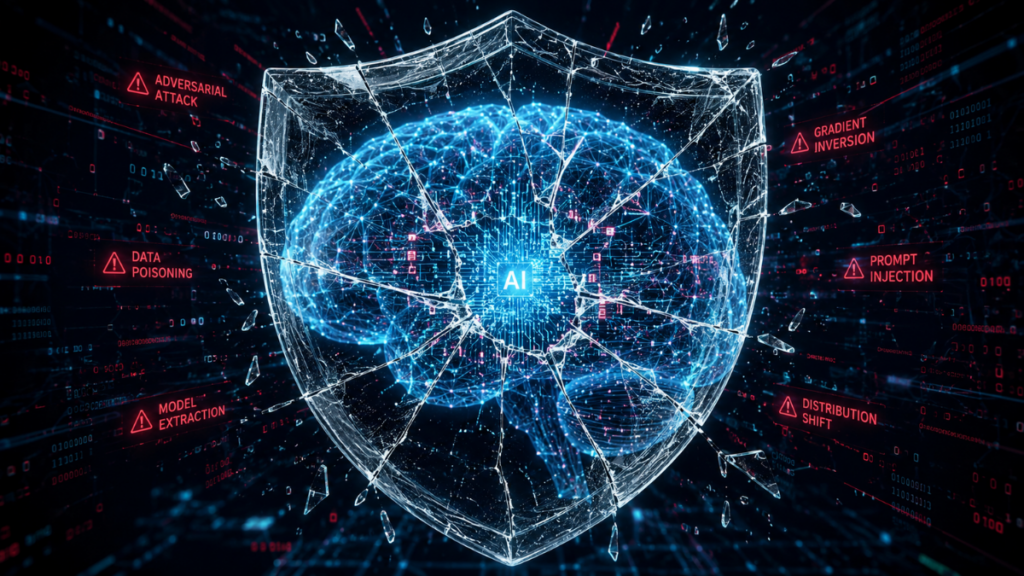
A toddler can understand the concept of “gravity” by dropping a toy. An AI can write a million lines of code to simulate physics but fails to grasp the why of the result. This is the paradox of artificial artificial intelligence. These models can process massive datasets but lack the common sense that is innate to biological intelligence. They are experts in syntax but novices in reality.
2. The tragedy of losing the data buoy and the helplessness before independent thinking
When removed from their massive training sets, LLMs often collapse. They are tethered to the data they were fed. This dependency reveals that their output is not “thought” but an echo. For true progress, we must look past the artificial artificial intelligence paradigm, as independent reasoning requires the ability to navigate new, unseen scenarios without a roadmap.
3. Lessons from the “2063 Robot War” – Satire from long-term fear
Science fiction often paints AI as a malevolent god. However, the real danger is not that AI will become too smart, but that we will become too reliant on “dumb” systems that we mistake for geniuses. The satire of artificial artificial intelligence lies in our fear of a digital uprising that isn’t coming, while we ignore the very real risks of algorithmic bias and systemic dependency.
4. Media status and the illusion of “silicon clouds”
Media headlines often describe AI as if it lives on a cloud, independent and evolving. In reality, these are just static weights and biases stored in server farms. By creating an aura of mystery, the industry distracts us from the reality that artificial artificial intelligence is just code, optimized to keep users engaged and clicking, rather than seeking the truth.

Read more: The Dark Side of Silicon-Carbon Batteries: The Real Reason Apple and Samsung Are Staying Away.
Practical solution 1 – 1-bit (FP1/INT1) algorithmic structure and BitNet architecture
1. The power-hungry giant: The energy barrier of FP16/FP32 models
Current models are bloated. Using 16-bit or 32-bit floating-point precision consumes staggering amounts of electricity. This energy intensity is a hurdle that makes current artificial artificial intelligence unsustainable for local devices, forcing us to rely on massive, centralized clouds.
More Read

2. Extreme “Quantization” solution: The power of the {-1, 0, +1} trio
Enter BitNet. By restricting weights to three values (ternary quantization), we can drastically reduce the memory footprint. This transforms the way artificial artificial intelligence is stored, allowing models to operate with a fraction of the hardware requirements while maintaining surprising performance.
3. Case-study Microsoft BitNet b1.58: 16x RAM reduction, bringing giant AI offline
Microsoft’s BitNet b1.58 approach is revolutionary. By compressing models to this extent, we can run high-capability models locally. This shift proves that the future of artificial artificial intelligence does not necessarily require more compute, but rather, smarter, more efficient mathematics. AI neural networks are becoming lighter and faster.
4. Practical benefits: Biological neuron simulation and the era of ultra-light, secure AI
This approach mimics the efficiency of the human brain more closely than traditional FP32 models. It paves the way for secure, offline AI that doesn’t need to send your data to a server. This is the real evolution of artificial artificial intelligence—turning it into a tool we can carry in our pockets.

Practical solution 2 – Quantum computing hardware (Quantum AI)
1. When the “data blind spot” breaks traditional computing methods
Traditional binary computers struggle with the combinatorial explosions inherent in complex problem-solving. This leads to the limitations we see in artificial artificial intelligence. We need hardware that can process probability distributions natively rather than simulating them.
2. The power of Qubits: Calculating millions of possibilities at once
Quantum AI leverages the principle of superposition. Instead of processing bit-by-bit, it explores the state space of a problem simultaneously. This is the only way to move beyond the limitations of artificial artificial intelligence that we currently face. It allows for the discovery of patterns that are invisible to classical logic.
3. Real leap: From “rote data learning” to “inferring essence” to reach AGI
Quantum systems offer a path to true AGI (Artificial General Intelligence) by enabling genuine inference. Unlike current models that rely on machine learning algorithms to guess the next word, a quantum-native model could potentially “understand” the underlying physical properties of the data it processes.

Frequently asked questions (FAQ)
1. What is the accurate definition of “artificial artificial intelligence”?
It refers to systems that simulate intelligence so effectively through statistical mimicry that they appear conscious, even though they possess no genuine understanding or internal state.
2. Why are current LLMs not considered to have true intelligence?
They lack grounding. They do not experience the world, they cannot reason about cause and effect independently of their training data, and they are purely probabilistic engines.
3. Does the 1-bit BitNet architecture reduce the intelligence of large models?
Surprisingly, no. Research shows that ternary weights can achieve parity with high-precision models, provided the architecture is designed correctly to handle the quantization.
4. When will Quantum AI truly replace current Cloud supercomputers?
It is a long-term goal. While we have proof of concept, scalable Quantum AI to replace massive LLM clouds is likely decades away due to decoherence and hardware stability challenges.
Conclusion
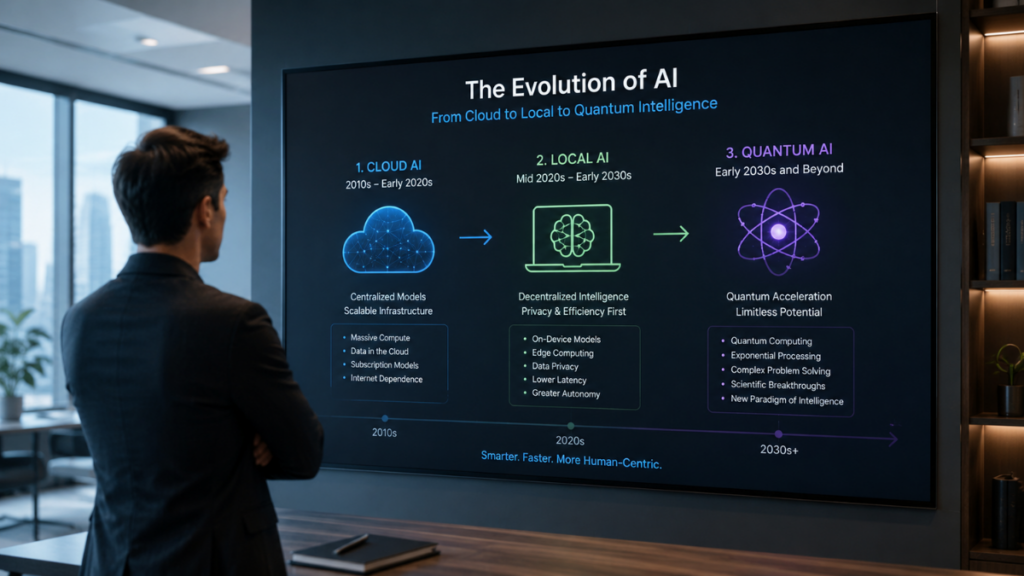
We are at a crossroads where we must decide whether to continue feeding the ego of artificial artificial intelligence or to seek actual innovation. The current path of scaling up models is hitting energy and intellectual walls. However, through architectural breakthroughs like BitNet and the long-term potential of Quantum AI, we can move from mere statistical mimicry to genuine computational efficiency and perhaps, eventually, true understanding. The future of AI is not in the size of the model, but in the precision of the logic.
Leave a comment to get free expert advice, or follow The Couch Insider to stay up to date with the latest insights and practical tips.