


Every time you enter a prompt into a chatbot, you are witnessing a miracle of modern intelligence. But have you ever wondered where this intelligence truly comes from when the world’s greatest libraries are slamming their digital doors? The reality is far more frantic than the polished responses suggest. While we marvel at the output, a silent, aggressive war is happening behind the curtain. Artificial AI is no longer being “fed” by the open internet; it is effectively starving.
The Great Digital Wall: Why Websites Are Blocking Artificial AI
This technological blockade represents a seismic shift in how the internet operates. For decades, the digital landscape was an open playground where crawlers could roam freely. Now, websites are essentially reclaiming their borders, treating their content as a guarded fortress rather than public domain. This transition indicates that the era of ‘free-for-all’ data acquisition is permanently coming to a close for all Artificial AI systems.
The honeymoon phase between the open internet and Artificial AI developers is officially over. For years, massive language models feasted on the entirety of the World Wide Web without restriction. However, the tide has turned. Today, more than 60% of authoritative sources—from The New York Times to Reuters and CNN—have erected digital barriers to prevent Artificial AI from accessing their content.

The Ownership Crisis and The Paywall
The core of this conflict lies in the definition of data ownership. Major media outlets argue that their intellectual property is not a free lunch for Silicon Valley giants. When [Artificial AI training data] is harvested without consent or compensation, it creates a lopsided economic model. By blocking scrapers, publishers are forcing a hard conversation: either pay for the premium content or do without it.
Using Robots.txt to Halt Scrapers
Webmasters are now explicitly adding directives to their robots.txt files to ban specific user agents associated with major AI labs. It is a simple, standardized, and highly effective way to tell the world: “You are not welcome here.” Because these crawlers are programmed to respect standards, they must comply, leaving them empty-handed in their quest for high-quality information.

Living on Scraps: The Dangerous Consequence of Data Scavenging
The shift toward lower-quality data sources brings with it a specific set of risks regarding data integrity. When Artificial AI is forced to ingest information from unverified forums or automated content farms, the model’s ability to discern truth from fabrication is severely compromised. This cycle of low-grade input inevitably leads to a degradation in reasoning capabilities, proving that data volume is no longer sufficient; data quality is the new gold standard for Artificial AI development.
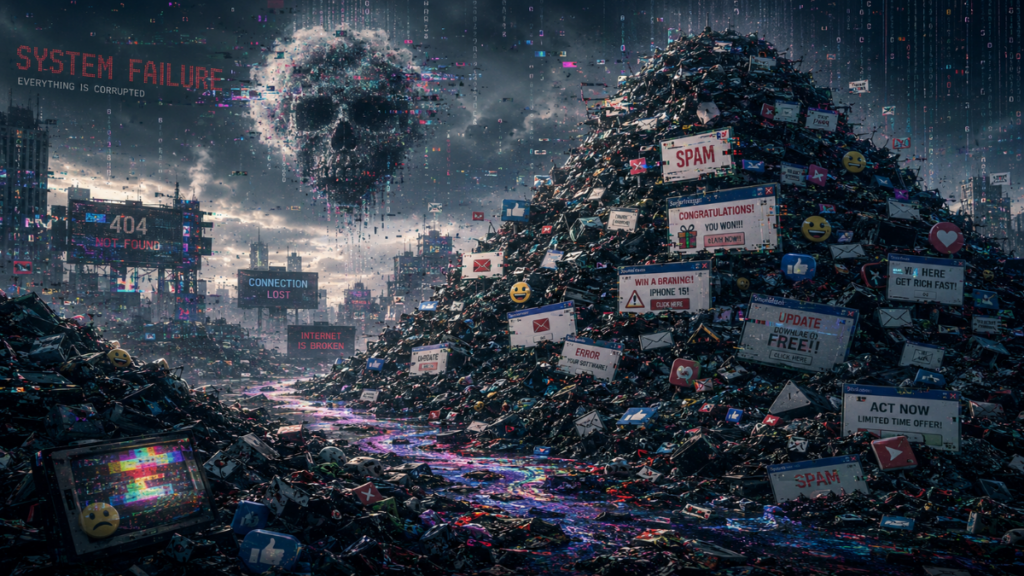
When the “five-star restaurants” of the internet—the reputable news sites and academic journals—close their doors, what is left for the hungry bots? They are forced to forage in the “digital gutters” where Artificial AI often yields polluted information.
More Read


The Danger of Content Farms
Without access to vetted, professional content, models are increasingly fed by the dregs of the internet. This includes unmoderated forums and spam-filled comment sections. The reliance on these sources is creating a feedback loop of misinformation. This is the primary driver behind the surge in [Artificial AI hallucination] events we see today.
“The quality of an artificial intelligence model is directly proportional to the quality of the information it consumes. We are currently witnessing a global experiment in information pollution.”
AI Research Ethics Bureau
When Artificial AI consumes incorrect or biased data, it regurgitates that bias back to users. This nutritional crisis is not just technical; it is a quality assurance nightmare.

The Unequal Battlefield: Why Only Giants Can Buy Quality Data
While the open web is closing, a new form of digital feudalism is emerging. Because public information is becoming scarce, only the largest companies can afford to keep their models competitive.

The Monopoly of AI Data Resources
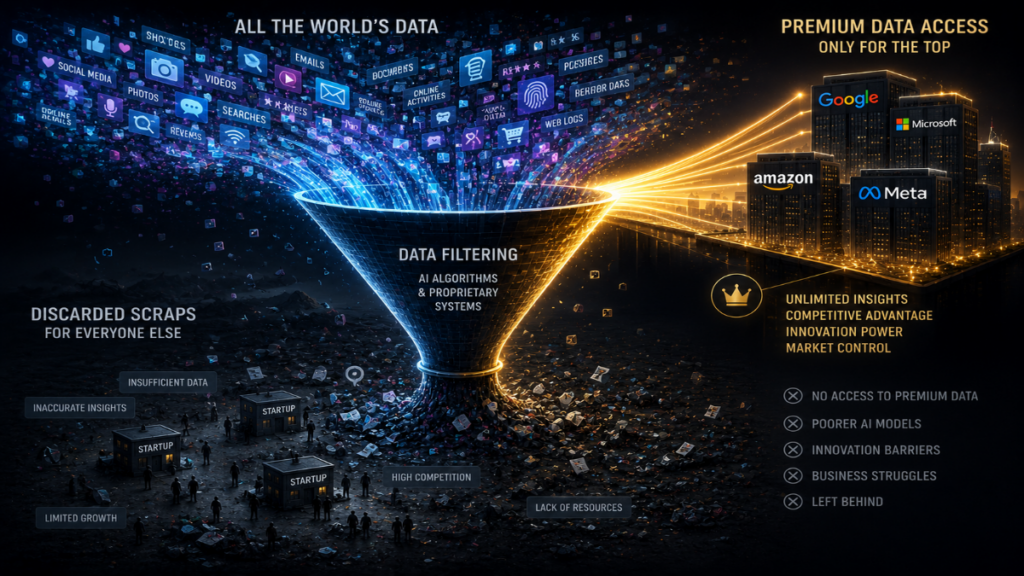
Companies like Google, Apple, and OpenAI are signing multi-million dollar deals with major publishers. This allows them to secure exclusive access to premium datasets that smaller companies cannot touch.

The result is a widening gap in the market. Large corporations can maintain high performance, while startups are left with the digital scraps, forcing them to rely on inferior Artificial AI scraping targets.



Read more: SpaceX Starlink satellite deorbit: The hidden environmental cost of Musk’s space ambition
Conclusion: A Data Starvation Crisis for AI
We must also consider the economic implications for developers who rely on open-source data. As more platforms implement strict blocks, the barrier to entry for building competitive models rises exponentially. Smaller labs simply cannot afford to match the massive licensing deals that industry leaders are signing, which risks creating a monopolistic environment. In this scenario, the future of Artificial AI will likely be determined not by innovation, but by who has the deepest pockets to pay for the remaining clean data sources.
We are reaching a tipping point. The systems we rely on are standing at the precipice of a serious knowledge crisis. By alienating creators through aggressive harvesting, tech giants have triggered a reactionary wall that may fundamentally stunt the growth of future models.
Are we witnessing the peak of machine intelligence before a long decline into ‘inbred’ and low-quality data loops? The answers provided are becoming homogenized and repetitive, mirroring the narrow, low-quality sources they are now forced to consume.
The future of Artificial AI depends on a resolution to this data war. Until then, the scavenging will continue, and the quality of intelligence will likely suffer.
LEAVE A COMMENT TO GET FREE ADVICE FROM OUR EXPERTS OR FOLLOW THE COUCH INSIDER WEBSITE TO UPDATE THE LATEST KNOWLEDGE ABOUT TECHNOLOGY AND MEDIA!